The Budapest issue
The Day Trips That Stretch Five Days in Budapest
Which trips out of Budapest are worth the travel time, with real prices, timings and the trains you have to build the day around.

By Marek NovákNeighbourhoods, baths and the slow way round
Five days is where Budapest stops being a checklist and starts behaving like somewhere you live in for a while. Three of those days belong to the city itself: the baths, both riverbanks, an evening with nothing booked. What you do with the other two decides whether the trip felt long or short. Hungary is small, its railways run outward like spokes, and almost every escape worth making sits within two and a half hours of a Budapest platform.
The first escape upriver asks nothing of you
Szentendre Old Town (Fő tér, the square the whole old town folds around) is the trip you can decide over breakfast. It is forty minutes on the HÉV from Batthyány tér, roughly 900 HUF each way, and it sets you down in a Serbian merchant town of ochre walls, hairpin lanes and small galleries, built by families who came north up the Danube in the seventeenth century and stayed. Walking it costs nothing. Museums run 1,500-3,000 HUF and lunch 6,000-9,000 HUF. Arrive before 11am or after 3pm on a summer weekend, because in between the coach parties compress the lanes to walking pace and there is nowhere to pass. Parties of twenty or more should split in two before the galleries, since the doorways will make that decision for you otherwise.

What turns Szentendre from a half day into a full one is the Hungarian Open Air Museum (Skanzen) (a few kilometres north of the town, with its own shuttle bus from the HÉV station). Farmhouses, churches, mills and workshops have been moved here region by region and rebuilt as working streets, so you see the rural Hungary that the capital's boulevards give no hint of. Admission is around 3,000 HUF. It closes on Mondays and is mostly a March-to-November proposition, so check both before you build the day around it. For groups it is the easiest site here, purpose-built for them, with pre-booked guided programmes and room to spread out.
Plan your Budapest trip
Live prices from our booking partners.
Free cancellation on many rooms. We may earn a commission when you book.
Two stops further up that repay the extra hour
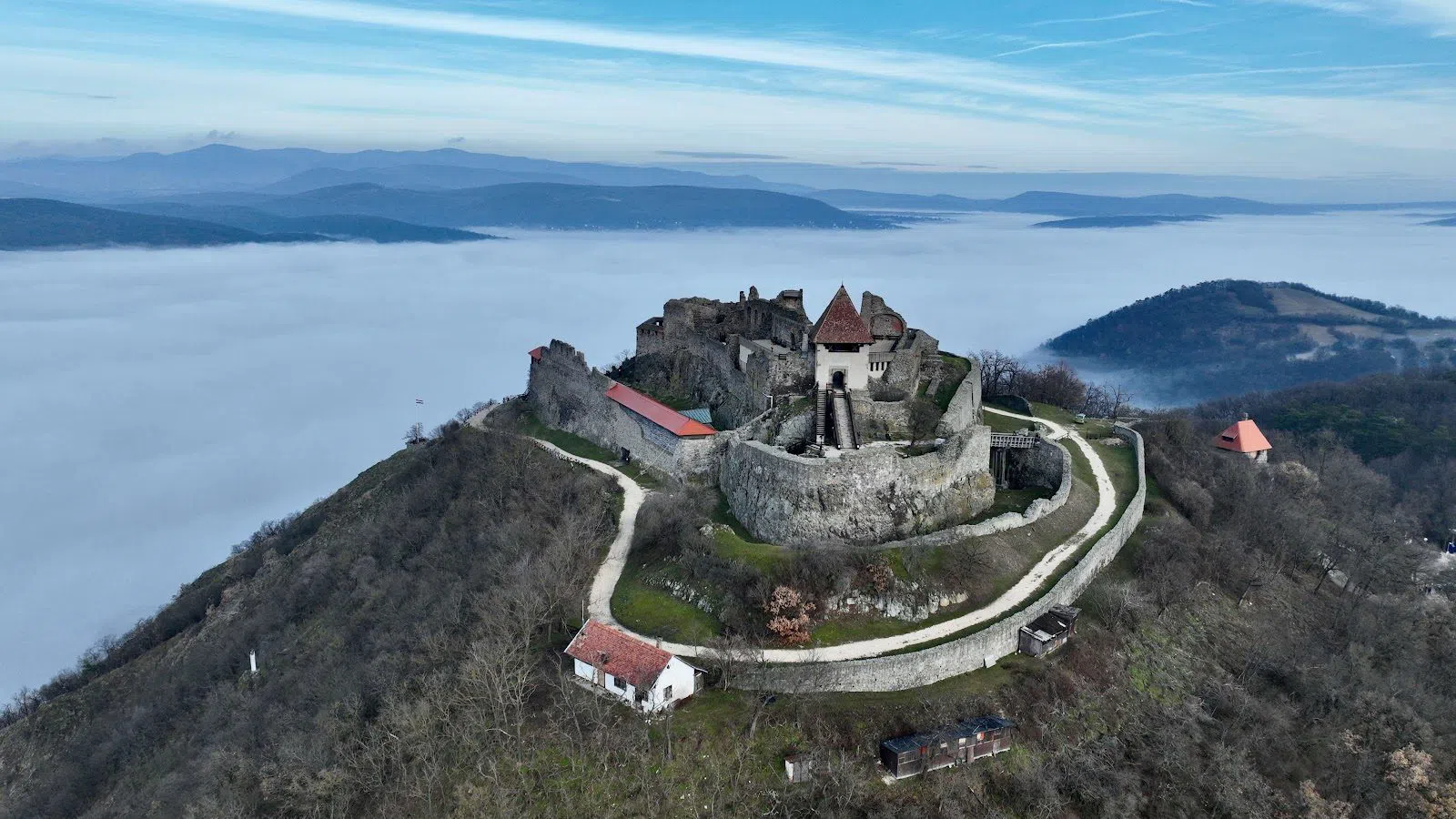
Visegrád Citadel (Visegrádi Fellegvár) (on the ridge above Visegrád village) holds the single best view in the Danube Bend, the river turning through a near right-angle several hundred metres below the terrace. It is open year-round, 9:00-18:00 from April to September and shorter in winter, closed 24 and 25 December. Entry is 2,800 HUF adult, 1,400 HUF concession, free for under-sixes and over-seventies. There is no group restriction, but the ridge-top terrace is congested at midday and the car park is small and metered, which is one more argument for arriving early. The climb from the village is steep enough that the shuttle or a taxi is money well spent.
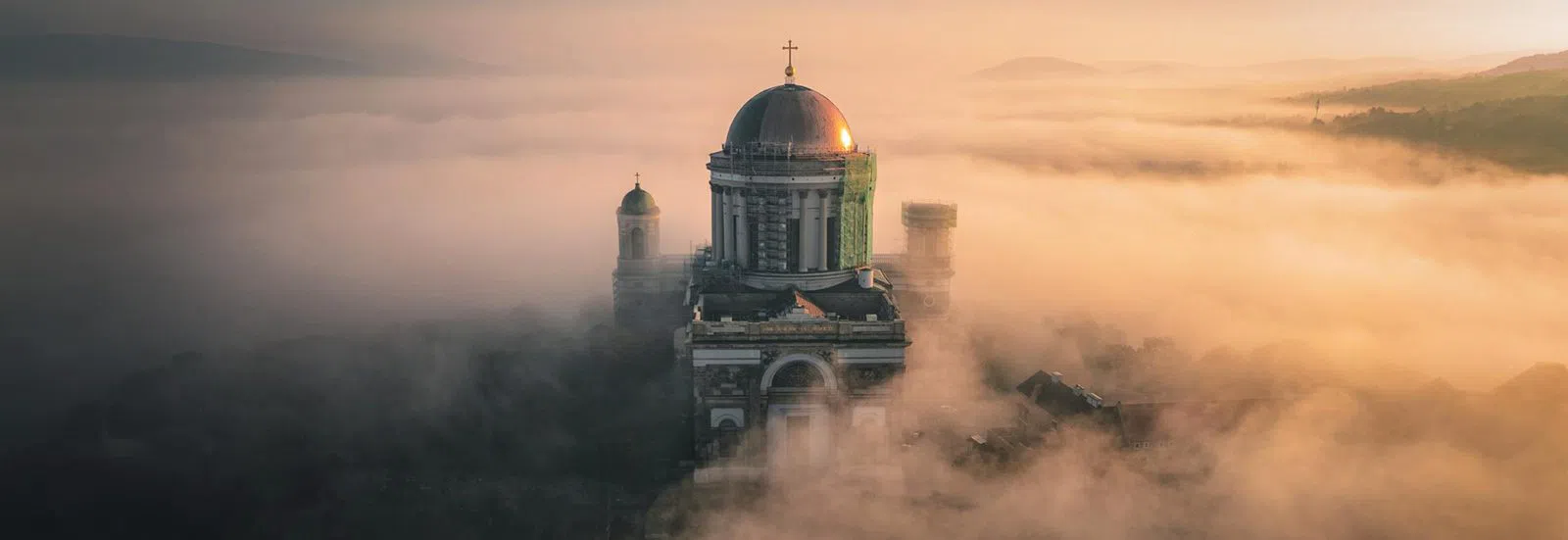
Further up, Esztergom Basilica (on Castle Hill at the northern end of the Bend) is Hungary's largest church and the seat of its ecclesiastical hierarchy. The nave is free. The cupola is about 2,800 HUF, the treasury about 1,900 HUF, and a combined ticket around 4,200 HUF. The cupola is worth it on its own: 400 steps, single-file, not wheelchair accessible, and at the top you look down on two countries at once, with the bridge over the river marking the border. The dome, crypt and treasury each keep their own last-entry times, so climb first and browse afterwards. Groups are welcome, though the stairwell only works in one direction at a time.
Taking the river itself instead of the railway

MAHART PassNave (passenger departures from the Pest embankment) is the slow, scenic way to reach all three of the above, roughly two hours to Szentendre, three and a half to Visegrád, five to Esztergom, at 4,000-9,000 HUF depending on the route. Day tickets let a party split up and regroup at the pier, which suits mixed groups where half want the citadel and half want lunch. Before you commit, check the operator's schedule-change page: low water suspended the entire Bend service from 13 July to 31 August 2026, and the pier at Vác is under restoration. The sane pattern even in a good water year is one leg by boat and the other by rail or bus, so a cancelled sailing costs you a view and not the whole day.
A palace on the H8 and a village at the end of a bus route
The Royal Palace of Gödöllő (Gödöllő, forty minutes out on the H8 HÉV) was Empress Elisabeth's summer residence, and the rooms are arranged to explain why a Habsburg empress preferred Hungary to Vienna's court. It opens daily 10:00-18:00; entry is 5,000 HUF on weekdays and 5,400 HUF at weekends, with an audioguide at 1,000 HUF. Groups are admitted only by reservation, capped at 25 people, with no group discount, and guided tours run 15,000-23,000 HUF for the party. A nine-year, 40-billion-forint restoration is under way, so expect scaffolding somewhere, and book the baroque theatre and the Horthy bunker as add-ons in advance rather than hoping for them at the desk.
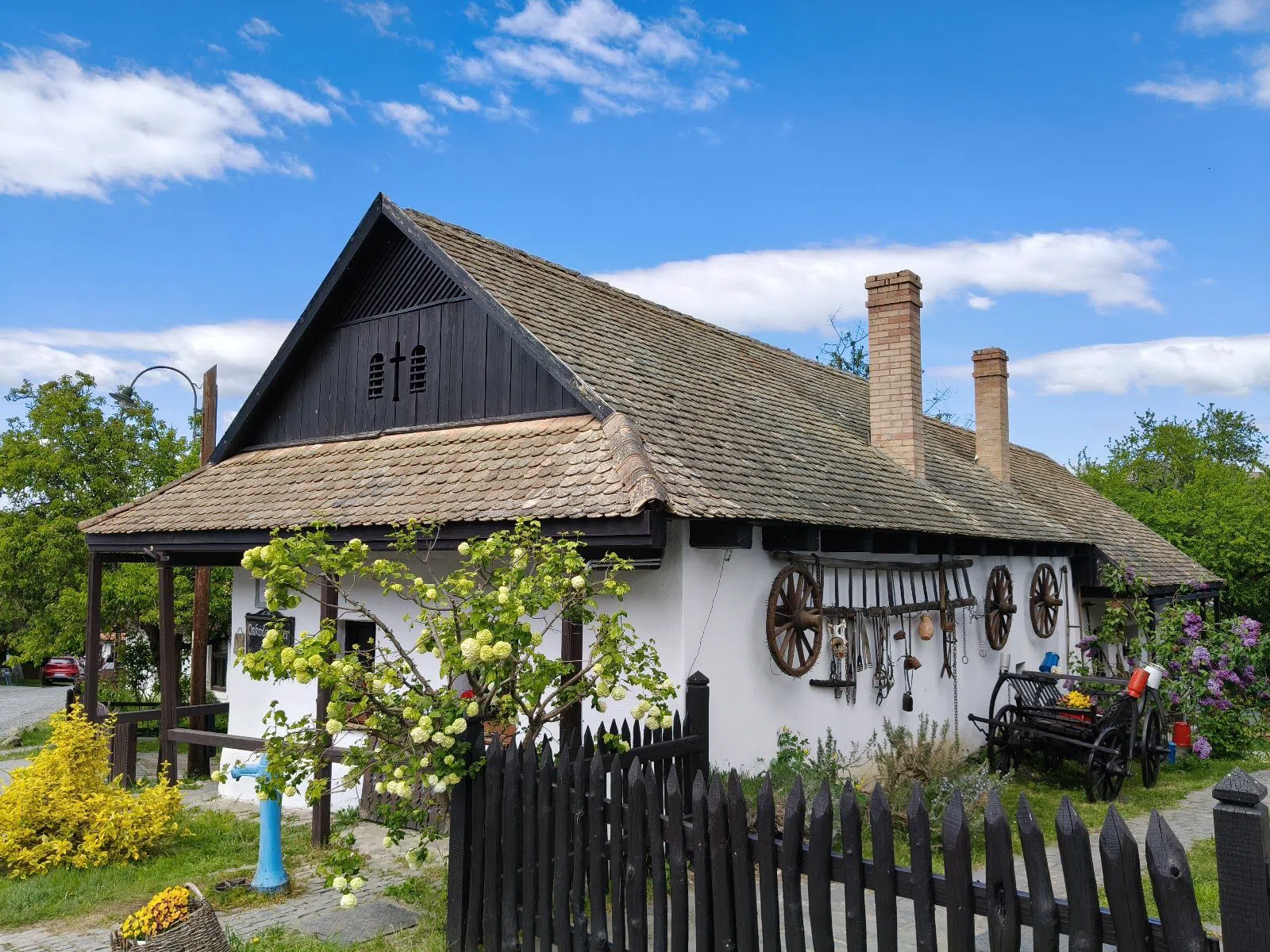
Hollókő Old Village (Ófalu) (in the hills northeast of the capital) is the furthest thing from Budapest you can still reach in a day. It was the first village anywhere to be given UNESCO listing: 67 protected houses from the seventeenth to nineteenth centuries, whitewashed and wood-galleried, still lived in rather than staged. The village is free to walk, museum houses are about 1,000-1,500 HUF each, and guided day tours start around 25,000 HUF. The bus decides everything else. It leaves Puskás Ferenc Stadion at 08:30 and returns at 16:00, and that single pair of times is the whole trip, with no later option to fall back on. Groups do well here, with craft workshops, folk dance and Palóc meals all bookable ahead.
The day that stacks a siege, a hot spring and a cellar row
Eger Castle (Dobó István Castle Museum) (above Eger's old town, ninety minutes by intercity train) sits over the site of Hungary's most retold siege, the defence of 1552, which every Hungarian schoolchild can narrate. The gate is open 06:00-22:00 with exhibitions roughly 09:00-18:00, closed 24 and 25 December, and tickets run 2,800-4,500 HUF. Casemate tours go to timed slots, so pre-book if you are more than a handful of people. An hour and a half to two hours covers it properly.

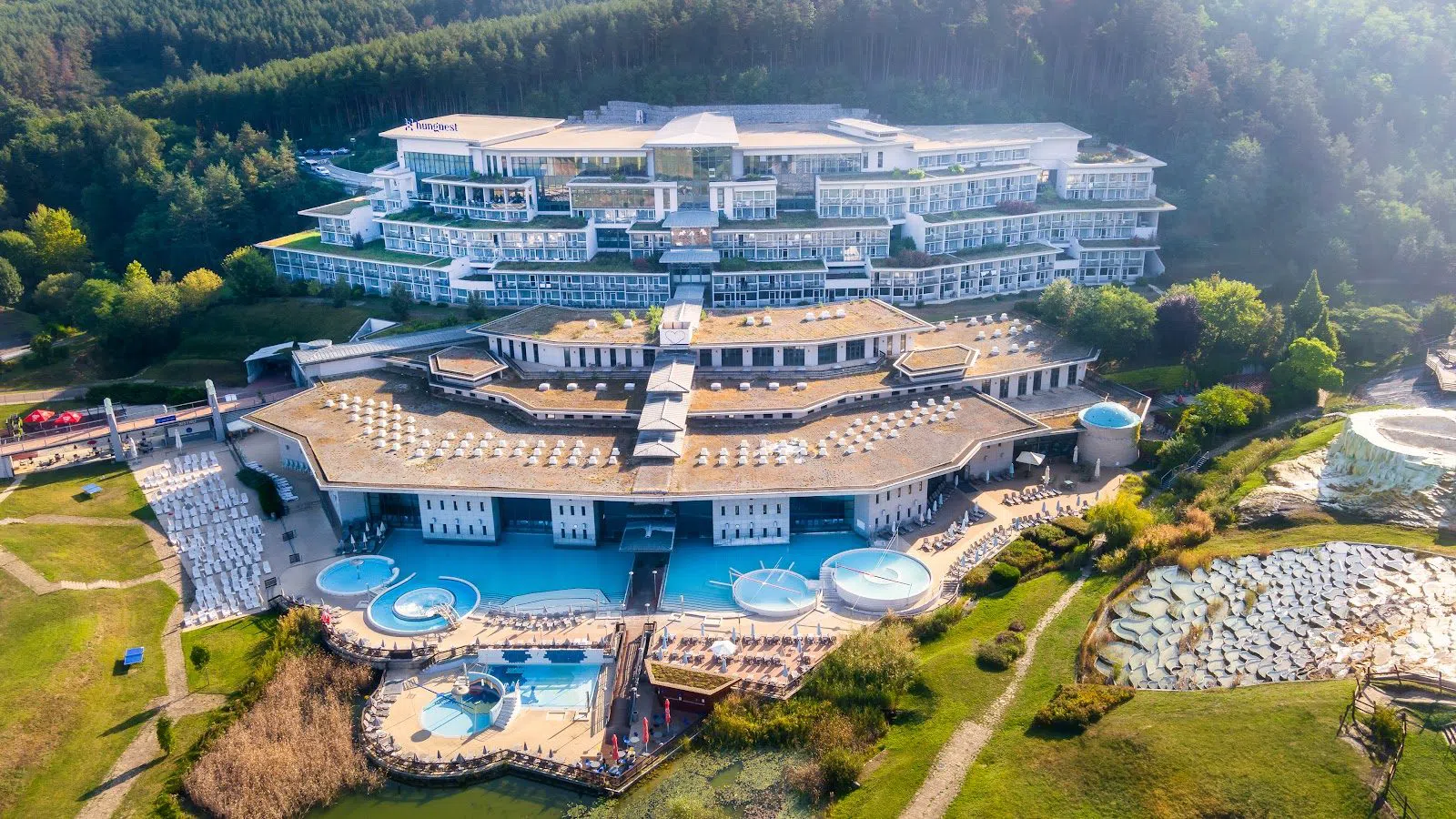
Eight kilometres out, Hunguest Saliris, Egerszalók (Egerszalók, a short taxi or bus from Eger) is built around a natural white travertine cascade, thermal water having laid down its own terraces over a hillside, with 17 pools arranged beside them. A day ticket starts around 9,700 HUF. Day guests are admitted alongside hotel guests but numbers are capped, so weekends and holidays can mean a short wait at the desk. Book the spa and not the hotel, and note that the property now trades as Hunguest Saliris; older signage and older listings use the previous name.
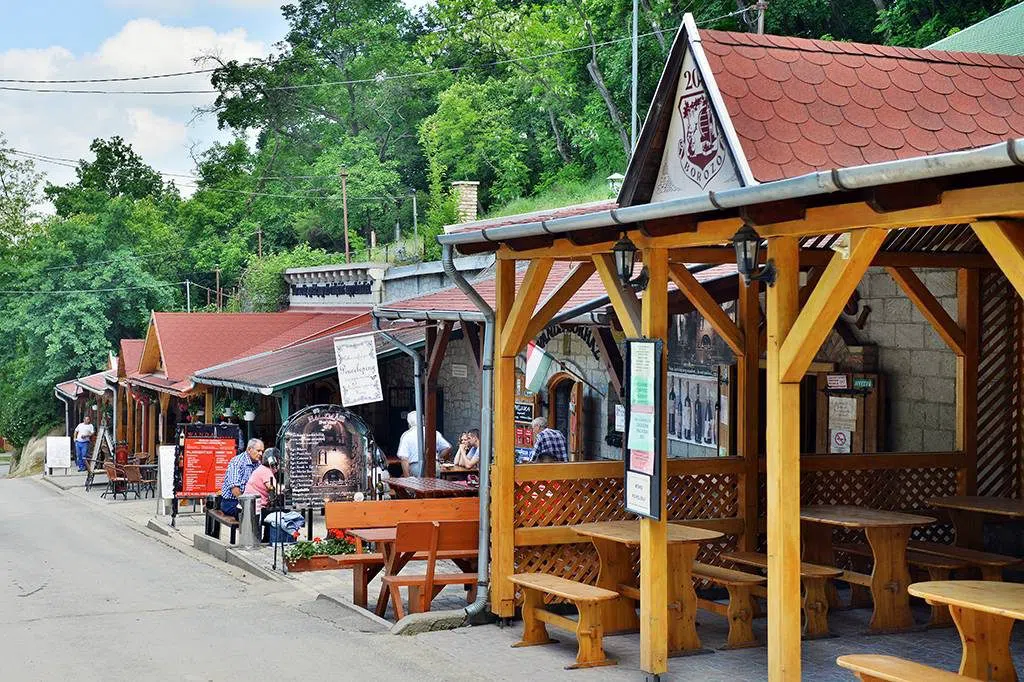
End at Szépasszony-völgy (Valley of the Beautiful Women) (a horseshoe of cellars on the southwestern edge of Eger), where thirty-odd independently owned cellars are cut into the tuff around one curved lane. This is the home ground of Egri Bikavér, and a glass is 200-600 HUF. There are no reservations and no dress code, which is the appeal. Go late afternoon, when locals start arriving; at midday it reads as a coach stop. Each cellar is small, so a large group spreads across several doors, which is how the valley is meant to be drunk. Build the whole day backwards from one number: the last direct train back to Budapest leaves Eger at 19:04.
Balaton wants an early alarm and pays it back at Tihany
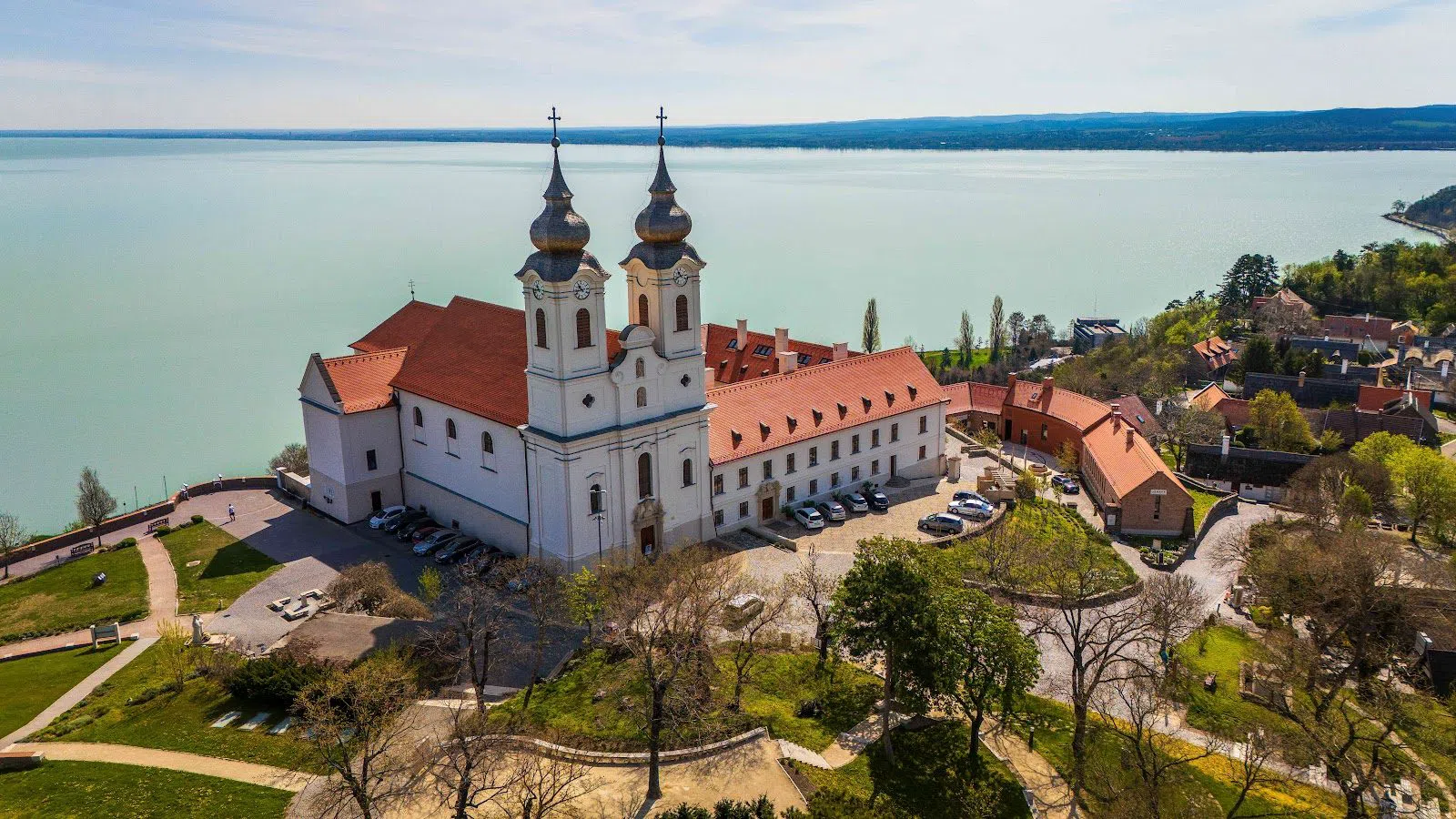
The terrace of the Benedictine Abbey of Tihany (on the peninsula, above the Old Village) has the finest view in Hungary: the lake opening out below, reed beds on one side, the abbey's twin towers behind you. The museum is about 3,100 HUF and needs no booking; guided tours, including monk-led ones, cost 10,500 HUF in English or German and must be arranged in advance by email. The church is free for worship. Two hours each way makes this the longest of the easy trips, and it only works if you take the 6:30-7:30am departure. An afternoon train turns it into a rushed look and a dark ride home.
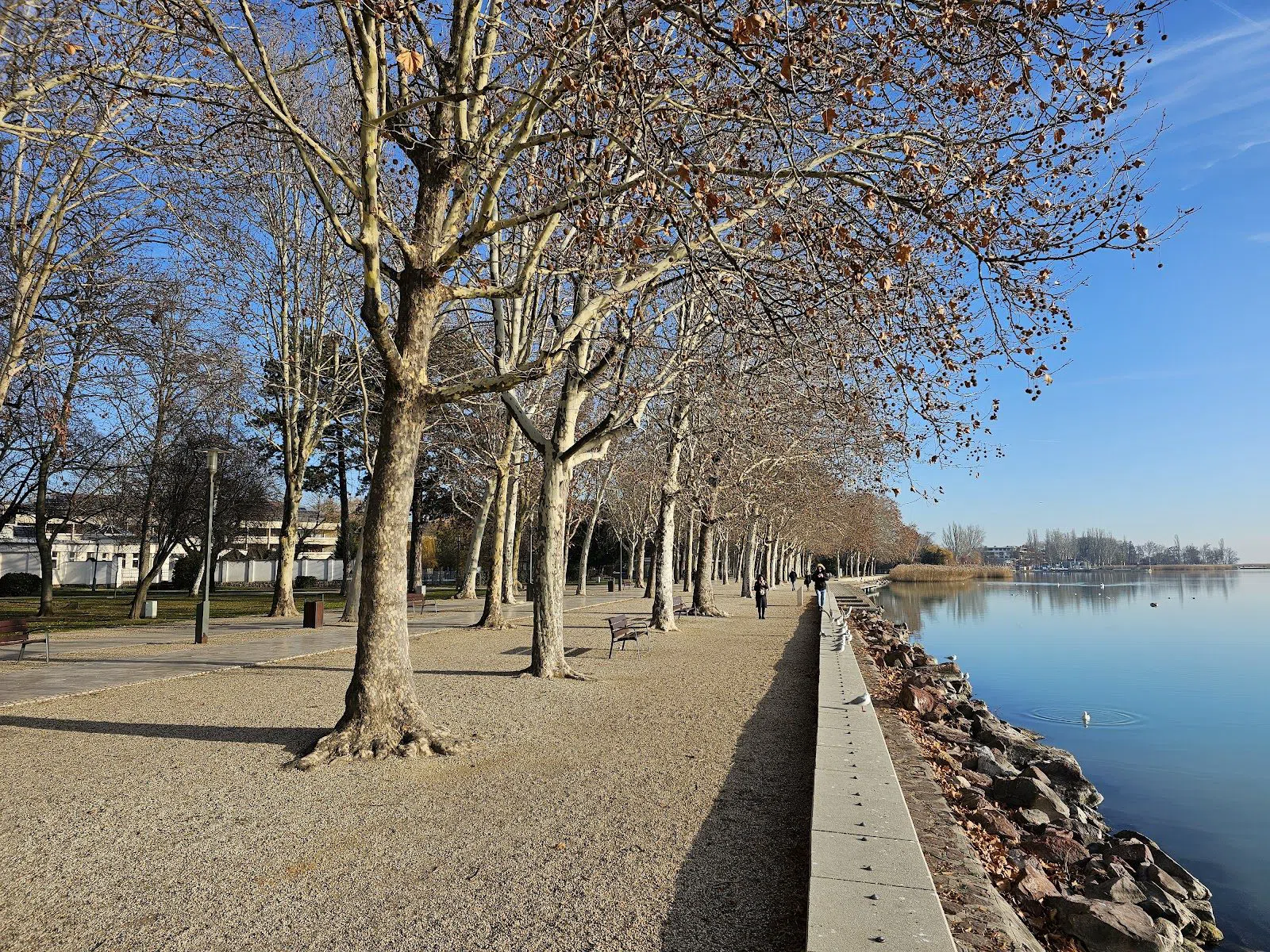
Balatonfüred (Tagore sétány) (the lakefront promenade) is the practical base for the north shore and a genteel old spa town in its own right, with a plane-shaded promenade where visitors have been taking the waters since long before the railway. The promenade is free and the train is 2,760 HUF one way. Bus 8 runs from the station to Tihany in about fifteen minutes, several times an hour, which is how you connect the two halves of the day. Lakefront restaurants take groups but need booking in July and August. Do not confuse bus 8 with the car ferry, which crosses the lake's narrow point between Tihany and Szántód from April to October and is a different journey entirely.
Two wine days at opposite ends of the effort scale
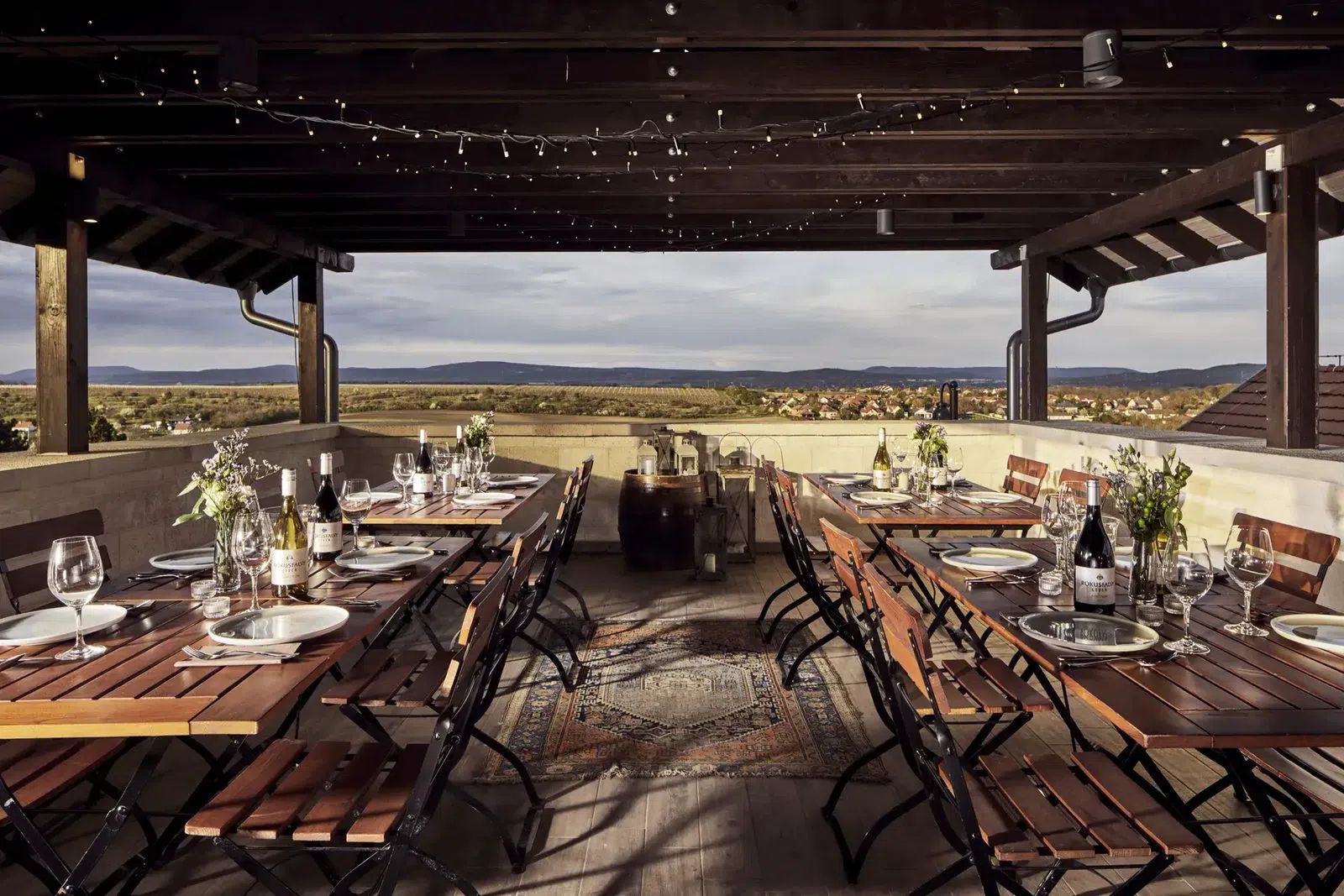
Rókusfalvy Estate (Rókusfalvy Birtok), Etyek (Etyek, half an hour west of the city) is Budapest's own vineyard country, and it exists for the day when the other options feel like too much travel. Guided tastings of four or six wines run for up to 25 people in the Press House, at fixed times or by request, at roughly 8,000-15,000 HUF a head, and take an hour to ninety minutes including a vine walk and the cellar. The Rókusfalvy Inn on the same site is Michelin Guide-recommended and is charged separately. The winery opens Mon-Thu 10:00-16:00, Friday to 20:00 and weekends to 18:00.
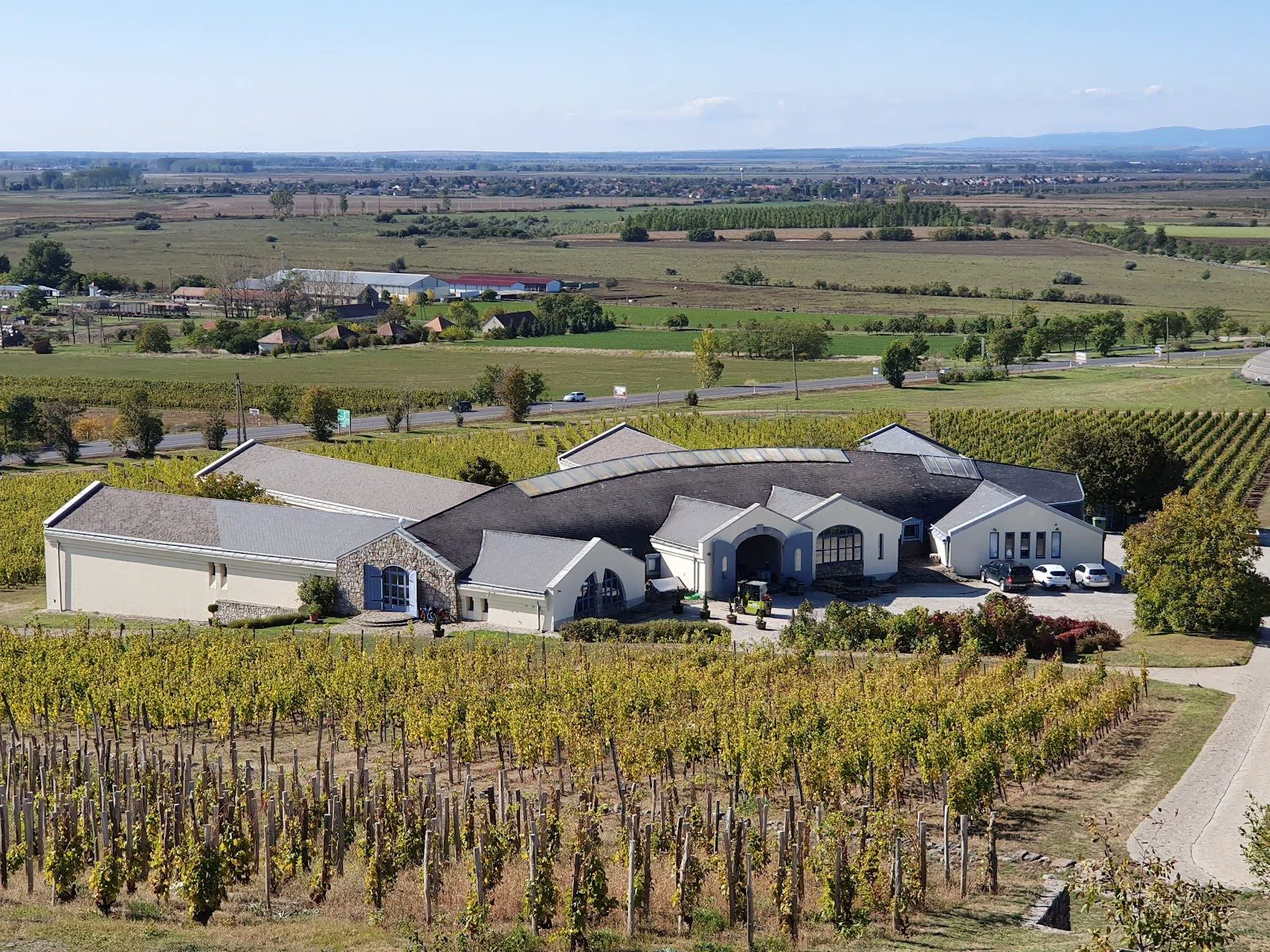
Disznókő, Tokaj (Tokaj-Hegyalja, about two and a half hours by train) is the opposite proposition: the gateway estate of a UNESCO-listed wine region and the place to taste the world's oldest botrytised sweet wine where it is made. Tastings run every day of the week, advance booking is required, and a flight costs roughly 10,000-25,000 HUF. The cellar suits small groups more than large ones. It is a long day, and it earns its place only if the wine is the point of the day rather than an ornament on it.
An abbey and a riding school for a different register
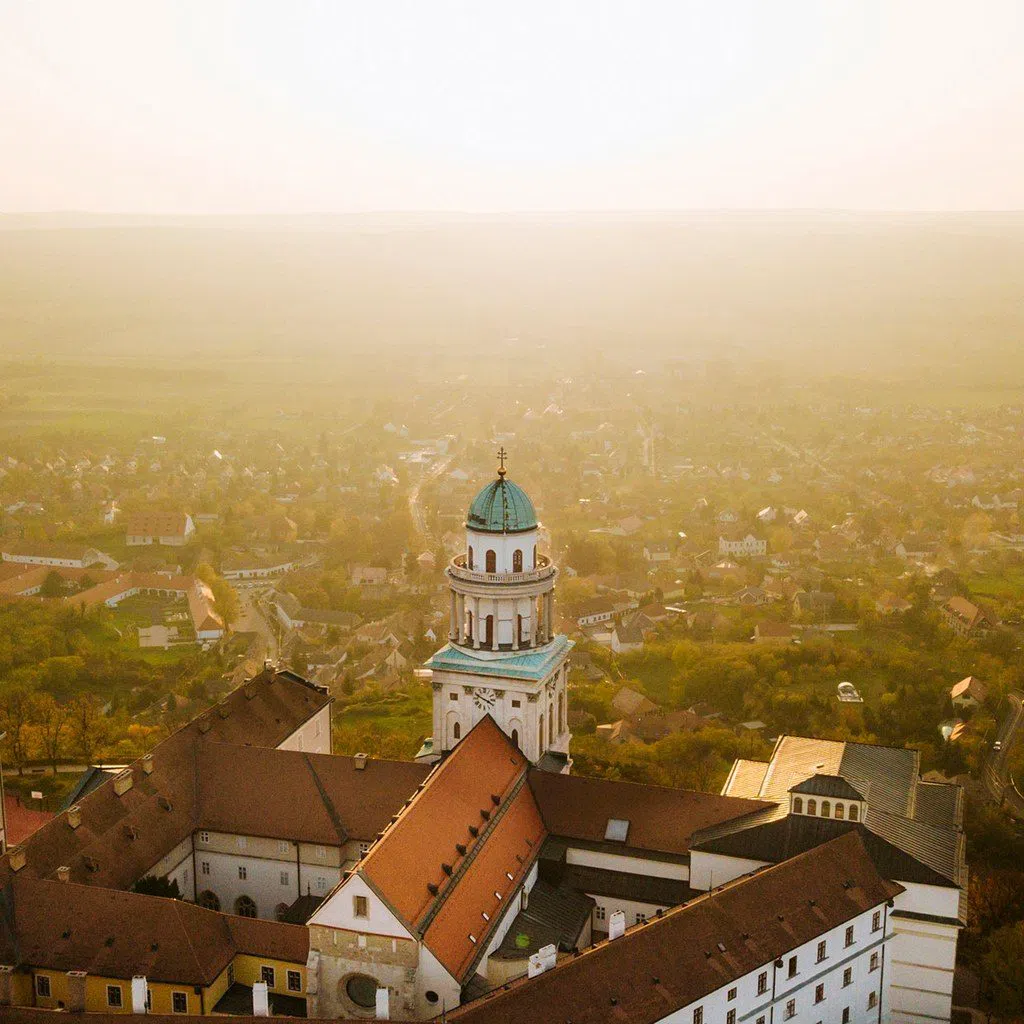
Pannonhalma Archabbey (on its hill in western Hungary) was founded in 996 and has been inhabited by monks more or less continuously since, which makes it the working counterweight to Hungary's museum-piece castles: a library, a basilica and a school still in daily use. General admission is roughly 4,000-5,000 HUF, guided tours more, with English and German tours bookable ahead and set-time tours running through the day for individuals. It opens 09:00-16:00 but closes on Mondays and on Friday afternoons, which catches people out. Allow ninety minutes self-guided, or two to two and a half hours with a guide.
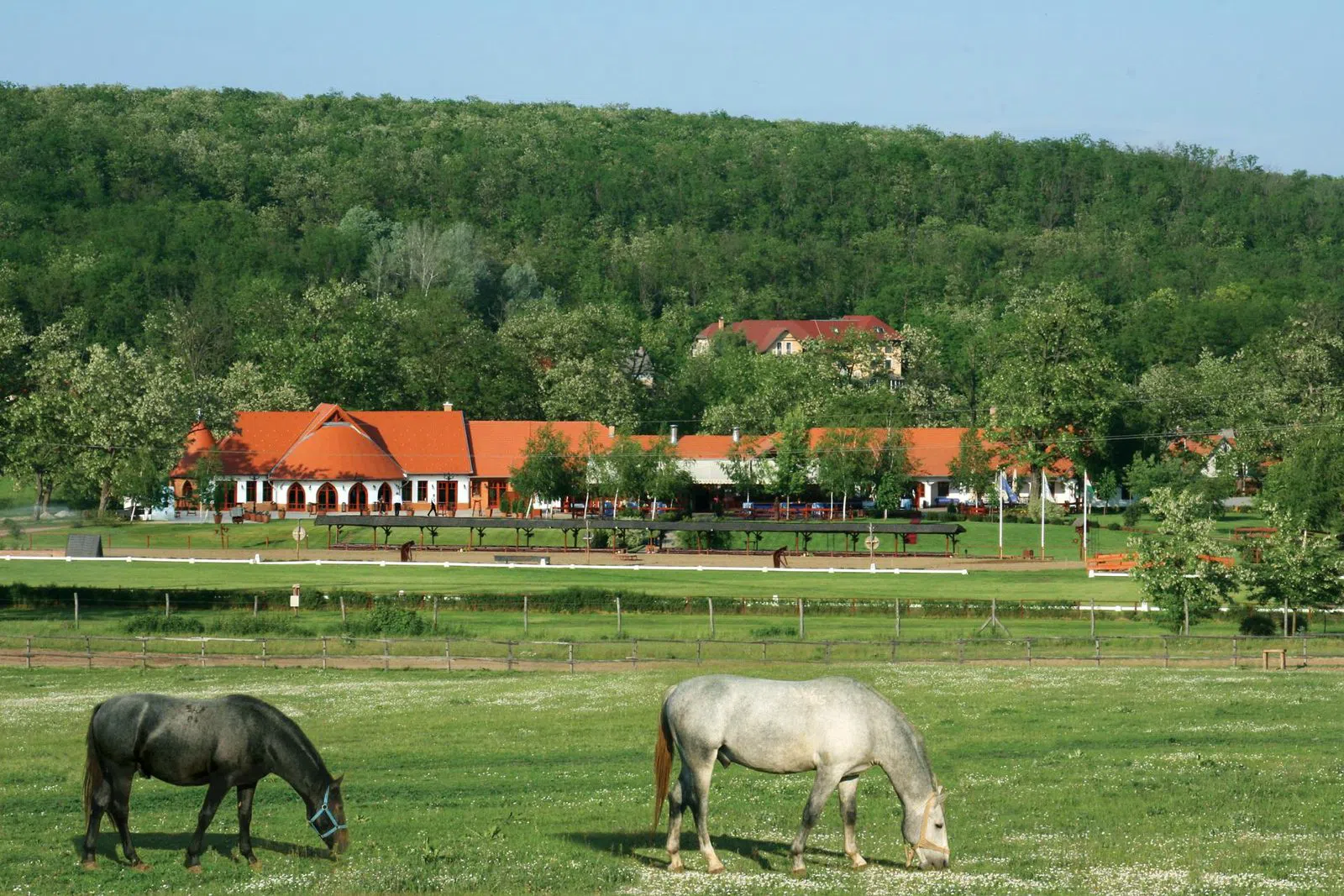
Lázár Equestrian Park (Mythos Resort Domonyvölgy) (Domonyvölgy, under an hour from the city) was founded by the Lázár brothers, thirteen-time world carriage-driving champions, and it remains the most reliable way to see real Hungarian horsemanship, archery at gallop and the five-in-hand, without a long drive. It takes groups only by prior appointment, from about twenty people up to very large events, with show-and-lunch programmes at roughly 15,000-25,000 HUF a head. It has been absorbed into the new five-star Mythos Resort on the same site, so confirm the day-visit programme and the price when you book. Two people who turn up unannounced will not get in.
Shaping the five days
Two escapes is the right number for a five-day trip, and three is one too many. Pick one river day and one that changes the register: Szentendre with the Skanzen, then Eger; or the Bend by boat, then Balaton. Keep the day after a long trip loose, because the city rewards an unplanned afternoon more than a second museum does. The Budapest guide covers what to leave in town.
If your group has mixed appetites, the Bend divides best: a day ticket on the river lets the walkers take the citadel while everyone else eats in the old town, and you regroup at the pier. Couples get more out of Etyek and Tihany. Groups of twenty and over should look at Hollókő, the Skanzen and the equestrian park, all of which are built for numbers, and should avoid arriving unannounced at Gödöllő, where the cap is 25.
Practical notes
Transport is the deciding factor, not distance. HÉV suburban trains cover Szentendre and Gödöllő and need no planning. Intercity trains handle Eger, Balatonfüred and Tokaj comfortably, and buying ahead for a summer weekend is worth the five minutes. Three trips are governed by a single timetable, the 08:30 bus to Hollókő, the 19:04 back from Eger and the 6:30-7:30am departure for Balaton, and those times should be written down before anything else in the day is decided.
Carry cash. The city takes cards everywhere, but cellar doors in Szépasszony-völgy, small museum houses and village workshops often do not, and 200 HUF a glass is not a card transaction anyone wants. Budget roughly 12,000-20,000 HUF a head for a straightforward day out including transport, entries and lunch, and 25,000-35,000 HUF for a wine tasting or a spa day. Check closing days before you commit: Mondays close the Skanzen, and Mondays and Friday afternoons close Pannonhalma.
Stay central enough that an early departure is not a taxi ride. Anywhere within a short walk of Batthyány tér, Keleti or Nyugati turns a 6:45am train from a chore into a short walk, and the Budapest hotel search is the fastest way to see what sits near which station.
Before you go
How many day trips should I fit into five days in Budapest?
Two. The city itself needs three unhurried days, and a third excursion turns the trip into a commute. Pair one river day (Szentendre with the open-air museum, or Visegrád and Esztergom) with one that changes the register, such as Eger or Lake Balaton, and keep the day after a long trip loose.
What is the best day trip from Budapest without a car?
Szentendre. It is forty minutes on the HÉV from Batthyány tér, roughly 900 HUF each way, and needs no booking. The Hungarian Open Air Museum a few kilometres north runs its own shuttle bus from the station. Eger is the best of the longer options, at ninety minutes by intercity train.
Can I still take the boat up the Danube Bend in 2026?
Check the MAHART PassNave schedule-change page before you plan around it. Low water suspended the entire Bend service from 13 July to 31 August 2026, and the pier at Vác is under restoration. Even in a normal water year, it is safer to take one leg by boat and the other by train or bus.
Is Lake Balaton realistic as a day trip from Budapest?
Yes, but only on an early train. It is about two hours each way to Balatonfüred at 2,760 HUF one way, and bus 8 reaches Tihany in roughly fifteen minutes. Take the 6:30 to 7:30am departure; an afternoon train leaves you with a rushed hour at the abbey terrace and a dark ride back.
Which day trips work for a large group?
The open-air museum at Szentendre, Hollókő and the Lázár Equestrian Park all handle large groups, though the equestrian park takes them only by prior appointment. The Gödöllő palace caps groups at 25 with no discount, and the lanes of Szentendre old town work for parties of twenty or more only if you split in two.