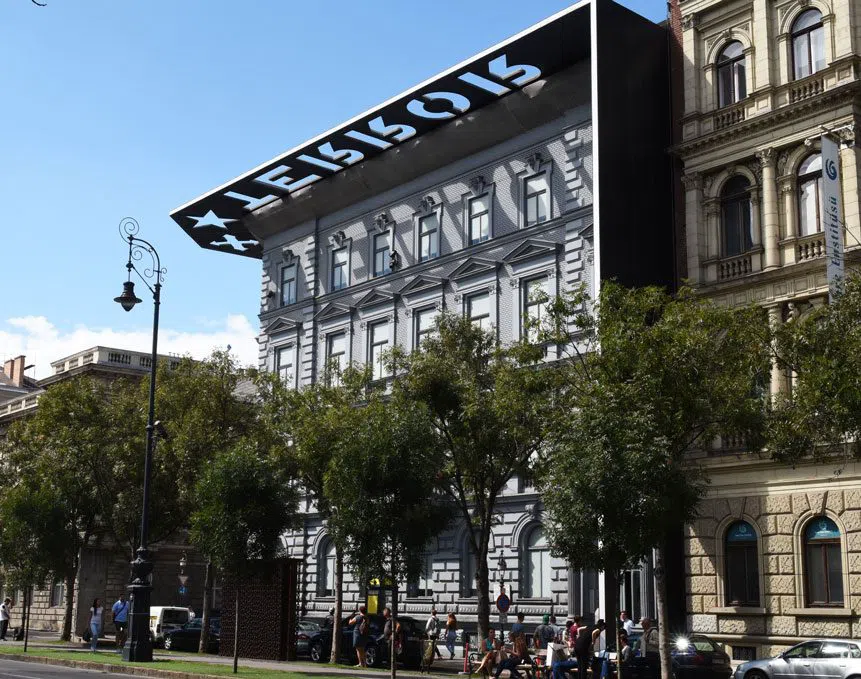
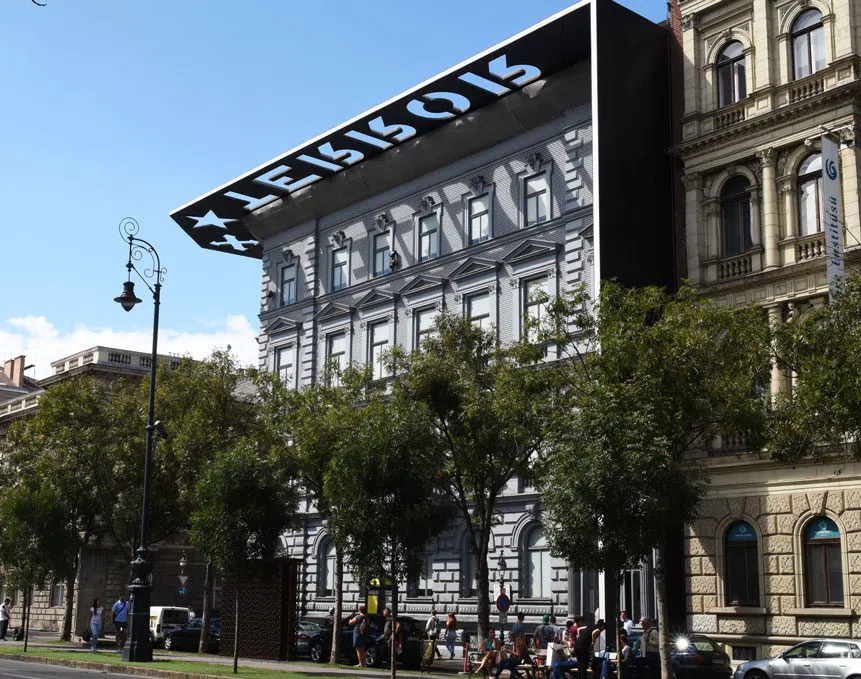
The frontage at Andrássy út 60 is wrapped in a black steel frame that cuts the word TERROR out of the sunlight and lays it across the pavement on a bright afternoon. Step through the door and the old courtyard has been roofed and floored in black granite, with a Soviet T-54 tank standing in it and three storeys of small photographs rising above it, most of them of people who went into this building and did not come out. Almost everyone stops there for a few seconds, which is the point of the room.
The address did the damage
Andrássy út 60 was not picked for a museum because it was convenient. The Arrow Cross, the Hungarian fascist party installed in the autumn of 1944, used the house as a headquarters and a place of interrogation. After the war the communist state security service took the same rooms, spread into the buildings on either side and held the address into the middle of the 1950s, by which point people in the city had learned not to say the number out loud.
The House of Terror Museum (Terror Háza Múzeum) opened here in 2002, on the upper stretch of Andrássy út in District VI, a few minutes above the Oktogon. The building itself is the main exhibit, which explains the tone. Rather than filling cases with artefacts, the museum takes you on a route through a place where particular things were done to particular people, staged with film, sound, reconstruction and recorded testimony from both sides.
What you actually walk through
The permanent exhibition starts at the top and works down, and the sequence matters. The upper floors cover the two occupations in order: the Arrow Cross months of 1944 and 1945, then the Soviet decades, the show trials, the deportations, the informer networks, the uprising of 1956 and the reprisals that followed. Rooms are built as installations rather than displays, with uniforms of the political police, banks of telephones, a map of the camp system, and screens running interviews with survivors and with people who worked for the regimes and were filmed explaining themselves.
Wall text is largely in Hungarian, with a printed information sheet in English available in each room. You pick it up at the door, read it, put it back for the next person. The system works and it is free, but it sets the pace, so decide early whether you are going to read every sheet or follow the rooms and read selectively. Near the end there is a gallery of the perpetrators, ordinary head-and-shoulders portraits of the men who ran the place, with names and dates, some of whom lived long and undisturbed lives afterwards. It is the quietest room in the building and the one most visitors remember.
The lift is the exhibit
The descent to the cellar is where the museum stops being a history display. You are put into a goods lift that moves at a crawl, and on a screen in front of you a former guard describes, evenly and without drama, how executions were carried out in the basement. One floor takes about three minutes. Nobody talks.
At the bottom is the preserved cell block. The torture chamber is kept as it was found. There is the wet cell, where standing water made rest impossible, and cells built too low to stand up in and too short to lie down in. The ceilings are close and the air is cool. Give yourself a few minutes in the courtyard afterwards before walking back out onto one of the grandest avenues in Europe, because the transition is abrupt.
The audio guide
The audio guide costs 2,000 HUF on top of the ticket, and it is a plain narrated handset: a voice and a running order, with no positional sound, no layered score and no app. It does give you the thread the room sheets only half provide, and it lets you keep walking with your hands free. Against that, the rooms already supply enough sound of their own. If you read quickly and follow chronology well, you can skip it; if you want someone to tell you what you are looking at, take it.
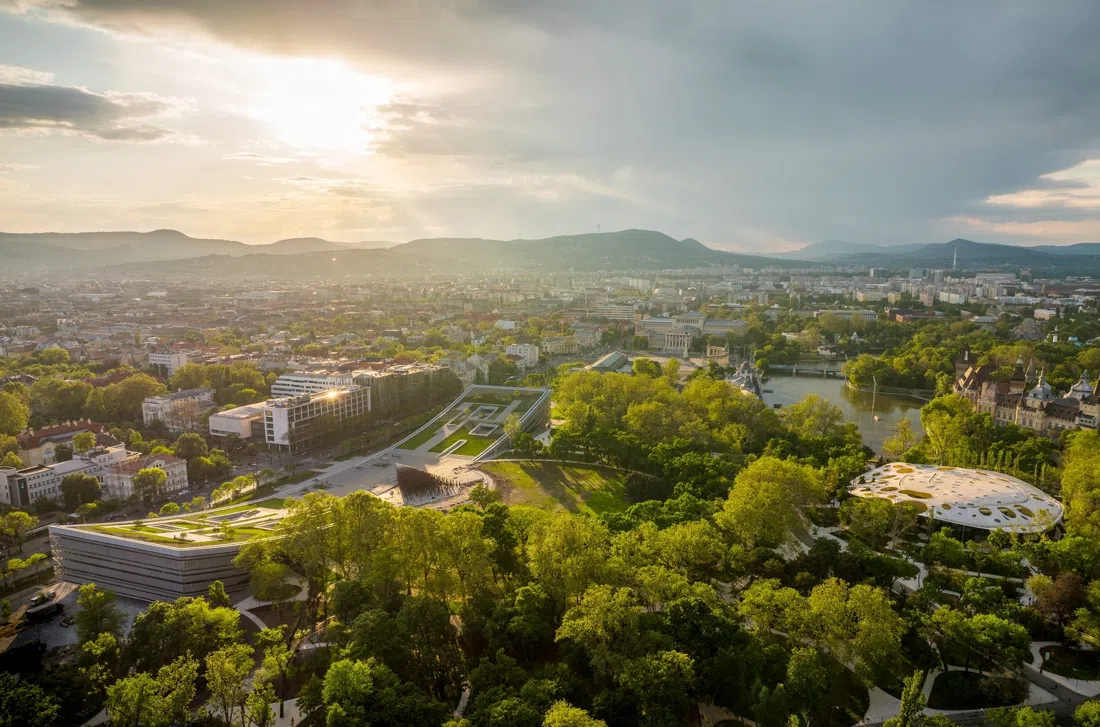
For contrast, the Hungarian House of Music (Magyar Zene Háza) in City Park, District XIV, is the strongest audio-led museum in the city, with a headphone-driven permanent exhibition using a positional sound system and a Sound Dome running 360-degree programmes, for roughly 3,000 to 4,500 HUF depending on the exhibition. The Hospital in the Rock Nuclear Bunker Museum (Sziklakórház), under Castle Hill in District I, goes the other way and has no audio guide at all: entry is by compulsory live guide only, 60 minutes, €30 for an adult paid in forints, with no photography, no under-sixes and a constant 15 to 18°C. All three are underground, and each tells you what happened in a different way.
Tickets, the cash desk and the queue
There is no online ticketing. You buy at the desk inside the door, on the day, and the cash desk shuts at 17:30, which in practice sets the last sensible entry. A full adult ticket is 4,000 HUF and a reduced ticket 2,000 HUF (about €10 and €5). Groups from 20 people pay 3,000 HUF each, or 1,500 HUF reduced. An English-language guided tour for a group costs 20,000 HUF, takes a minimum of 10 and a maximum of 30 people, and has to be booked at least ten days in advance by telephone on +36 1 374-2662, so it is not something you can arrange on the morning.
Because nothing can be bought ahead, the only queue strategy is arrival time. The doors open at 10:00; on a weekday the first hour is calm and the line rarely leaves the lobby. Weekend middays and wet afternoons push it onto the pavement, and with no timed entry there is no way to jump it. If you would rather have the museum built into a wider half-day with a driver and a guide, bookable guided tours covering this part of the city are listed alongside this article rather than in it. They run seven days a week and have collected 1,648 traveller reviews between them; the top-rated option is a private car tour starting from 263 USD per person, a different proposition entirely from a 4,000 HUF door ticket.
Check the door before you plan a morning around it. The museum closed on 15 September 2026 while the culture ministry reviewed the exhibition and dismissed the founding director, Mária Schmidt. A reopening was announced for 22 September at 10:00, with press reports of a free first week. Confirm it is open on the day, and expect the framing of the exhibition to remain a live argument in Hungary for some time.
Rules, access and who should think twice
Photography is banned throughout the galleries, without exception, and staff enforce it. That is not a hardship. It takes the phone out of the room and the exhibition is better for it, but do not turn up planning to shoot anything.
The museum closes on Mondays. The route involves moving between floors and a long, narrow cellar with low doorways, so if steps or confined spaces are a problem, ask at the desk before you buy. There is no minimum age, but the cellar and the execution testimony are not suitable for young children, and roughly twelve upwards is a fair line. Couples and solo visitors get the most out of it. Large groups tend to bunch at the sheet racks, which is why the group rate and the advance-booked guided tour exist.
How long it takes and whether it is worth it
Ninety minutes is the floor. Two hours is normal. If you read every English sheet you will be inside for two and a half, and it is not a museum to rush the end of, because the end is the cellar. Do not stack anything time-critical immediately afterwards.
The answer is yes, with conditions. It is the most affecting museum in Budapest and the best use of 4,000 HUF in the city if you want to understand the twentieth century here rather than just look at it. It is also a curated argument with a strong political voice, written by particular people for particular reasons, and the 2026 ministry review makes that plain rather than hiding it. Go, take it seriously, and treat it as one account among several rather than the last word. It suits anyone with an interest in modern European history, and it does not suit anyone looking for a light hour between lunch and a bath house.
Best time to go
Tuesday to Friday, arriving at opening, is the best combination in the week. The first hour is the quietest, the cellar is close to empty, and you are back out on Andrássy before noon with the day intact. The second-best slot is around 15:00 on a weekday, once the morning coach groups have cleared and before the desk starts winding down at 17:30. Avoid arriving after 16:30 in any season, because the cellar deserves more time than you will have.
Weekends are busiest, and so is any wet afternoon, when everyone in the city is indoors at once. Mondays it is shut, which is the day to give to Memento Park in District XXII or to the free 8F Gallery at the photography centre on Nagymező utca, the only part of that building open on a Monday. In winter, an early visit also buys you daylight for the walk up the avenue afterwards, which is worth more than it sounds when the light goes at four.
Where the same history continues
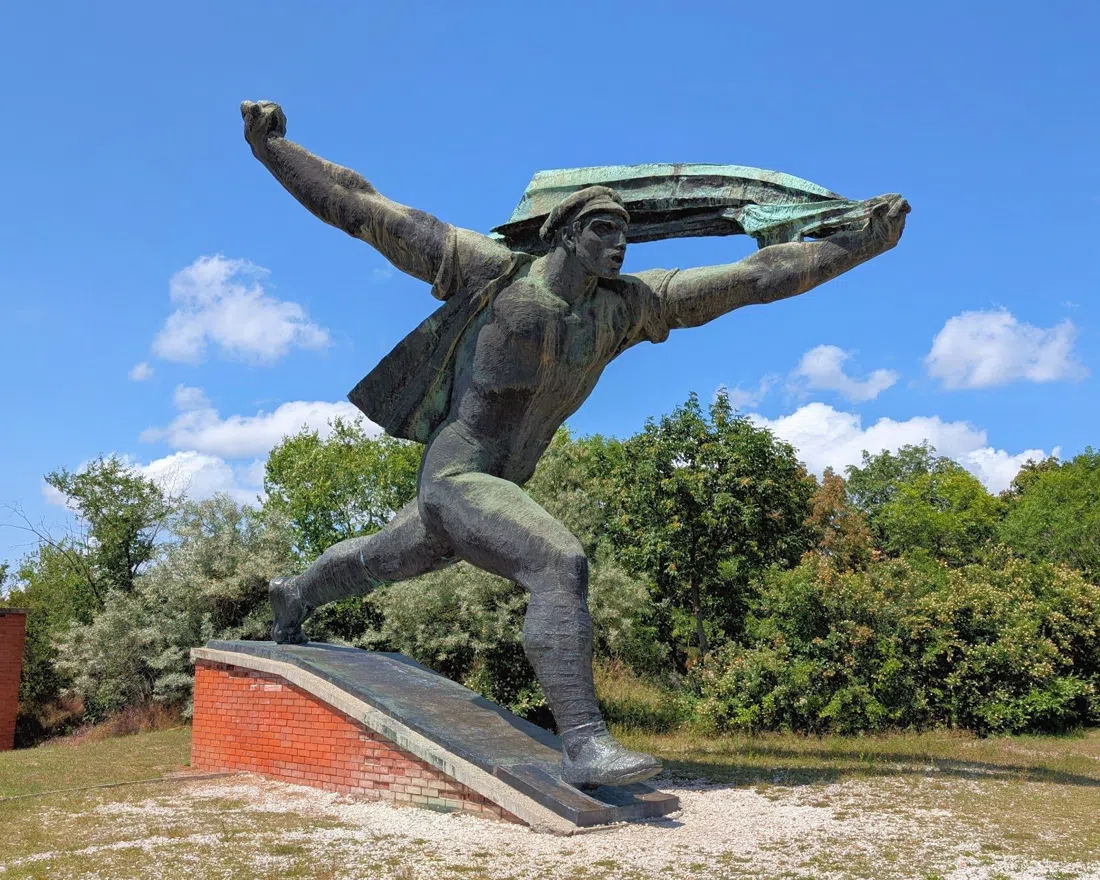
Memento Park, out in District XXII on the southern edge of the city, is the natural second half of a communism day: every statue the regime put up in public, exiled to a field. Adult entry is 3,000 HUF, students 1,800 HUF, under-fourteens 1,200 HUF, free with a Budapest Card, and group discounts and guided tours are arranged through [email protected]. Hours are 10:00 to 18:00 from May to October and 10:00 to 16:00 from November to April, and the journey out means budgeting half a day.
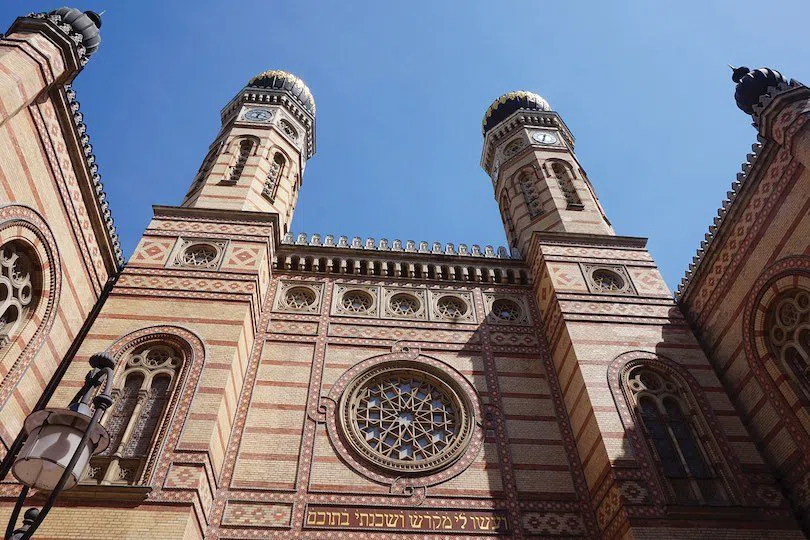
The Dohány Street Synagogue and the Hungarian Jewish Museum, ten minutes away in District VII, tells the 1944 and 1945 half of the story from the other side. One ticket of roughly 8,500 to 9,000 HUF covers the synagogue, the museum, the ghetto cellar exhibition, the Wallenberg Memorial Park and the graveyard, with a guided tour included in several languages. Modest dress is required and men cover their heads, with a kippah provided at the door. Hours move with the season and last entry is an hour before closing.
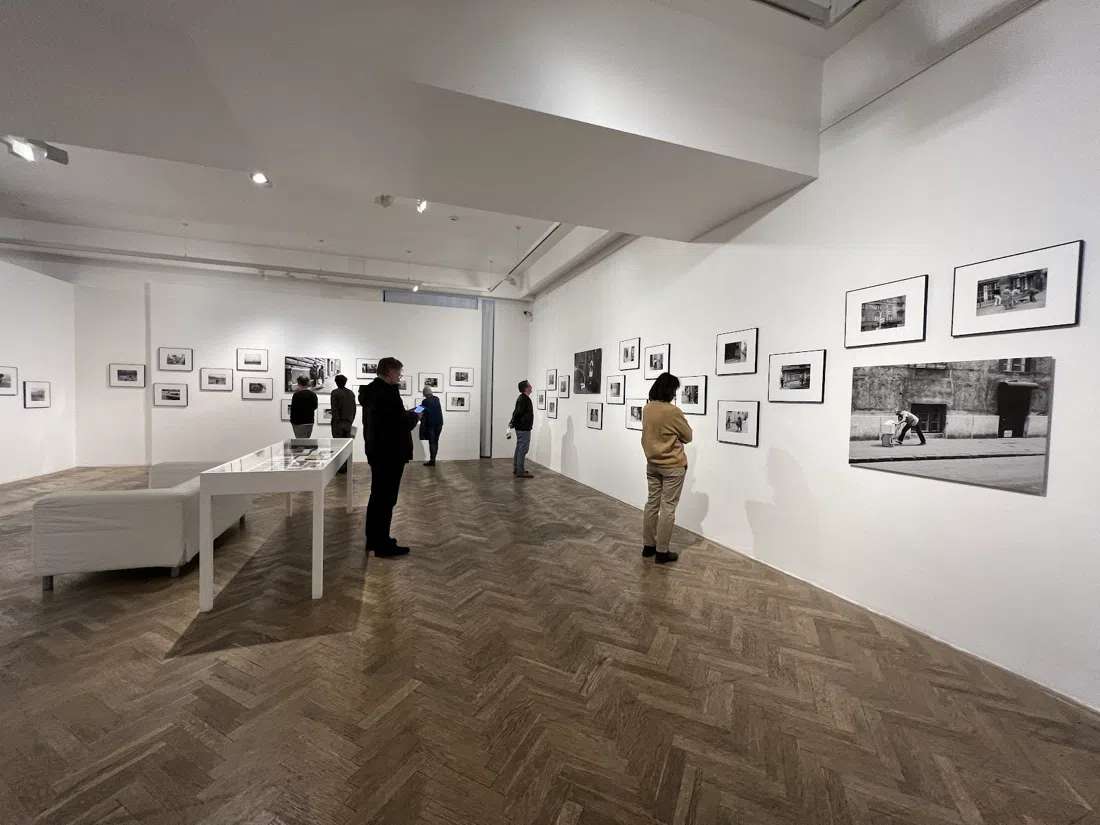
Closer to hand, the Robert Capa Contemporary Photography Center on Nagymező utca in District VI holds permanent Capa and André Kertész collections plus a rolling programme; the 44th Hungarian Press Photo Exhibition runs there from 16 September to 8 November 2026. Entry is around 2,000 to 3,000 HUF, groups by arrangement on +36 1 413 1310, and the photojournalism sits naturally beside what you have just seen.
The rest of Andrássy út
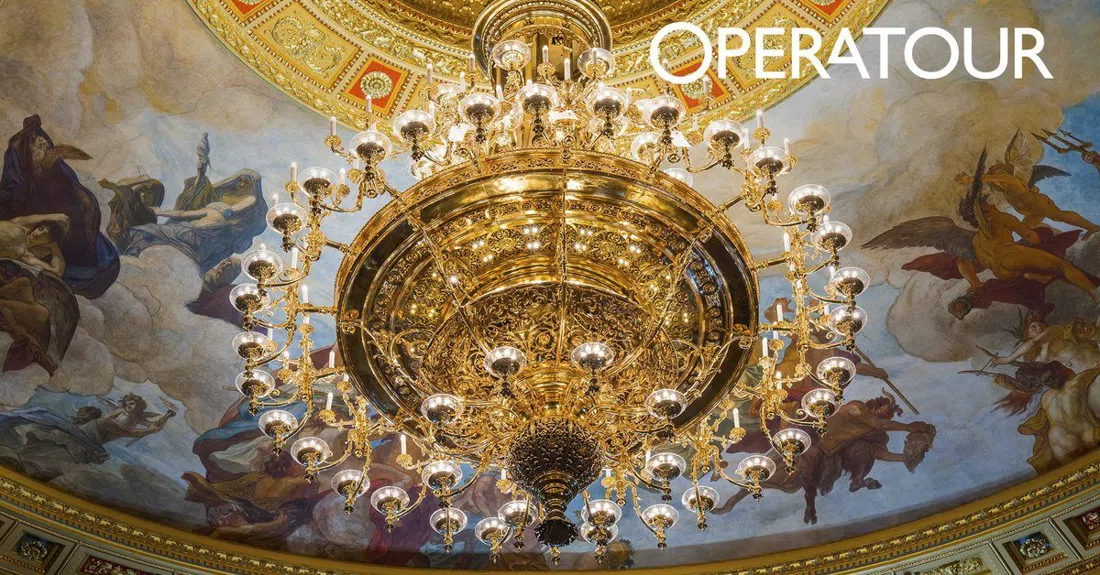
The avenue is the lighter half of the day and all of it is within a walk. The Hungarian State Opera House, fifteen minutes back down Andrássy in District VI, runs a 60-minute building tour that ends with costumed soloists singing on the staircase landing. English departures go daily at 13:30, 15:00 and 16:30, the OperaTour is 12,000 HUF and the Hungarian-language version 6,400 HUF, with a maximum of 30 per tour. Private morning tours between 09:00 and 13:00 need fifteen tickets minimum at 4,000 to 7,000 HUF each. Performance seats run roughly 6,000 to 35,900 HUF.
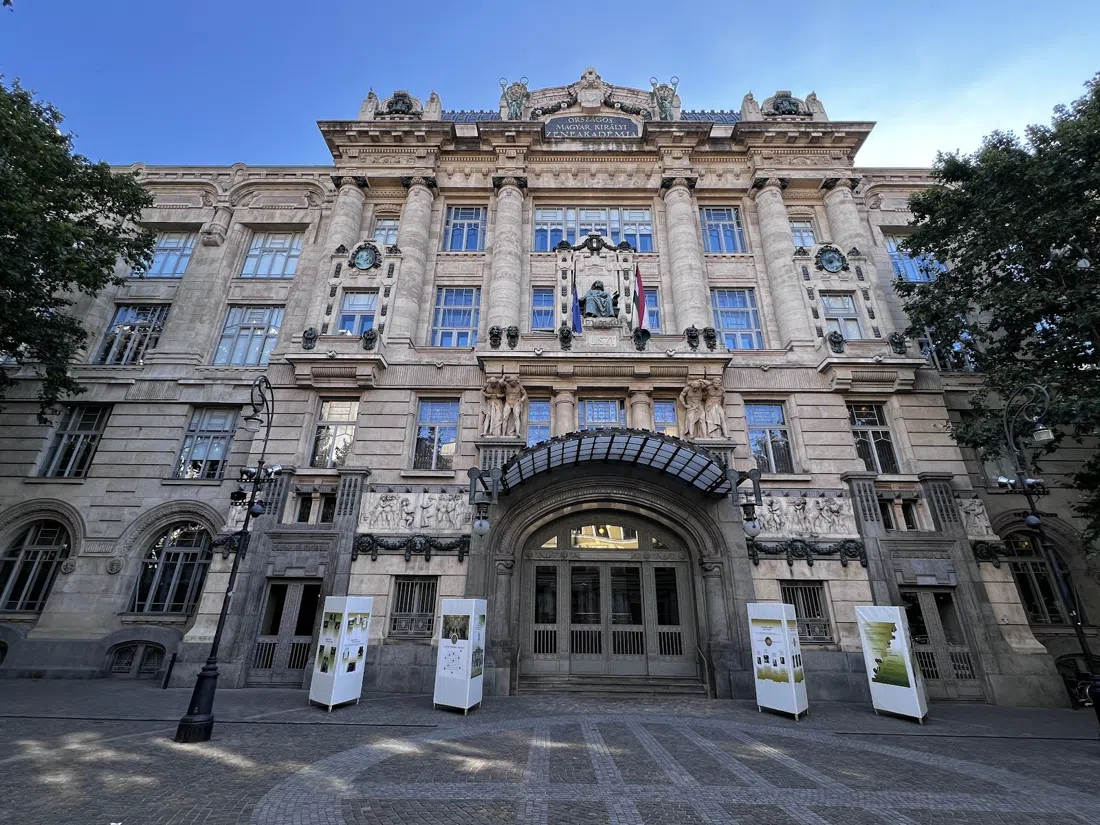
Five minutes the other way, the Liszt Ferenc Academy of Music (Zeneakadémia) on Liszt Ferenc tér gives you a 50-minute tour of the Grand Hall and the Solti Chamber Hall that closes with a student playing live. A guaranteed individual tour is 6,700 HUF in a foreign language or 4,100 HUF in Hungarian; groups of 9 to 36 pay 2,900 or 5,500 HUF per head and book ahead at [email protected], with German, French, Italian, Spanish and Russian available alongside English. A mini concert adds 1,200 HUF.
Two minutes off the avenue, Mai Manó House — Hungarian House of Photography on Nagymező utca was built in 1894 as a court photographer's own house and studio and still shows work in it. Tickets are modest, low four figures in forints, at the door or online, and it opens Tuesday to Sunday from 12:00 to 19:00. The staircases are tight, so it suits a couple rather than a party; call +36 70 709 7578 for anything larger.
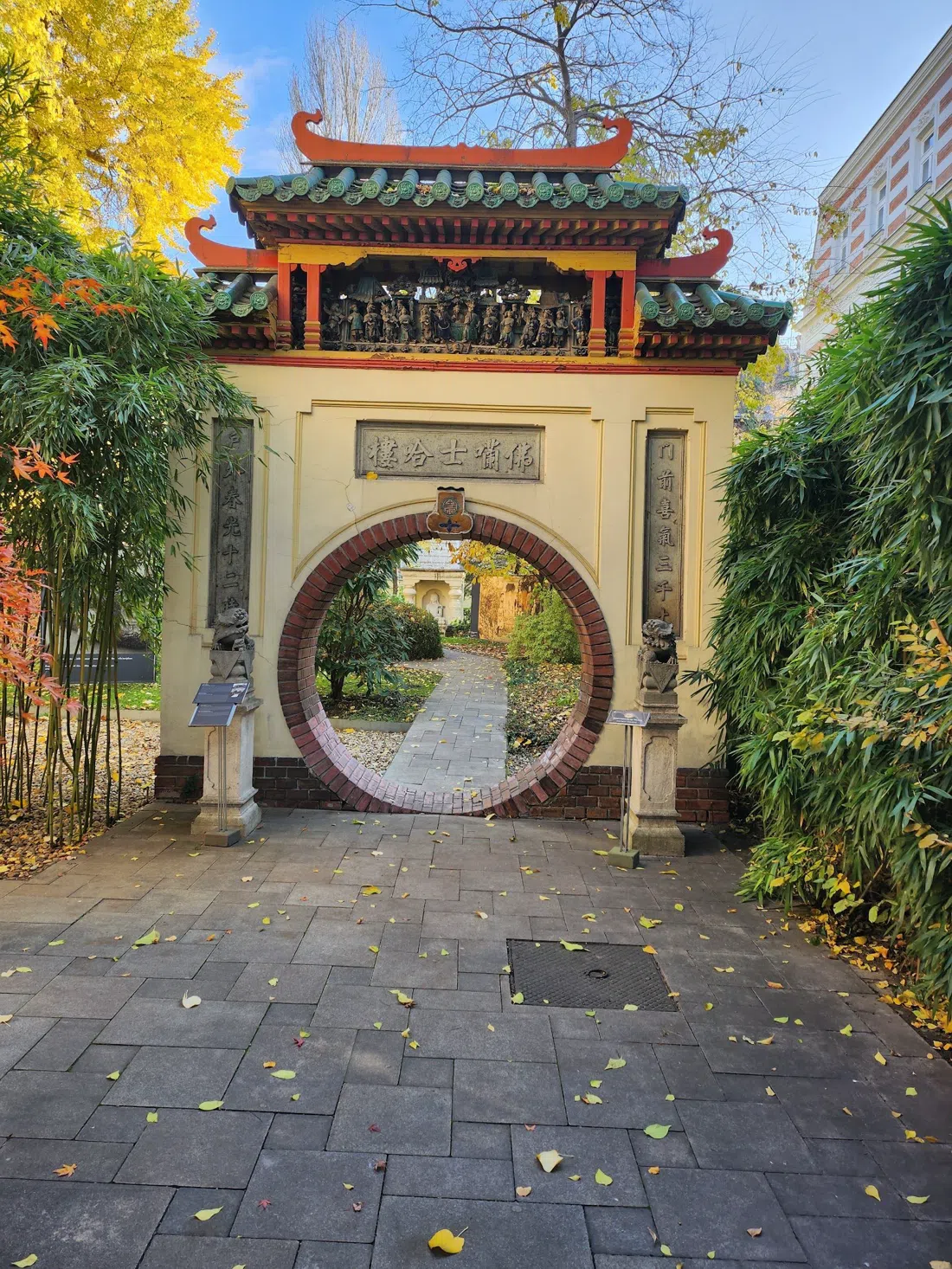
Three stops further up the line, the Ferenc Hopp Museum of Asiatic Arts is a merchant's Asian collection in his own villa, almost empty on a weekday, 1,400 HUF full and half price for students and seniors, with the garden open Wednesday to Sunday 10:00 to 16:00 and the galleries Tuesday to Sunday 10:00 to 18:00. Groups should email ahead. At the top of the avenue, Heroes' Square (Hősök tere) is free, open and the standard assembly point for walking groups, with one caveat: the Archangel Gabriel statue was lifted off the central column in 2024 for restoration and had not returned as of September 2026, with reinstatement possible later in the year.
Coffee, a meal and the history in print
Művész Kávéház, ten minutes down Andrássy in District VI, is the reliable sit-down after the cellar, open every day from 09:00 to 20:00, with coffee and cake around 3,000 to 5,000 HUF. It takes groups and hosts readings; reserve on +36 70 333-2116. It matters because the obvious alternative next door to the museum, Lukács Cukrászda at Andrássy út 70, closed permanently and has not reopened.
Két Szerecsen Bisztró és Kávéház on Nagymező utca, diagonally opposite the Liszt Academy, runs 08:30 to 23:30 on weekdays and from 09:00 at weekends, so it covers breakfast before a 10:00 opening or a real meal afterwards. Mains are roughly 2,700 to 6,400 HUF and the weekday lunch menu is the value pick. Book online or on +36 1 343 1984, though inside 24 hours it is better to call.
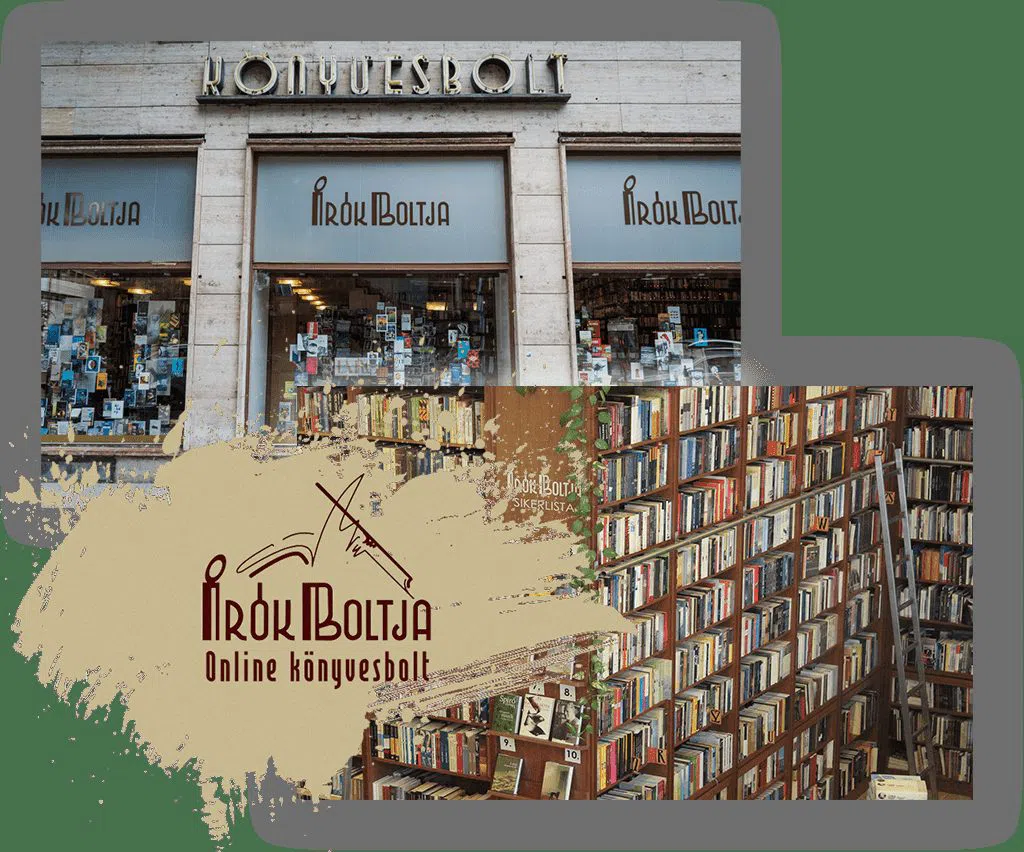
Írók Boltja (Writers' Bookshop), a hundred metres from the museum on Andrássy út, is where to buy the history in print. It has been a literary institution since the 1960s, occupies a former café and keeps an English-language section upstairs, with paperbacks from around 3,000 HUF. It is small, fine for a few people and hopeless for a coach party, and it closes on Sundays.
Practical notes
Vörösmarty utca station on the Millennium Underground (M1), District VI, surfaces within metres of the museum door, and the line is worth the fare on its own: continental Europe's first underground, running since 1896, UNESCO-listed along with the avenue above it, and 130 years of service in 2026. A single ticket is about 450 HUF and a 24-hour travelcard about 2,500 HUF. Buy before you board, because the platforms are narrow and a group will fill one.
Carry forints. Card payment is normal across the city, but the museum sells only at its own desk with no online option, so cash is the sensible fallback, and the desk shuts at 17:30 regardless of how the queue looks. Budget roughly 6,000 HUF for the museum with the audio guide, 3,000 to 5,000 HUF for coffee and cake, and 2,700 to 6,400 HUF for a main course, which puts a full day on the avenue comfortably under 20,000 HUF per person before any tour or opera seat.
For timing, give the museum a clean two hours with nothing chasing it, keep Monday for the open-air and free options, and stay within walking distance if you can. A Budapest hotel search across District VI puts you on or beside Andrássy út, which turns all of the above into a walk rather than a schedule. For the rest of the city, the Budapest guide covers the districts, the baths and the river.