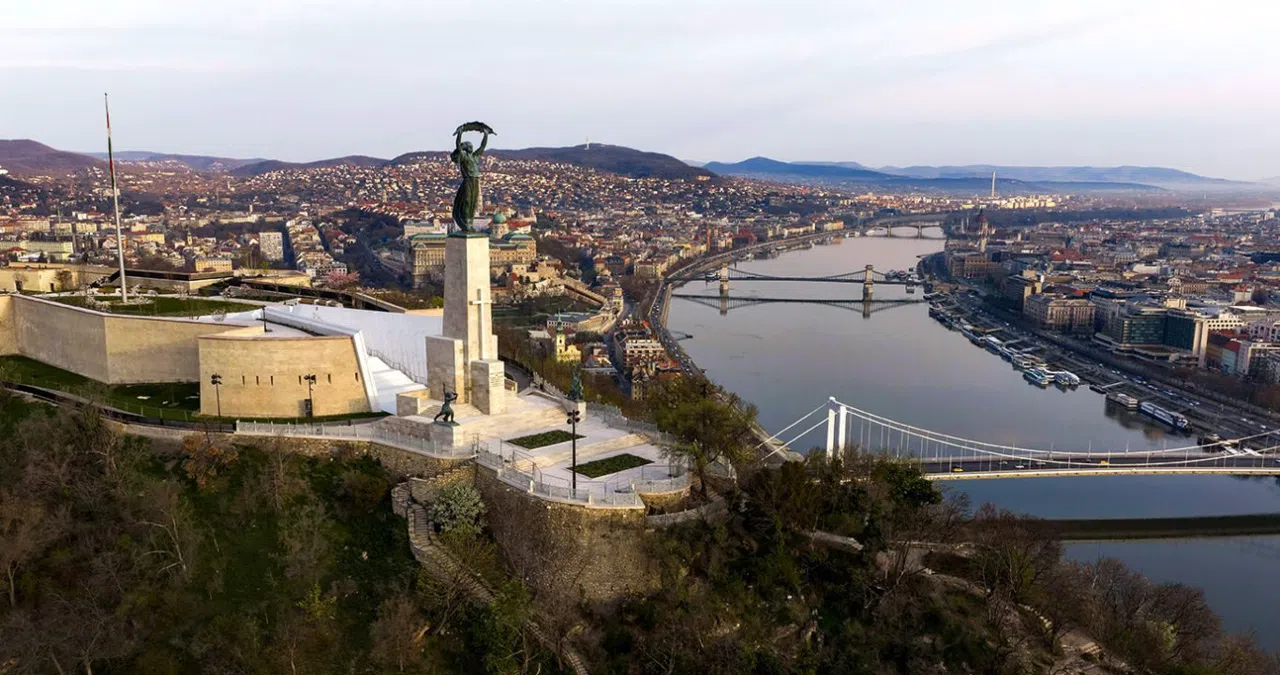

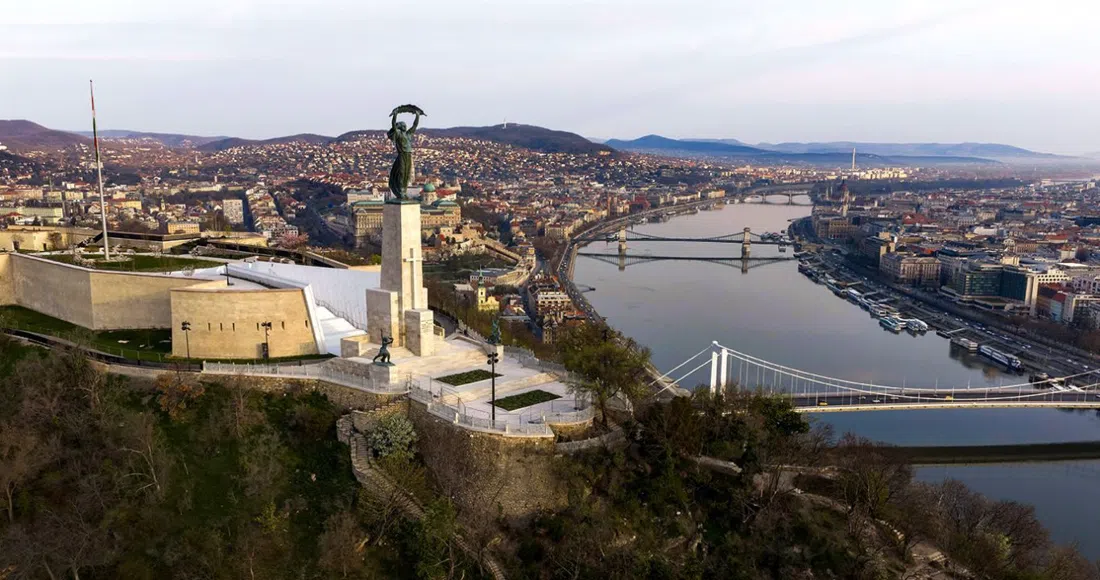
Gellért Hill goes up steeply and directly from the Danube, a grey limestone bluff with a fortress on the crown that spent eleven years behind hoardings. It reopened in the spring of 2026 after a four-year rebuild, and most of what people climb for now costs nothing. The park inside the walls, the rampart walkways and the plaza under the Liberty Statue are free to walk; one wing of the fortress has a ticket desk, and that is the only part of the day you need to book.
What reopened on the summit and what is ticketed
Citadella (Gellért Hill summit) is a mid-nineteenth-century fortress that sat closed for eleven years while it was rebuilt. The reopening changed what a visit costs, and it is worth spelling out, because almost every older guide online still describes the old arrangement. The 6,000 square metres of inner park, the rampart walkways, the promenade and the Liberty Statue plaza are free-flow and free of charge. You can walk in, walk the walls, take the view in every direction and leave without paying anything.
What is ticketed is the western rondella: the Bastion of Liberty exhibition, the Roof Garden 360 and the Round Bastion Terrace, sold as one combined admission. It costs 4,900 HUF for an adult and 2,450 HUF for students aged 6 to 26 and seniors aged 62 to 70. Family tickets run from 7,350 to 9,800 HUF depending on the make-up of the party. Under-6s, visitors over 70 and disabled visitors with one companion get in free, but they still need a registration ticket rather than simply walking up.
The catch is the timed entry. The exhibition runs on 20-minute slots, and the operator does not currently take group bookings because of capacity limits. A party of ten has to book ten individual slots online, which is fiddly and much easier done the night before than on the path up.
The walk up from the Pest side
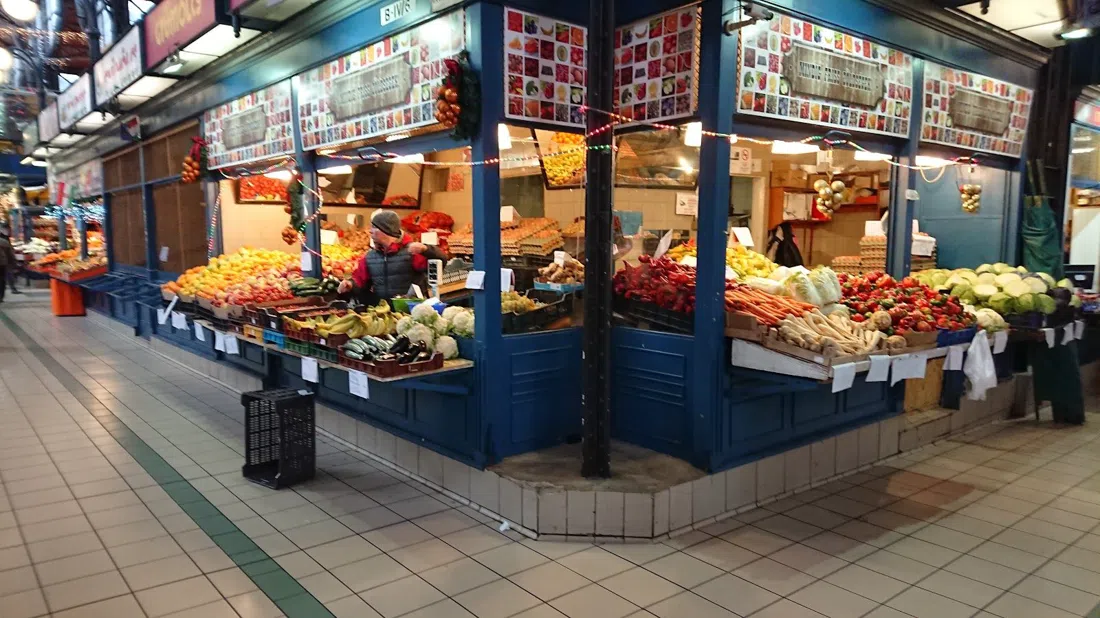
The classic approach starts across the river. Great Market Hall (Fővám tér, Pest) is free to enter, copes easily with groups and sells paprika alongside most other groceries, with a food gallery upstairs that jams solid around midday. Hours are early-to-evening on weekdays and shorter on Saturday; Sunday trading is minimal, so treat a Sunday visit as a write-off and plan the climb alone.
From the hall you cross Liberty Bridge (Fővám tér to Szent Gellért tér), a public bridge open to pedestrians on both sides at all hours. It is also the best place to photograph the hill itself, with the rock face and the statue stacked above the green ironwork.

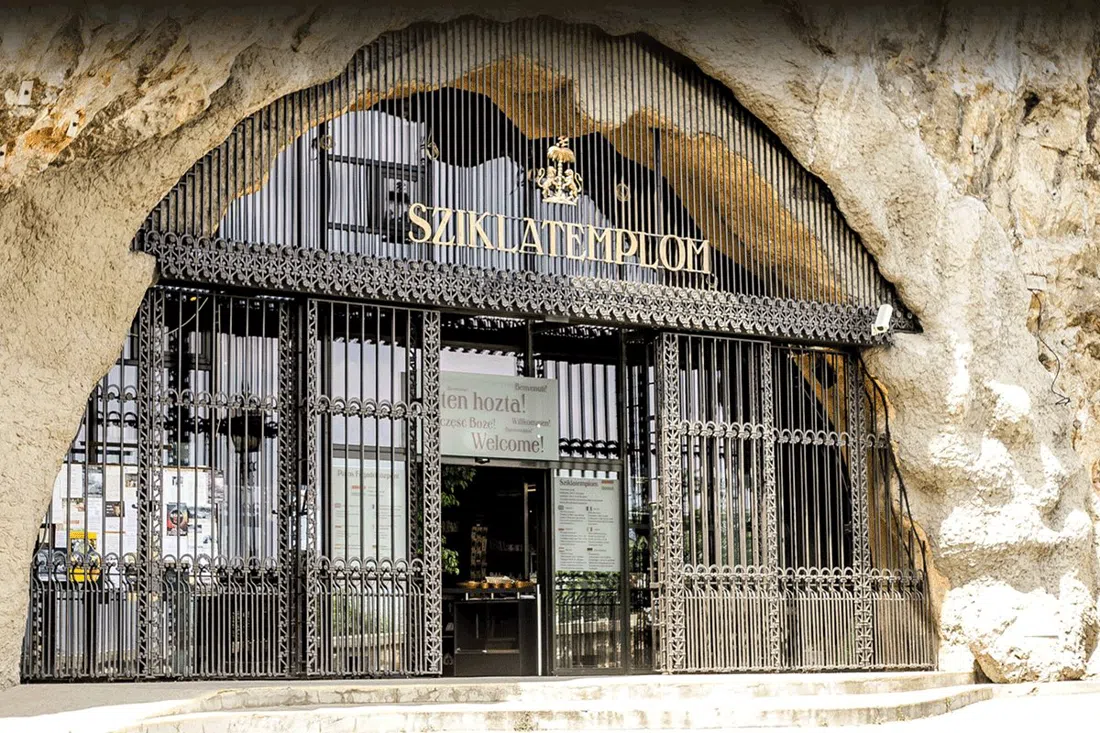
You land at Szent Gellért tér with the hill directly ahead. Gellért Hill Cave Church (Sziklatemplom) (Szent Gellért tér, at the foot of the hill) is built into the rock a short walk up from the square and takes visitors continuously Monday to Saturday. Entry is a low tourist fee that includes an audio guide; confirm the current rate at the desk rather than trusting a figure online. It closes all day Sunday, and the daily 5pm Mass closes it to tourists entirely, and both catch people out. It is a working church, not a museum, so a quiet group is welcome and a loud one is not.
From there the path winds up through the trees. If you have children with you, route the climb past Gellért Hill Slide Park (Gellért-hegyi Csúszdapark) (bath-side slope) on the way up rather than saving it for later. It is a free public playground, always open, rebuilt in 2017 on a 1967 layout, and it is the single best reason to bring children up this hill. The bath-side path is a genuine hike with small legs, so the slides work better as the reward than as a detour.
Allow 25 to 40 minutes from Szent Gellért tér to the summit on foot, more with stops. The path is paved and well-worn but it is a continuous climb with steps in places.
Inside the rondella
The ticketed half is compact and it is not a long museum. The Bastion of Liberty exhibition occupies the rebuilt western rondella and carries the fortress's own story. The two roof levels, Roof Garden 360 and the Round Bastion Terrace, are the reason the ticket has any real value: they put you above the rampart line, which is the only meaningful difference between the paid view and the free one.
Whether that difference is worth 4,900 HUF depends on what you want. If you are after the panorama, the free walkways deliver it. If you want height over the crowd, a place to sit and the fortress interpreted properly, the ticket earns its keep. Plan on 30 to 45 minutes inside once you are through, and remember the entry itself is a 20-minute slot, so arriving ten minutes early is sensible and arriving twenty minutes late means arguing at a desk.
The statue and where to stand
Liberty Statue (Szabadság-szobor) (Gellért Hill summit) is an open plaza with no ticket and no door policy, restored as part of the same works that reopened the fortress. It is now reachable on a level, barrier-free plaza, which matters if anyone in your party is unsteady on stone steps.
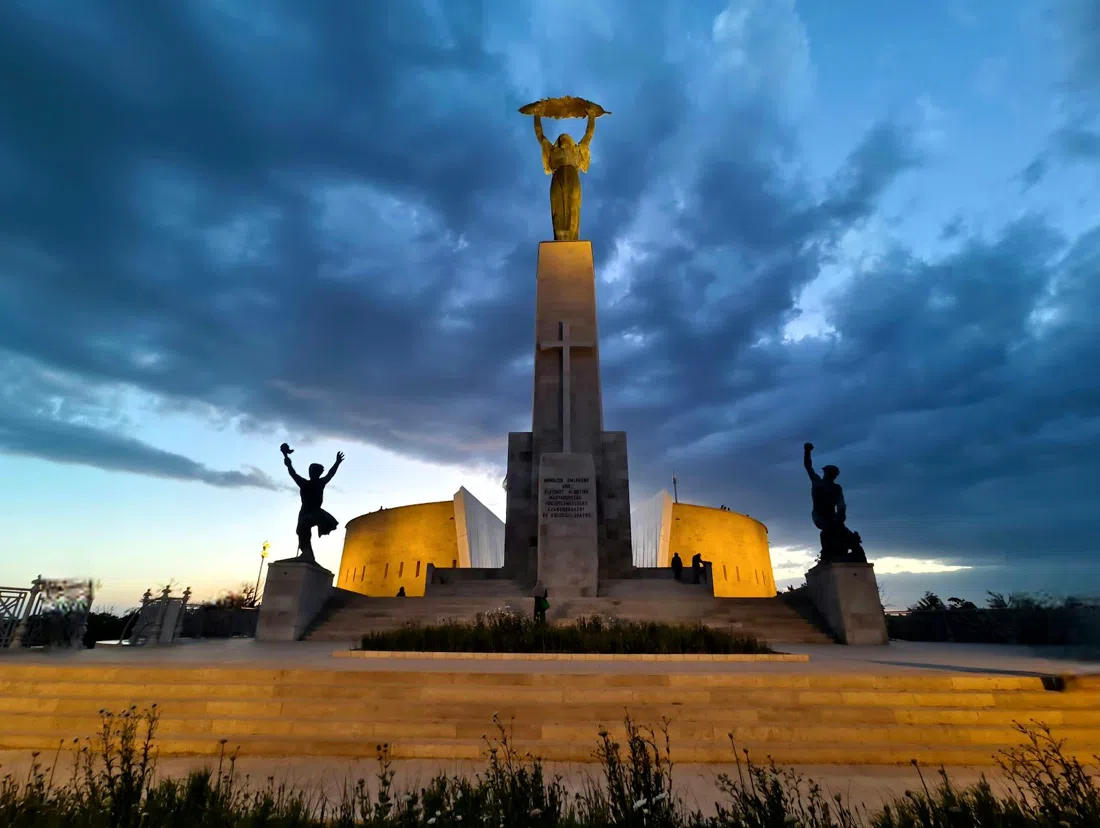
This is the shot most people actually came up the hill for, and there is a right place to take it. Stand on the north side so the city sits behind the figure rather than open sky. The only real constraint is crowding: the plinth apron fills at sunset, and a large group standing shoulder to shoulder there simply blocks everyone else. Spread out.
Two viewpoints that take the overflow
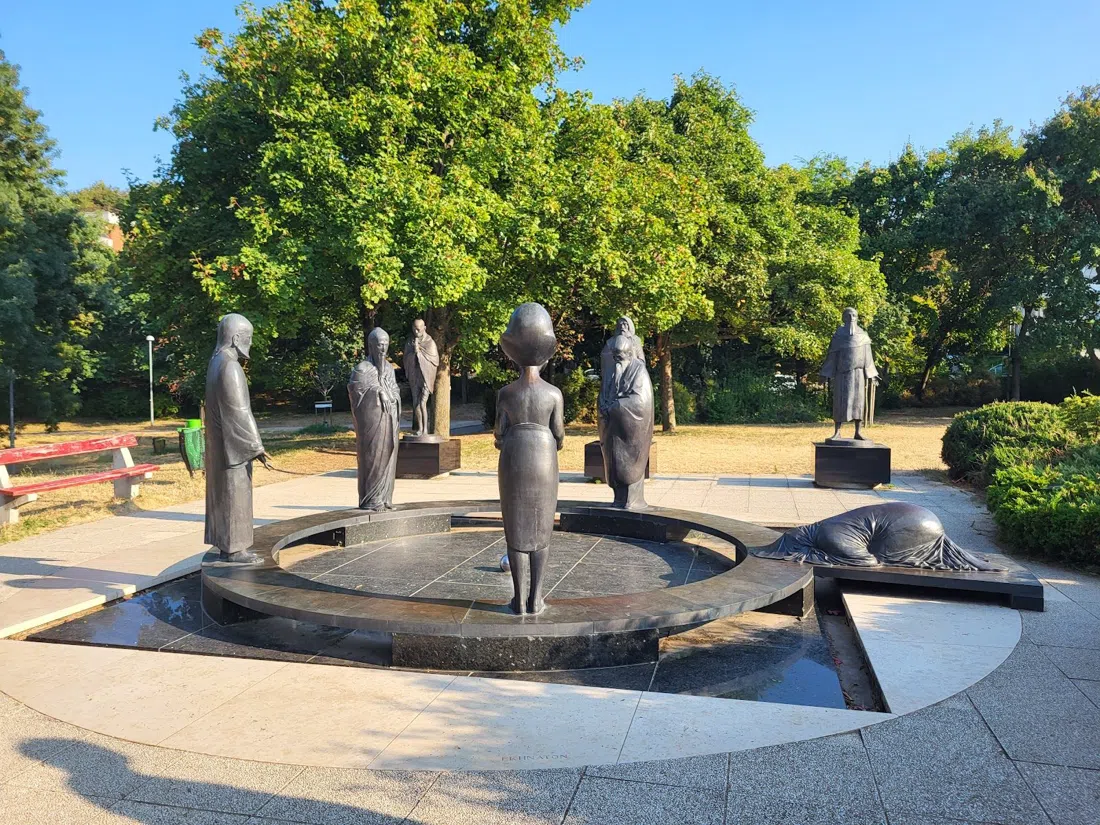
Garden of Philosophy (Filozófusok kertje) (western slope of Gellért Hill) is the best-value detour on the whole hill. Nándor Wagner's 2001 sculpture group stands on a quiet terrace with the Parliament and the Chain Bridge lined up, and it is consistently emptier than the summit. It is unenclosed, free and always open. Small groups fit comfortably; a coach party will swamp the terrace and ruin the point of coming.
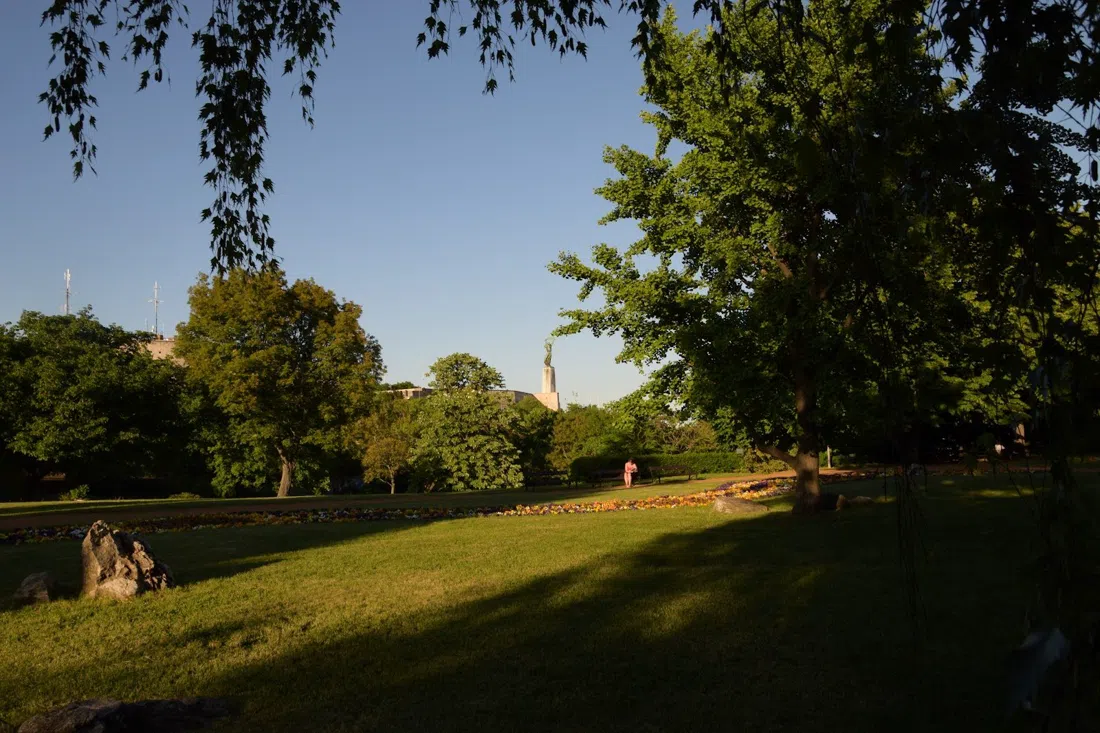
Jubilee Park (Gellért-hegy Jubileumi park) (southern Gellért Hill) is the overlooked half of the hill, an open public park, 24 hours, free, with no restrictions of any kind. When the summit terraces are shoulder to shoulder it absorbs the overflow, and walking down through it lands you close to the bus 27 route back into town.
How long the whole thing takes
The free part of the summit (park, ramparts, promenade, statue plaza) is a comfortable 45 minutes to an hour. Add 45 minutes for the ticketed exhibition and terraces including the slot wait. Add the climb itself, 25 to 40 minutes each way, and a Citadella visit on its own is a solid half-morning.
Stretch it into a full day by book-ending it: the market hall and the bridge before the climb, the Garden of Philosophy on the way round, and the descent to the north foot for a bath or a late lunch. That is roughly six hours at an unhurried pace.
Best time to go
Go early in the morning. The summit is open air and free-flow, so it has no opening time to wait for, and between roughly seven and nine the walkways are close to empty and the light falls along the river rather than into the lens. Sunset is the opposite: the view is at its best and the plinth apron is at its worst for space.
Weekdays beat weekends by a wide margin, and Sunday is the weakest day of the week for a full itinerary, since the cave church is closed all day and the market hall barely trades. If you want the church and the market in the same day, go Monday to Friday, or Saturday with the market done early.
Seasonally, the climb is simply easier out of high summer; the path is exposed in stretches and there is little shade near the top. Winter afternoons give you the city lights coming on well before dinner time, which suits anyone who does not want to be on a dark path at 9pm. If you are pairing the hill with the thermal baths, note that some zones at Rudas are affected by works into autumn 2026.
Tickets, queues and whether to book ahead
For the free areas there is nothing to book and nothing to queue for. For the exhibition, book online. The 20-minute slot system means the desk can genuinely be sold out for the next hour on a busy afternoon while slots sit open at nine the following morning, and since the operator does not take group bookings, any party larger than a couple should sort the tickets out before they set off.
Guided options exist for the hill and the wider riverfront if you would rather be walked through it, and they are attached to this page as a separate card rather than described here. For scale: those bookable experiences carry 15,733 traveller reviews between them, the top-rated one holds 4.7 out of 5 from 7,569 reviews, and it runs seven days a week. Prices on that card start from 57 USD per person, which is the honest comparison point against a 4,900 HUF door ticket. A guide is buying you commentary and logistics, not access, because the summit itself is free.
Access and who will struggle
The statue plaza is level and barrier-free once you are up there. Getting up there is the hard part: every walking route from the river is a sustained climb, and the bath-side path in particular is steep. Bus 27 runs up the hill and is the sensible option for anyone who cannot manage the ascent. It stops at Busuló Juhász, a short level walk from the fortress gates.
For the descent, Várkert Bazár (Castle Garden Bazaar) (Buda riverside, below the castle) does the work for you. Its escalator and wheelchair-accessible lift are free, as are the gardens and terraces, and they carry you on towards Buda Castle without another climb. Only specific exhibitions and concerts are ticketed, and the neo-Renaissance garden stays open late.
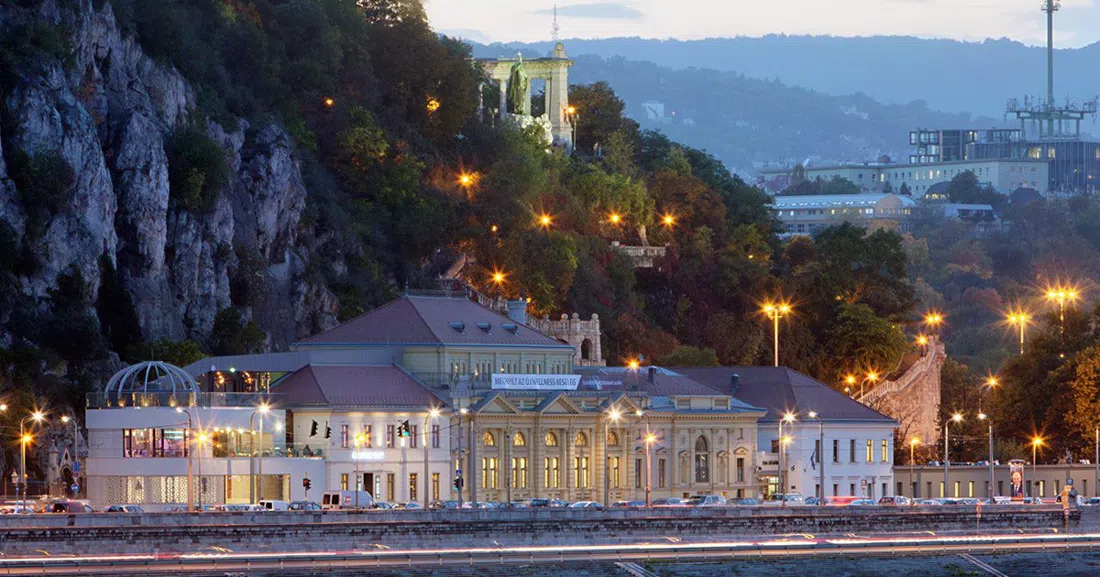
Rudas Thermal Bath (northern foot of Gellért Hill) is the usual pairing with the walk, and it has the firmest rules of anything here. It is open daily and handles groups easily, but there are strictly no under-14s, and parts of the Turkish section run men-only or women-only on set days, so check before committing a mixed party. It is not wheelchair accessible. Tickets are 12,000 HUF on weekdays, 15,000 HUF Friday to Sunday and 16,000 HUF in holiday periods, with a Friday and Saturday night ticket at 15,000 HUF sold online only. The rooftop tub gives you the river panorama at eye level after you have had it from above, which is a better sequence than doing it the other way round.
Coming down the north side
The descent towards Tabán is gentler than the way up and lands you somewhere useful. Tabán Park (Tabán, north foot of the hill) is open, free and unrestricted, and it is the one green space near the hill that genuinely absorbs a large group. The cherry avenues make it the best-looking stretch of the walk in spring, and it links the hill directly to Várkert Bazár and the castle.
Aranyszarvas Étterem (Tabán) sits in the same pocket, between the Citadella descent and Várkert Bazár, and is Budapest's best-known game restaurant. Expect roughly 4,000 to 12,000 HUF a dish. It takes reservations and will handle groups by arrangement, but the dining room is small and historic, so book ahead rather than arriving mob-handed.
Eating on the hill itself
Busuló Juhász Étterem (Gellért Hill, at the bus 27 stop of the same name) has been on the hill since 1901 and is the only proper sit-down restaurant within walking distance of the fortress gates. It is contemporary Hungarian at the fine-dining end for this city, priced accordingly. The standard booking line takes reservations up to about 20 people; anything larger goes through its events department. It is also the most reliable landmark for finding the Citadella, since the bus stop carries its name.
Is it worth it
Yes, with one qualification. The climb and the free summit are worth anyone's morning: the view over the Danube, the bridges and the Parliament is the defining one in this city, and it now costs nothing to stand in. That part suits everybody, couples, families, solo walkers, and groups of any size, since the park and ramparts are free-flow.
The ticket is a narrower proposition. Buy it if you want the extra height of the roof terraces, if the weather is good enough to sit down up there, or if you want the fortress explained rather than guessed at. Skip it if you are short on time, travelling with a big party that would have to book individually anyway, or content with the view you have already got for free from the walkway.
Who it does not suit: anyone who cannot manage a sustained uphill walk and will not take bus 27, and families hoping to end the day in the thermal bath, since under-14s are not admitted there.
Practical notes
Transport. The M4 metro stops at both ends of Liberty Bridge: Fővám tér on the Pest side for the market hall, Szent Gellért tér on the Buda side for the climb. Trams run along both embankments. Bus 27 is the only way up the hill without walking; take it to the Busuló Juhász stop. Coming down, the free escalator and lift at Várkert Bazár save your knees and put you at the castle.
Money. Prices are in forint. Cards are accepted at the fortress ticket desk, the baths and restaurants; carry some cash for market stalls and the cave church desk. Do not plan on paying in another currency.
Timing. Go early on a weekday. Avoid Sunday if the cave church or the market matters to you. Book the exhibition slot online the night before, especially for more than two people.
Budget. A free day is entirely possible: bridge, church aside, slide park, summit park, ramparts, statue, Garden of Philosophy, Jubilee Park, Tabán, Várkert Bazár. Add 4,900 HUF for the fortress exhibition, 12,000 HUF for a weekday soak at Rudas, and 4,000 to 12,000 HUF a dish if you finish with dinner in Tabán.
For where to stay within walking distance of either foot of the hill, start with the Budapest hotel search; for the rest of the city around it, the Budapest guide covers the districts either side of the river.