The Budapest issue
Walking Budapest From Parliament to Fisherman's Bastion at Dusk
A ninety-minute route along the Danube, planned around the light, with the tram, the funicular and the free hour at the Bastion each timed to fit.

By Marek NovákNeighbourhoods, baths and the slow way round
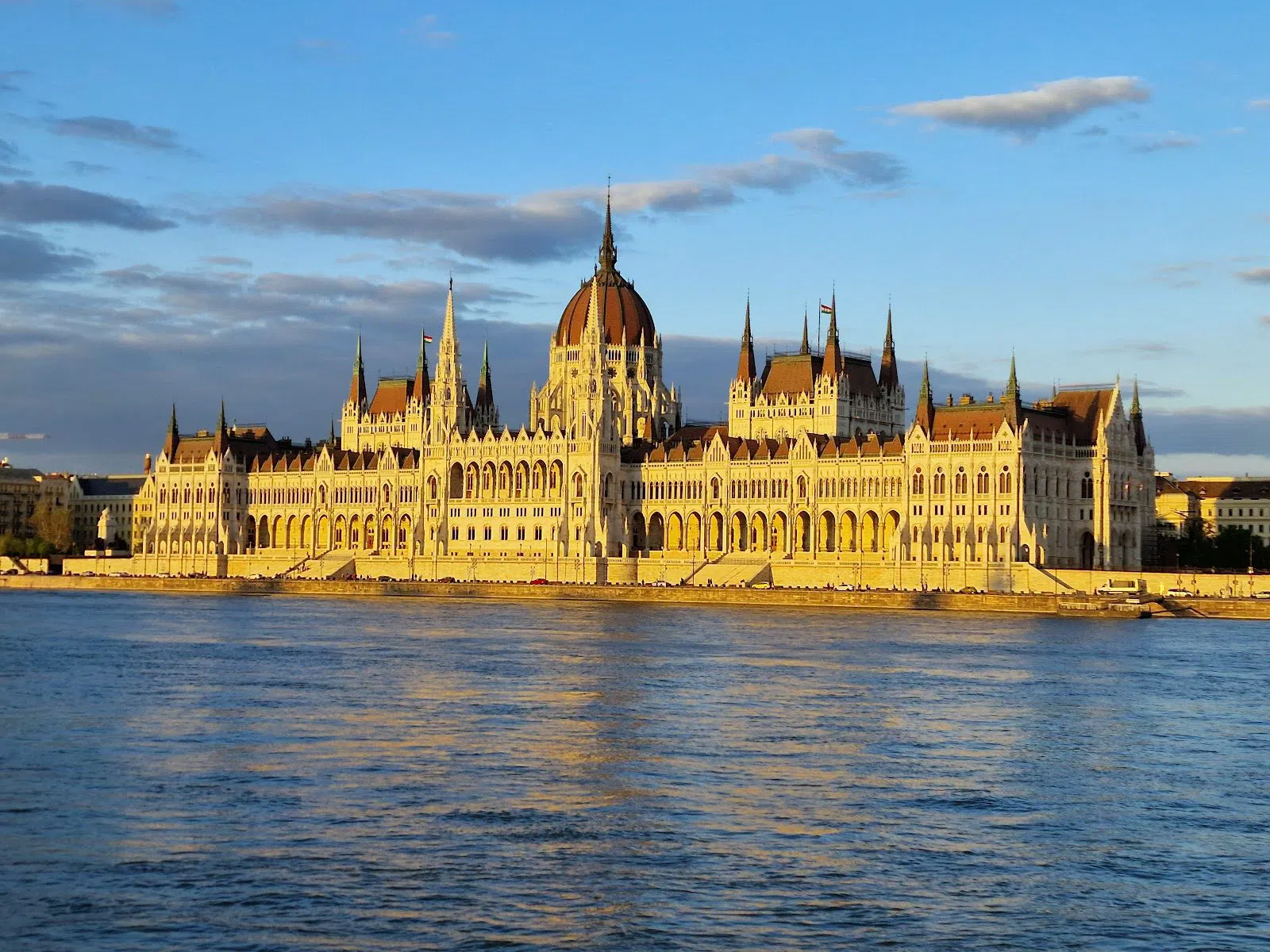
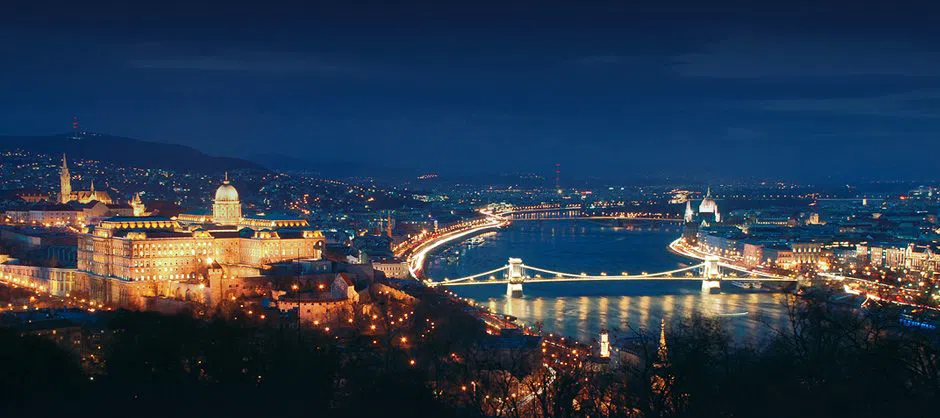
The Danube runs north to south through the middle of Budapest, and that one fact decides where you want to be standing at the end of the day. The sun drops behind the Buda hills and lands flat on the Pest bank, so the river front of Parliament burns while the castle opposite has already gone to silhouette. Forty minutes later the floodlights come up on the Buda side and the whole arrangement reverses. A walk that begins at Parliament and ends on Fisherman's Bastion follows that reversal rather than fighting it.
How the light falls on this stretch of river
Photograph Buda from Pest before the sun goes down, and be standing on Buda after it. The rest is logistics.
Sunset moves a long way across the year here. In late June the sun goes down around 20:45; by the end of September it is nearer 19:00; in December it has gone before 16:00. The last hour of daylight does its work on the Pest facades, and the thirty to forty minutes after sunset, when the sky still holds colour and the floodlights are already burning, do their work on the Buda ones. Between the two you have roughly ninety usable minutes, which is almost exactly how long this route takes at an unhurried pace with stops.
So start ninety minutes before sunset at Kossuth Lajos tér, and check the day's actual sunset time before you set out rather than trusting a general sense of "evening". In May, leaving at 18:30 and leaving at 19:30 give you two different walks.
Plan your Budapest trip
Live prices from our booking partners.
Free cancellation on many rooms. We may earn a commission when you book.
Parliament belongs to the outside of the day
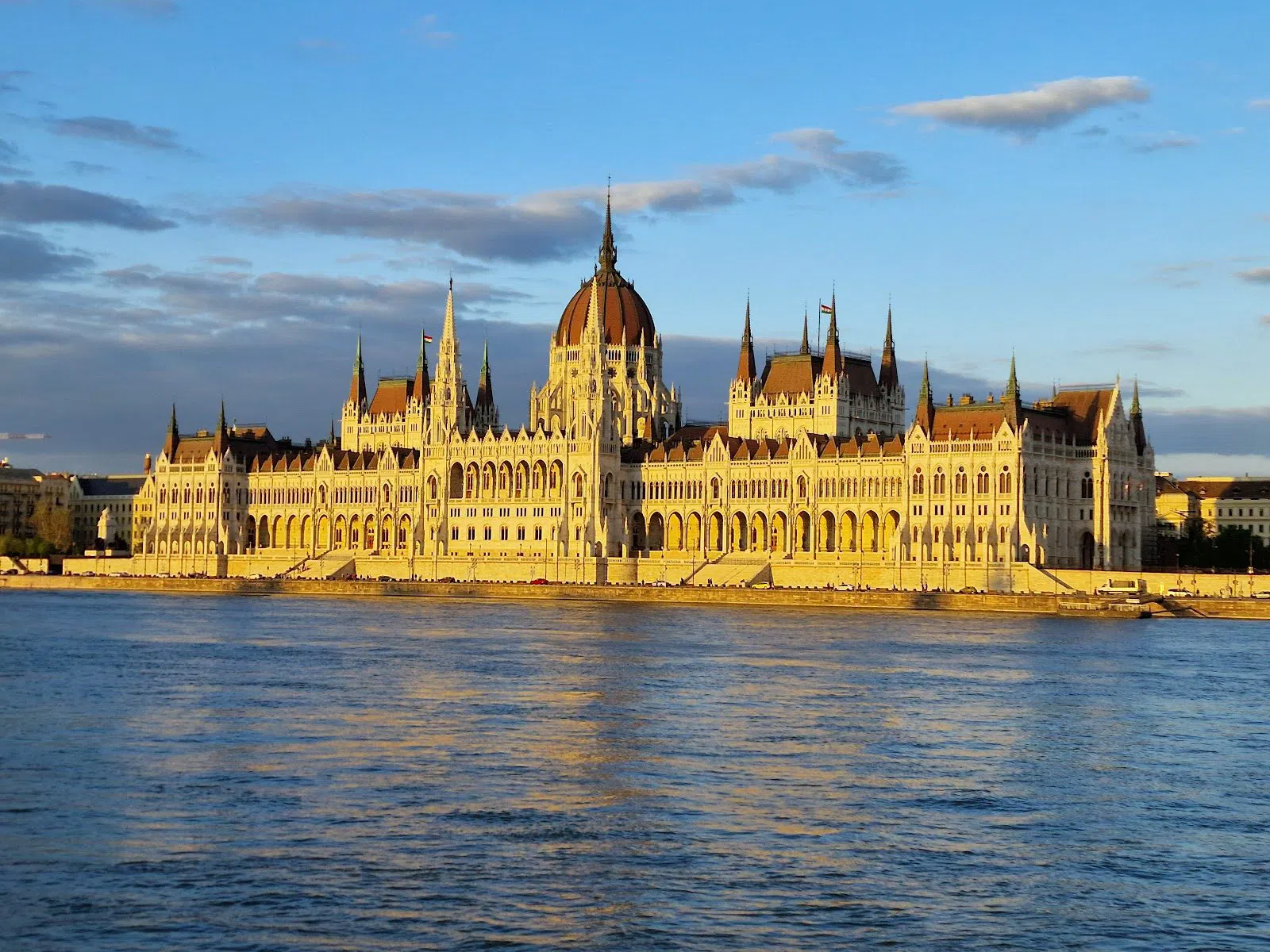
Hungarian Parliament Building (Országház), Kossuth Lajos tér, Lipótváros. Imre Steindl's parliament opened in 1902 and is still the largest building in Hungary, which is easier to feel from a hundred metres away than from the square in front of it.
Two practical things. You can only see the interior on a guided tour, in timed groups of about thirty, and tours sell out weeks ahead from April to October; book before you travel, and if you are travelling as a group, go through the Visitor Centre rather than buying singles. The tour runs 45 minutes and costs 4,000 HUF for EU citizens and 8,000 HUF for everyone else (roughly €10.50 and €21). Put it in the morning or early afternoon, because spending your best light indoors is a waste of it.
The second thing matters more for the walk. The great riverside facade faces west, so at sunset it takes the light full on, which means you do not take the photograph from the square. You take it from across the water on the Buda bank, or from Margaret Bridge. The square itself is free and open at any hour, and worth ten minutes for scale, but the view of Parliament is somewhere else.
The side angle from Margaret Bridge
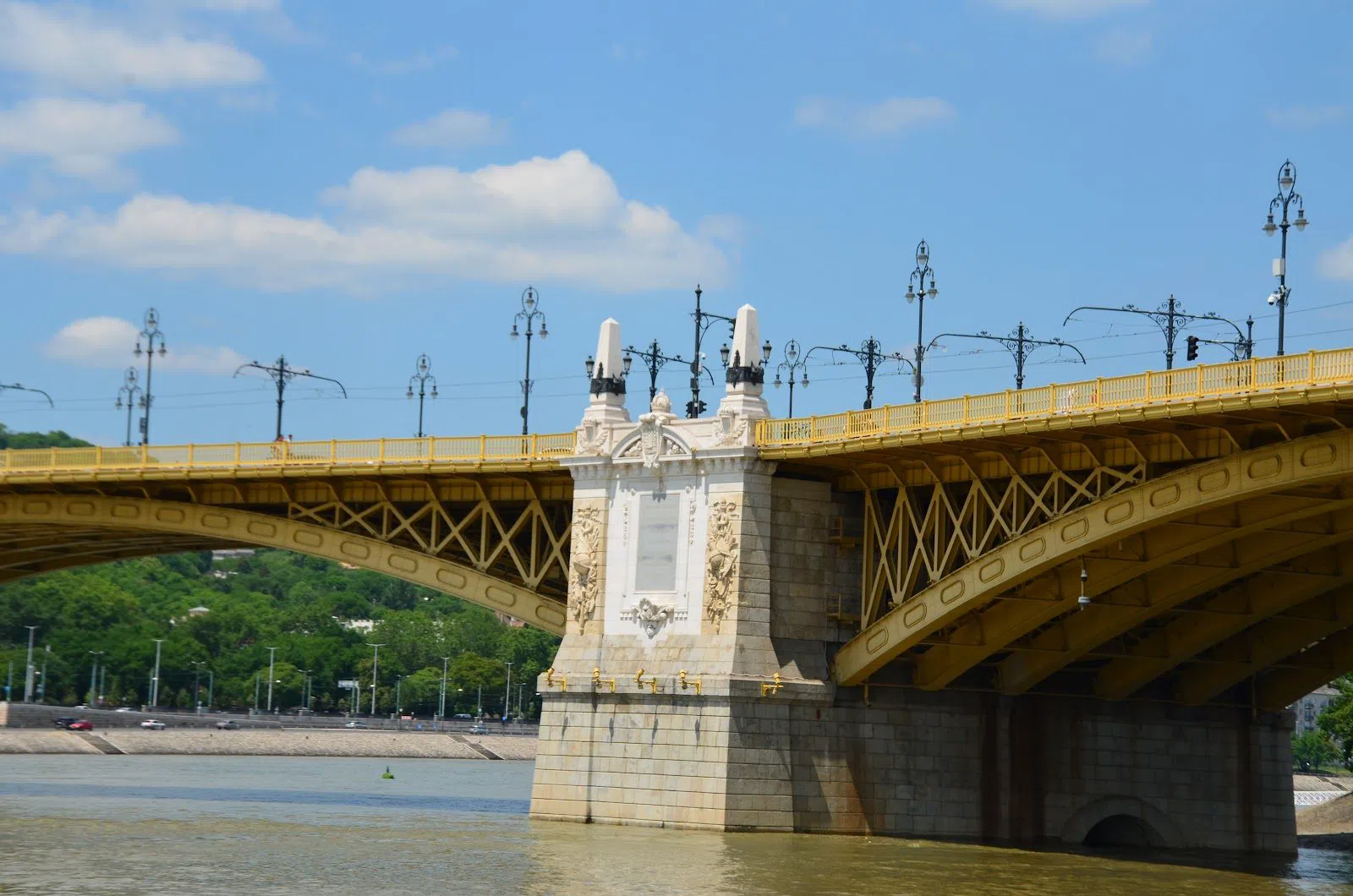
Margaret Bridge (Margit híd), Jászai Mari tér end, District XIII. Ten minutes' walk north along the embankment from Kossuth tér, and the best side-on view of Parliament anywhere in the city. The bridge bends at its midpoint where it meets the island, which is why it gives you an angle the straighter crossings cannot. Pavements are wide, it is free and open at all hours, and the mid-span landing takes a group of a dozen without anyone standing in the cycle lane.
It is also much quieter than the Chain Bridge at the same hour. If your evening is really about photographing Parliament rather than reaching the castle, stop here, then use the mid-span stair to drop onto Margaret Island afterwards.
From Jászai Mari tér you can walk straight back south, or take the tram.
The tram that undoes a wrong turn
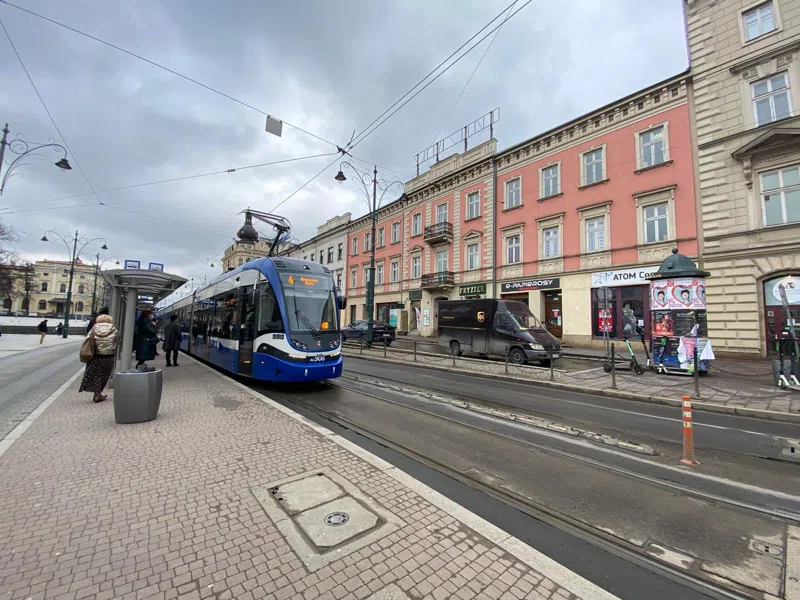
Tram 2 (BKK), Jászai Mari tér to Közvágóhíd, along the Pest bank. It runs every few minutes, needs no booking, and costs about 450 HUF for a single ticket or around 2,500 HUF for a 24-hour travelcard. Sit on the Danube side.
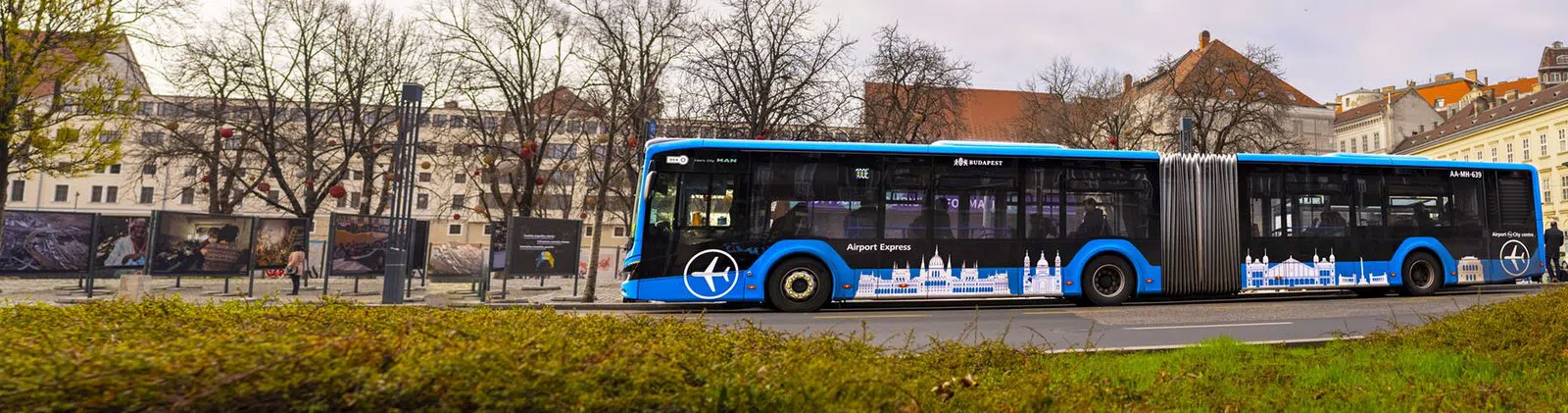
It is worth knowing about for backtracking. This route only works in one direction, and the tram lets you cover the Parliament-to-Great Market Hall stretch in the wrong light and then walk it in the right light, rather than doing the same kilometre twice on foot. A group of more than six should expect to split across cars at rush hour, which is fine as long as you agree the stop beforehand.
Two hundred metres south, the shoes
Shoes on the Danube Bank (Cipők a Duna-parton), on the embankment just south of Parliament, Lipótváros. Sixty pairs of iron shoes on the stone, set there in 2005 by the sculptor Gyula Pauer with the film director Can Togay. They mark the people shot into the river by Arrow Cross militia in the winter of 1944 and 1945.
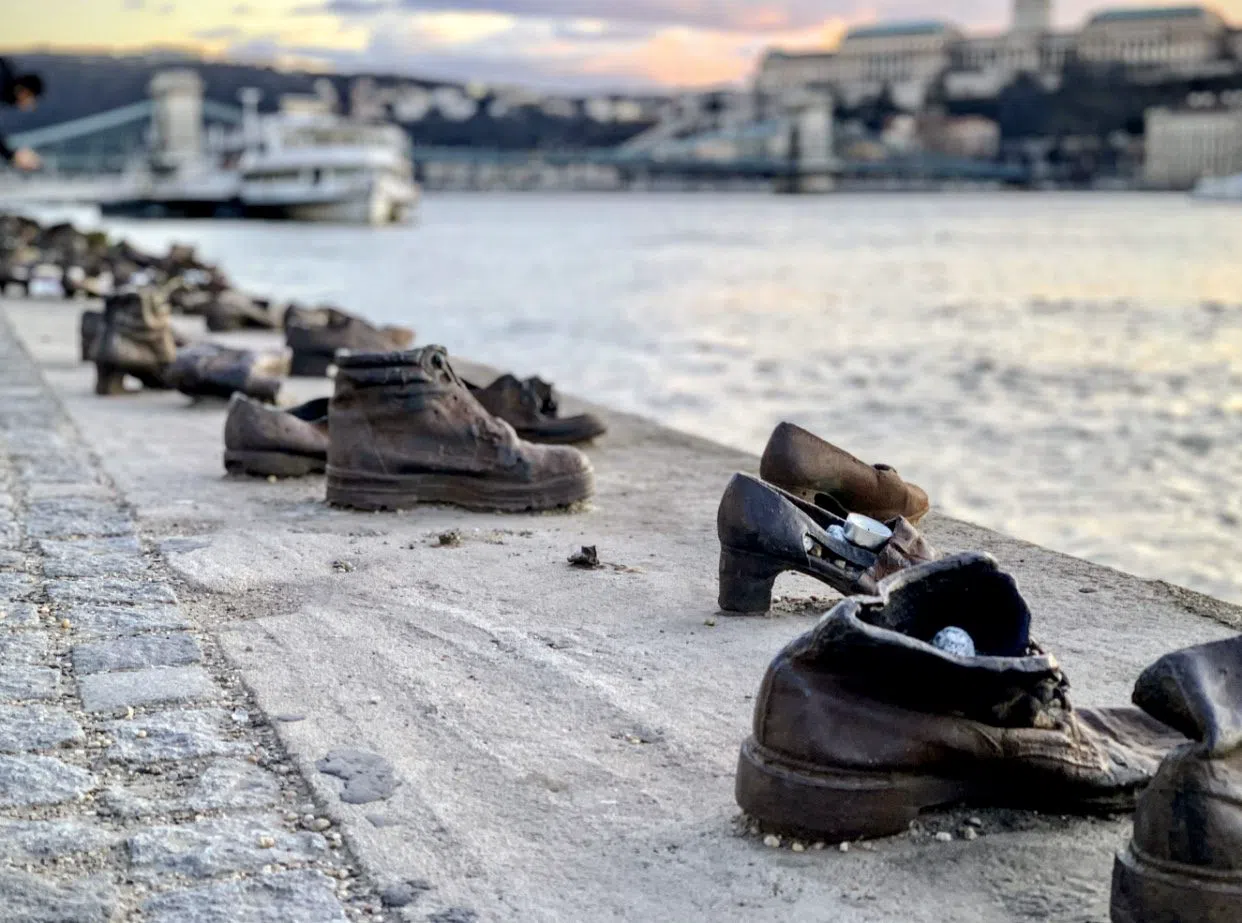
It sits directly on the walking line, so it costs no detour, and it is open ground with no ticket and no closing time. It is not a photo stop. There is room for a large group, but the site asks for quiet and it deserves it. Stand, read the small plaque, and move on; do not put anyone in the shoes.
The promenade from Parliament to Elisabeth Bridge
Danube Promenade (Dunakorzó) and the Little Princess statue, Belváros, District V. From Parliament down to Elisabeth Bridge is about thirty minutes on the flat, with a railing on your right the whole way and the castle across the water. László Marton's small crowned figure sits on that railing near Vigadó tér, where walking-tour groups gather; it is a two-minute stop, not a destination.
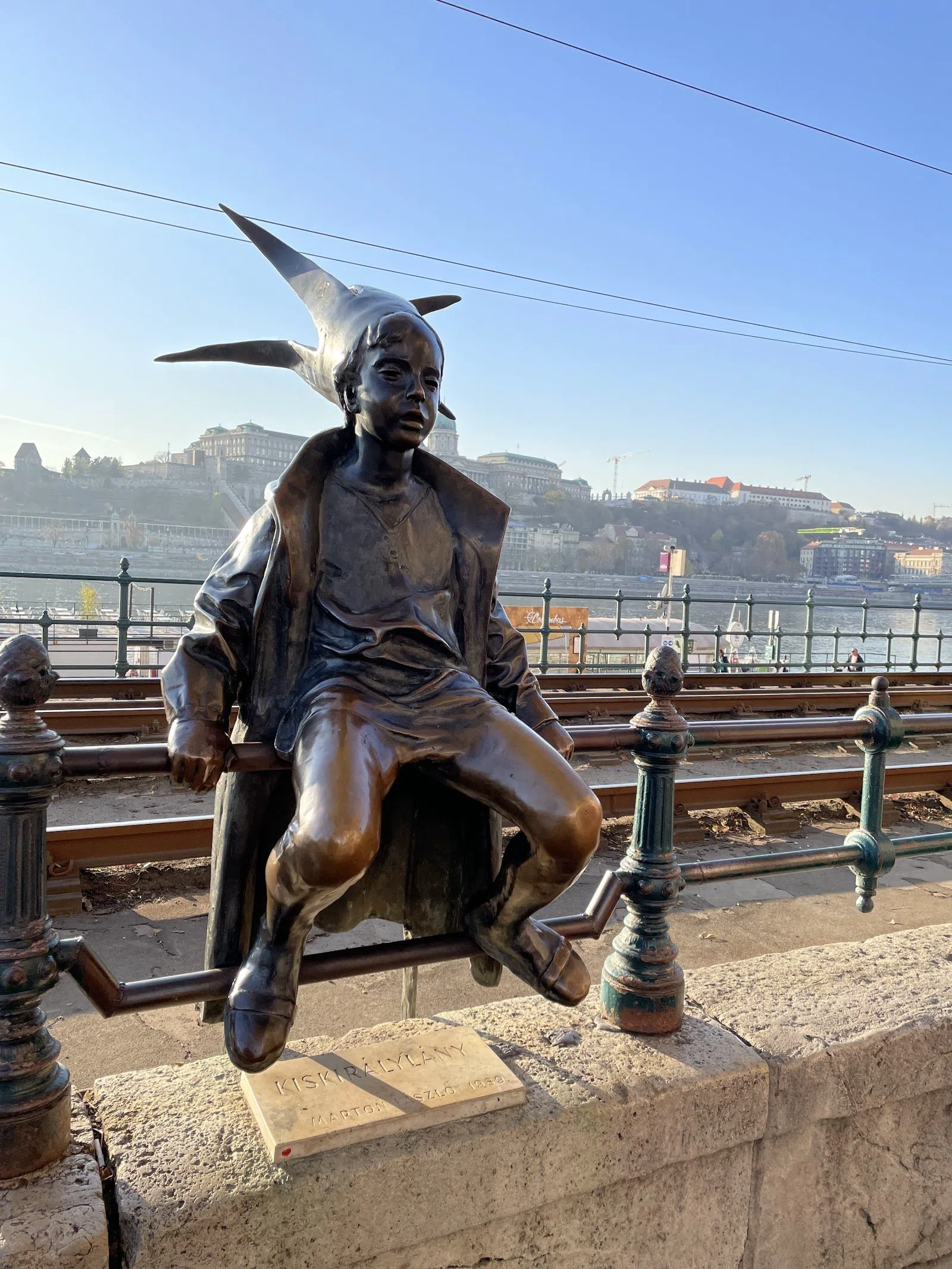
This is the west-facing side of the river, and it is where the reversal becomes visible. The Buda skyline falls into shade before you do, so the castle's floodlights read as light while you still have daylight on your face. That is the moment to be moving south towards the bridge.
Crossing the Chain Bridge at the right minute
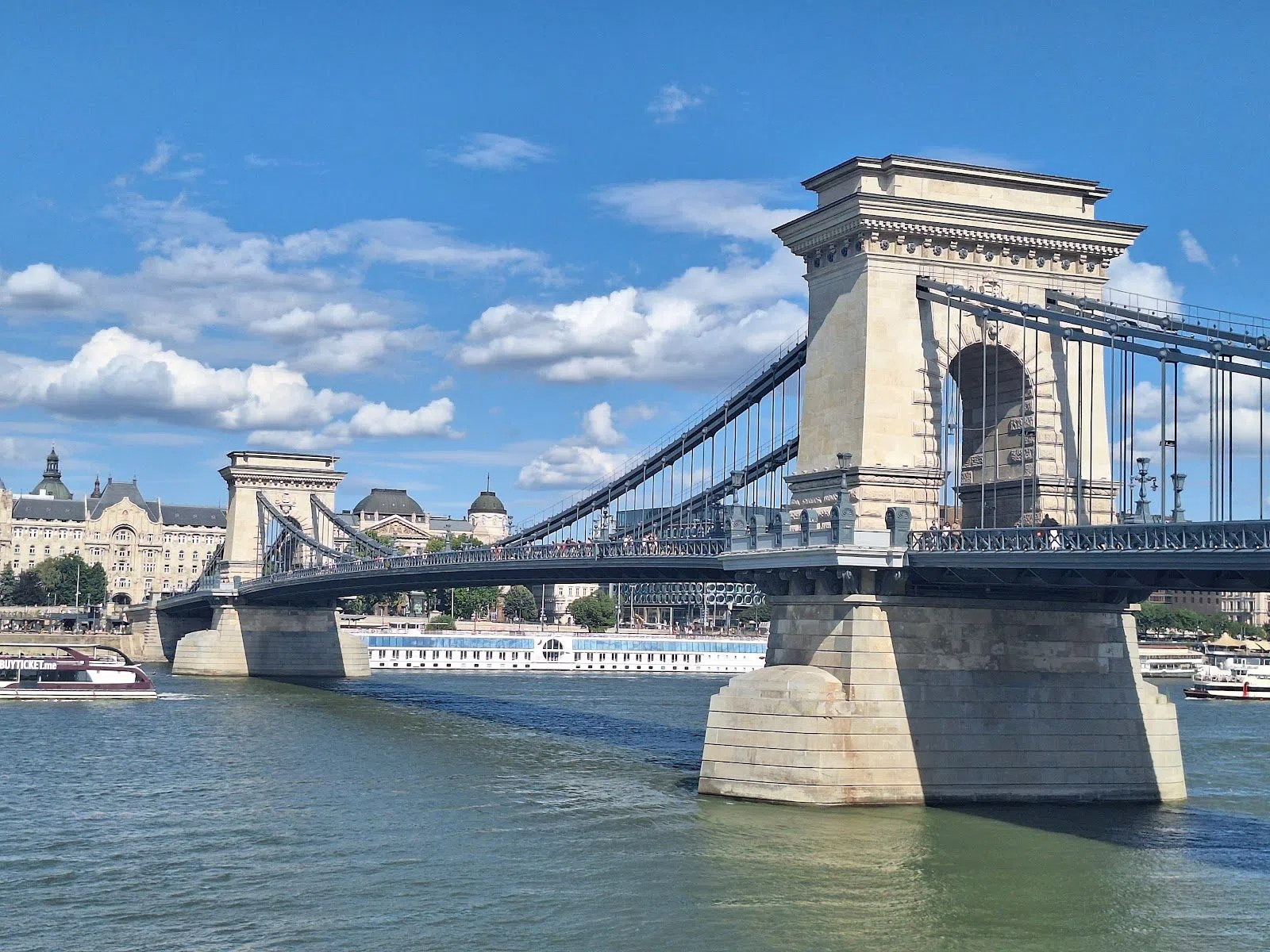
Széchenyi Chain Bridge (Széchenyi Lánchíd), from Széchenyi István tér on the Pest side to Clark Ádám tér on the Buda side. It opened in 1849 as István Széchenyi's project, engineered by William Tierney Clark and built under the supervision of Adam Clark, whose name is on the square at the far end. Since the 2023 reopening it carries only buses, taxis and bicycles, so the pavements stay walkable even with a group behind you.
The crossing is 375 metres and takes five to ten minutes. Mid-span, facing north, is the frame that holds Parliament, the castle and the river together, and it is the one place on this walk where everything lines up at once. Aim to be standing there about fifteen minutes before sunset, then keep going.
A drink where the bridge lands
Leo Rooftop (Hotel Clark Budapest), Clark Ádám tér, District I, at the Buda foot of the bridge. It is a genuine pause rather than a detour, because it sits exactly where you step off the crossing and exactly below where you are about to climb.
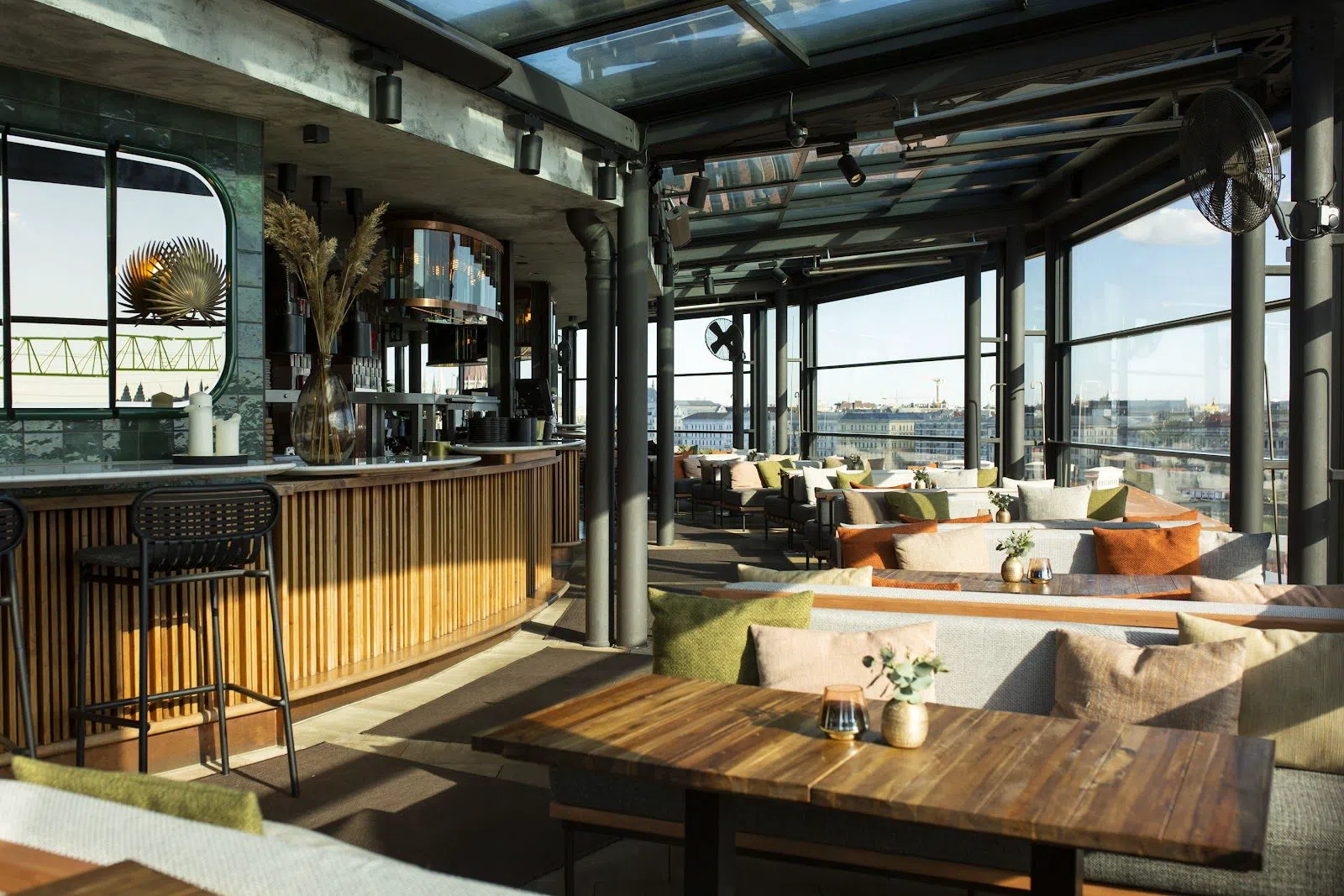
The door is the difficulty. Reservations are essentially required, days ahead, including for hotel guests, and the terrace is small: a couple or four will be fine, ten people need to phone ahead and may be told no. Smart casual is the expectation. Cocktails run 4,500 to 6,500 HUF and mains 9,000 to 15,000 HUF. Book the slot that ends thirty minutes before sunset, not the one that begins then. After sunset you want to be moving uphill, not waiting for a bill.
Two ways up to the castle
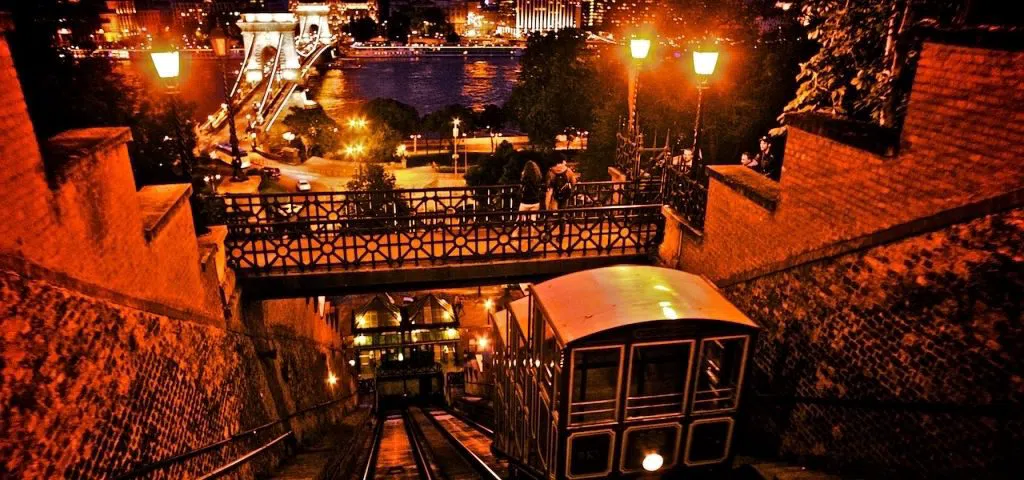
Buda Castle Funicular (Budavári Sikló), Clark Ádám tér, District I. Ninety seconds instead of a stair climb, which matters when you are timing an arrival. The cabins hold about 24 people, there are no group bookings, and the queue at Clark Ádám tér gets long in the late afternoon. It costs 4,000 HUF one way or 5,000 HUF return, and the detail that catches people out is that BKK travelcards and the non-PLUS Budapest Card are not valid on it. It closes for maintenance on odd-week Mondays, so check before you build an evening around it.
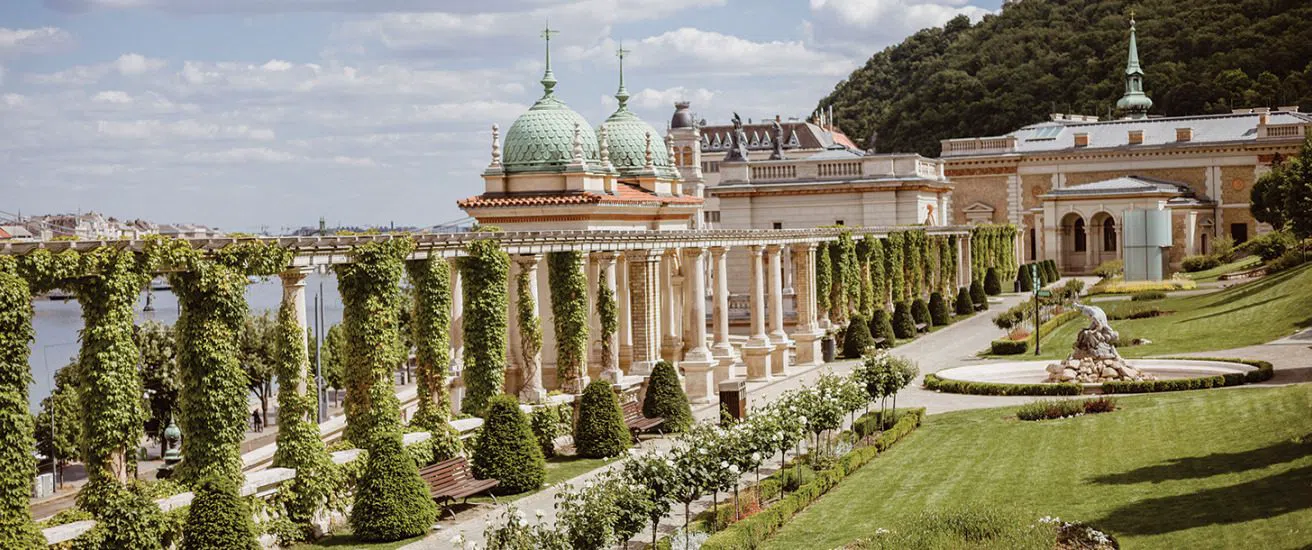
Várkert Bazár (Castle Garden Bazaar), Ybl Miklós tér, District I, a few minutes south along the river. Miklós Ybl's terraced complex from 1883, left to rot for decades and restored in 2014, is the better answer when the funicular queue is twenty deep. You climb through formal gardens with the river widening below you, and there are lifts and escalators if the stairs are not appealing. The gardens are free and open 06:00 to 24:00, so they stay usable long after the crowds have gone up top; the exhibition halls run 10:00 to 17:30, cost roughly 2,000 to 4,000 HUF and close on Mondays.
Fisherman's Bastion after nine
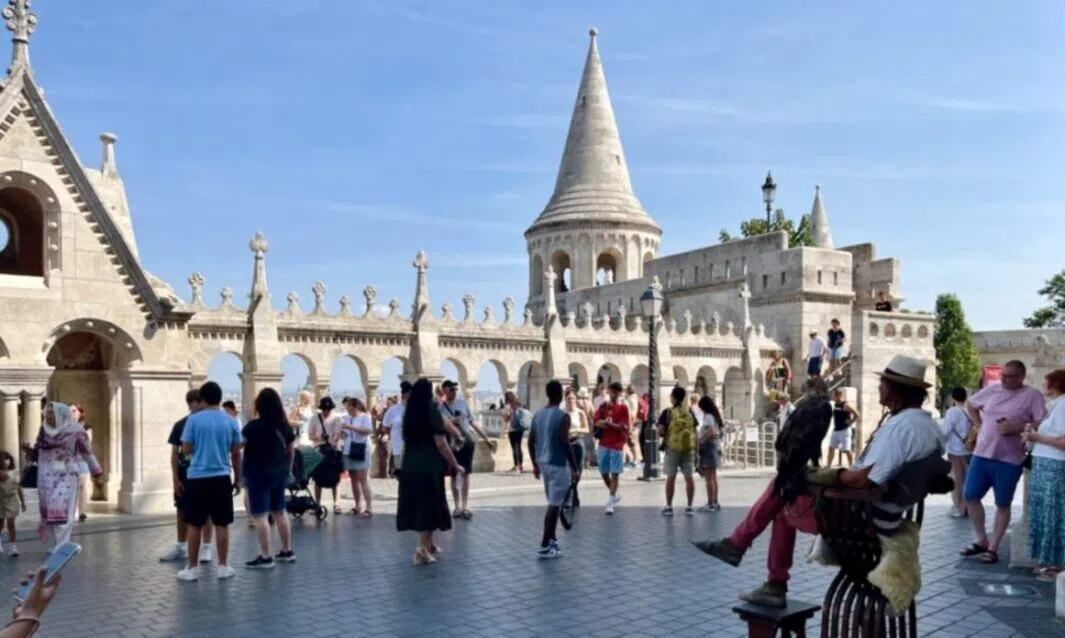
Fisherman's Bastion (Halászbástya), Szentháromság tér, the Castle District. Frigyes Schulek finished it in 1902 as a viewing terrace dressed as a fortification, its seven towers standing for the seven Magyar chieftains, its name taken from the fishermen's guild that once defended this stretch of wall. It has never had to hold anything off; it was built to be stood on.
The lower terrace is free and open around the clock. The upper towers are ticketed at 1,700 HUF (about €4) between 09:00 and 21:00 from June to September, and outside those paid hours they are simply open and free. Come after 21:00 in high summer and you get the towers for nothing, at exactly the hour when Parliament's floodlights are on and the sky behind it has gone deep blue. The gate takes card only, no cash. Official guides bringing groups of six or more enter free, and teachers go free with ten or more children.
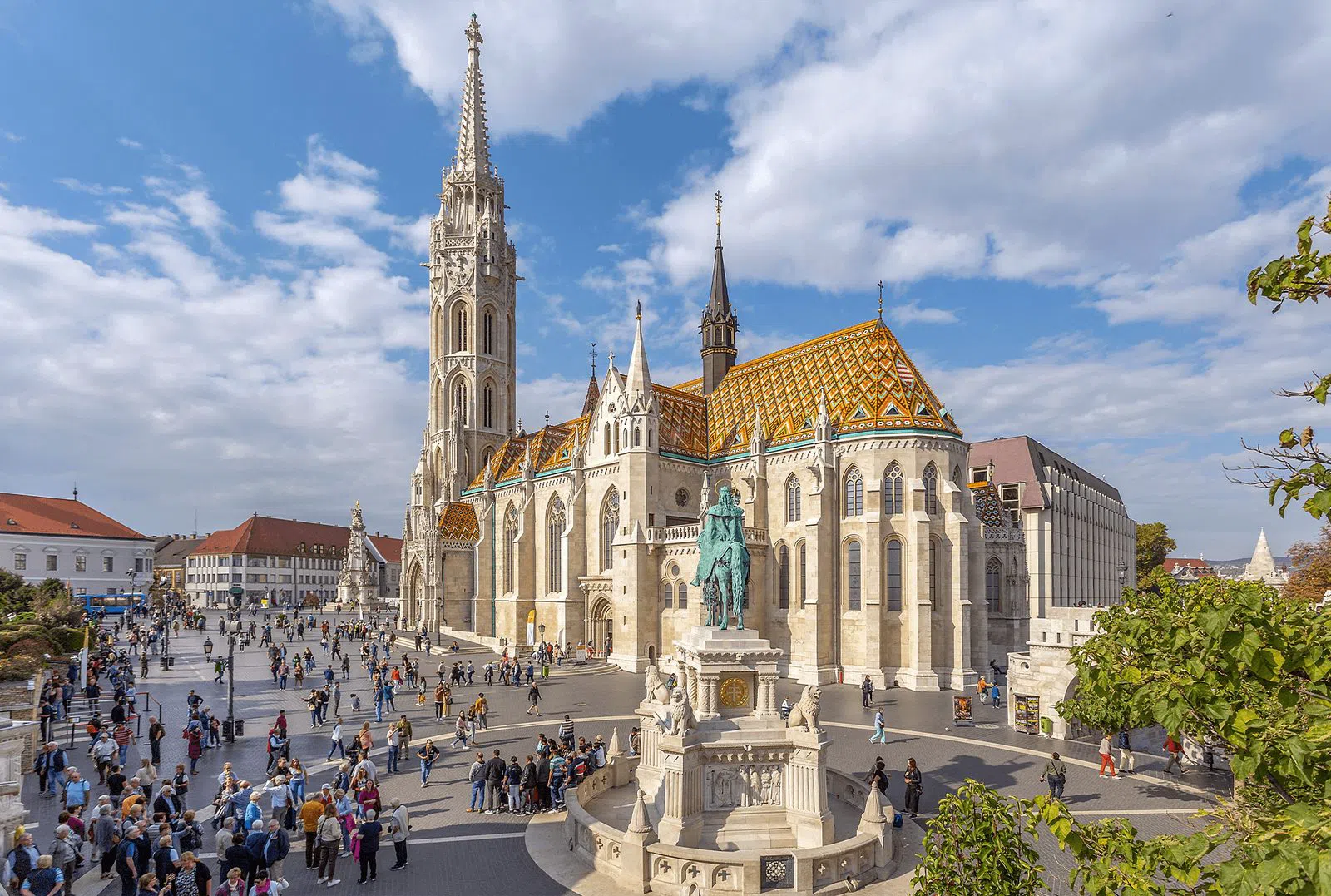
Matthias Church (Mátyás-templom), beside the Bastion on Szentháromság tér, its roof laid in patterned Zsolnay tiles. It costs nothing in walking, but it will not fit into your evening. Opening is 09:00 to 17:00 Monday to Friday, to 13:00 on Saturday and from 13:00 on Sunday, and it closes to visitors during services. Entry runs about 2,200 to 3,500 HUF with a separate ticket for the tower, which is small-group only. Do the interior earlier in the day, then step back out onto the terrace when the light arrives.
The other hill, for the whole city in one frame
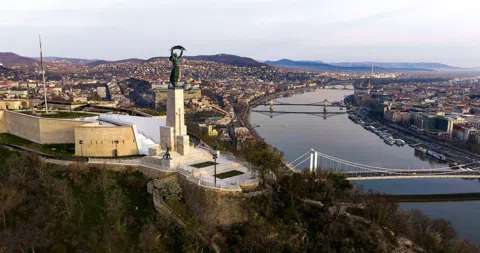
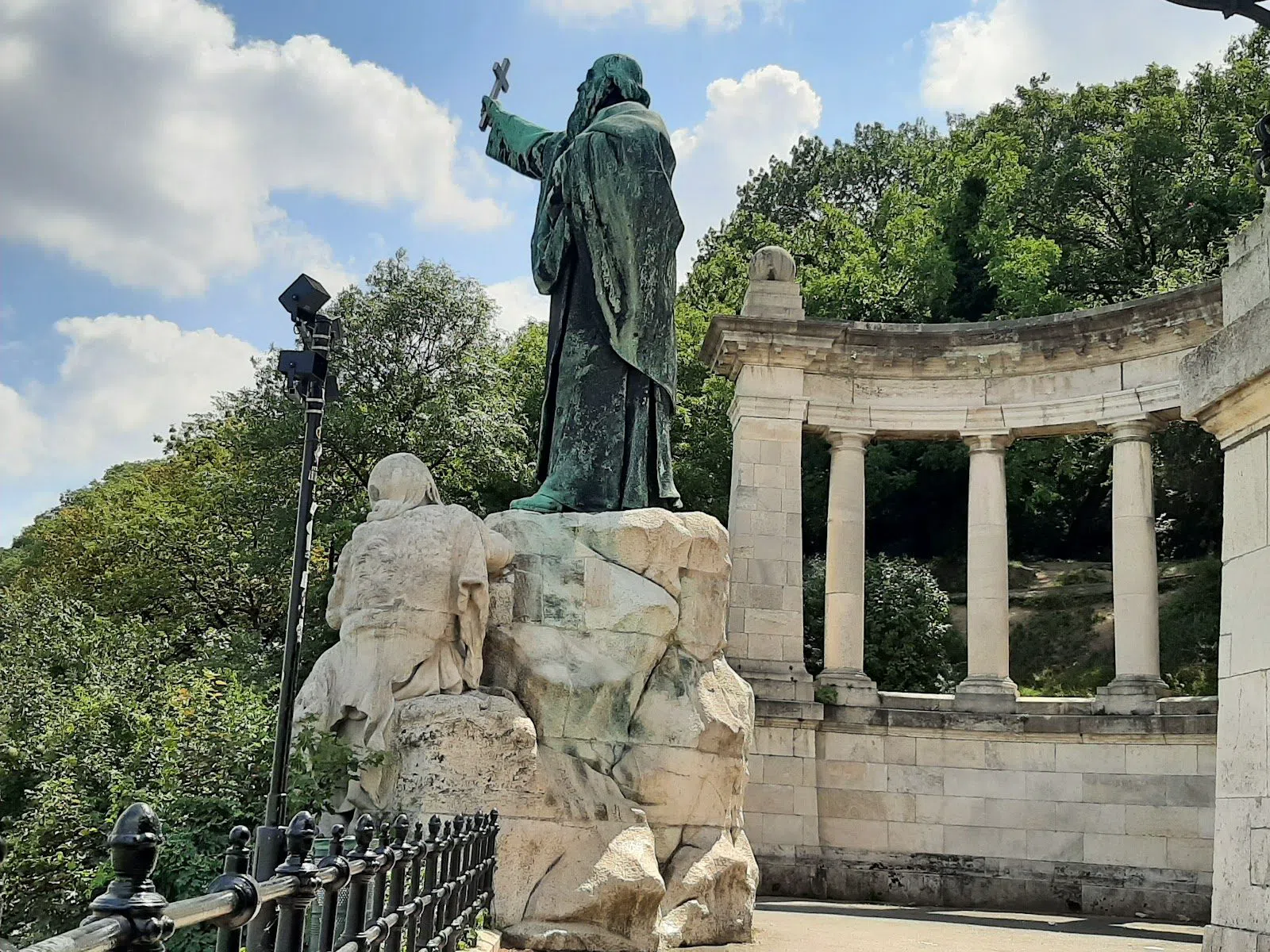
Citadella and the Liberty Statue, Gellért Hill, District XI, above the Buda bank. The fortress the Habsburgs built in 1854 after the war of 1848 and 1849 reopened to the public in spring 2026 after eleven years behind hoardings, and a lot of guidance still has not caught up. The inner park, terraces and walking routes are free, the exhibition hall is ticketed, and there is a café and an ice cream counter inside the walls. It is barrier-free, approachable from three directions and the easiest viewpoint in the city to bring a group to. It also gives the highest all-city panorama, which the Bastion cannot match.
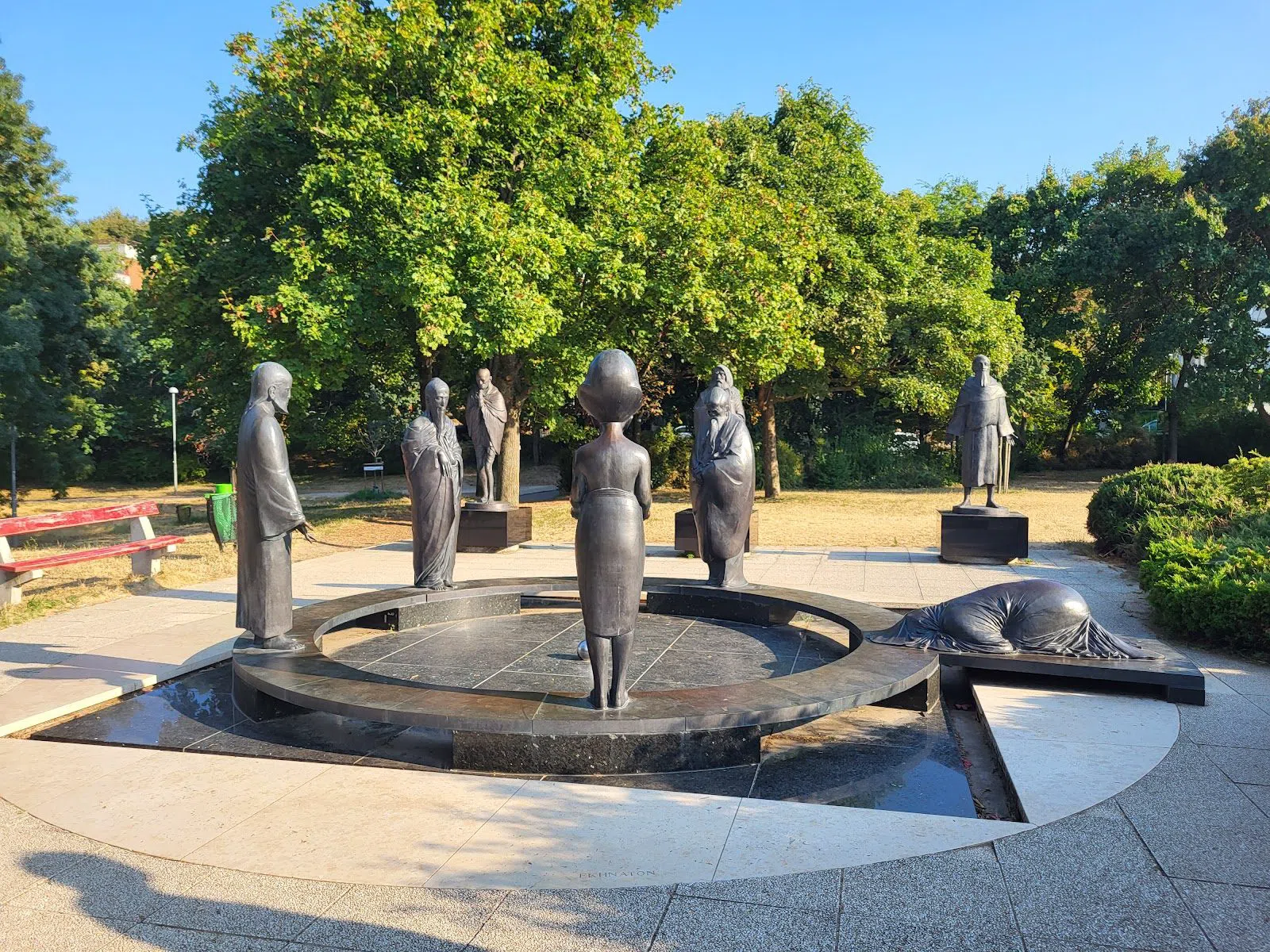
Garden of Philosophy (Filozófiai kert), Gellért Hill, on the north face of the same hill, an unenclosed park with Nándor Wagner's ring of bronze figures around a polished sphere. Free, open at all hours, and almost empty when the Citadella terraces are three deep. It looks straight down the line of the river at the bridges. There is very little space and no facilities of any kind, the paths are steep, and there are no shops up there, so bring water and arrive an hour before sunset while you can still see your footing.
Treat Gellért Hill as a second evening rather than an extension of the first. Trying to add it to the Parliament walk means arriving somewhere in the dark and out of breath.
The Pest-side bookend
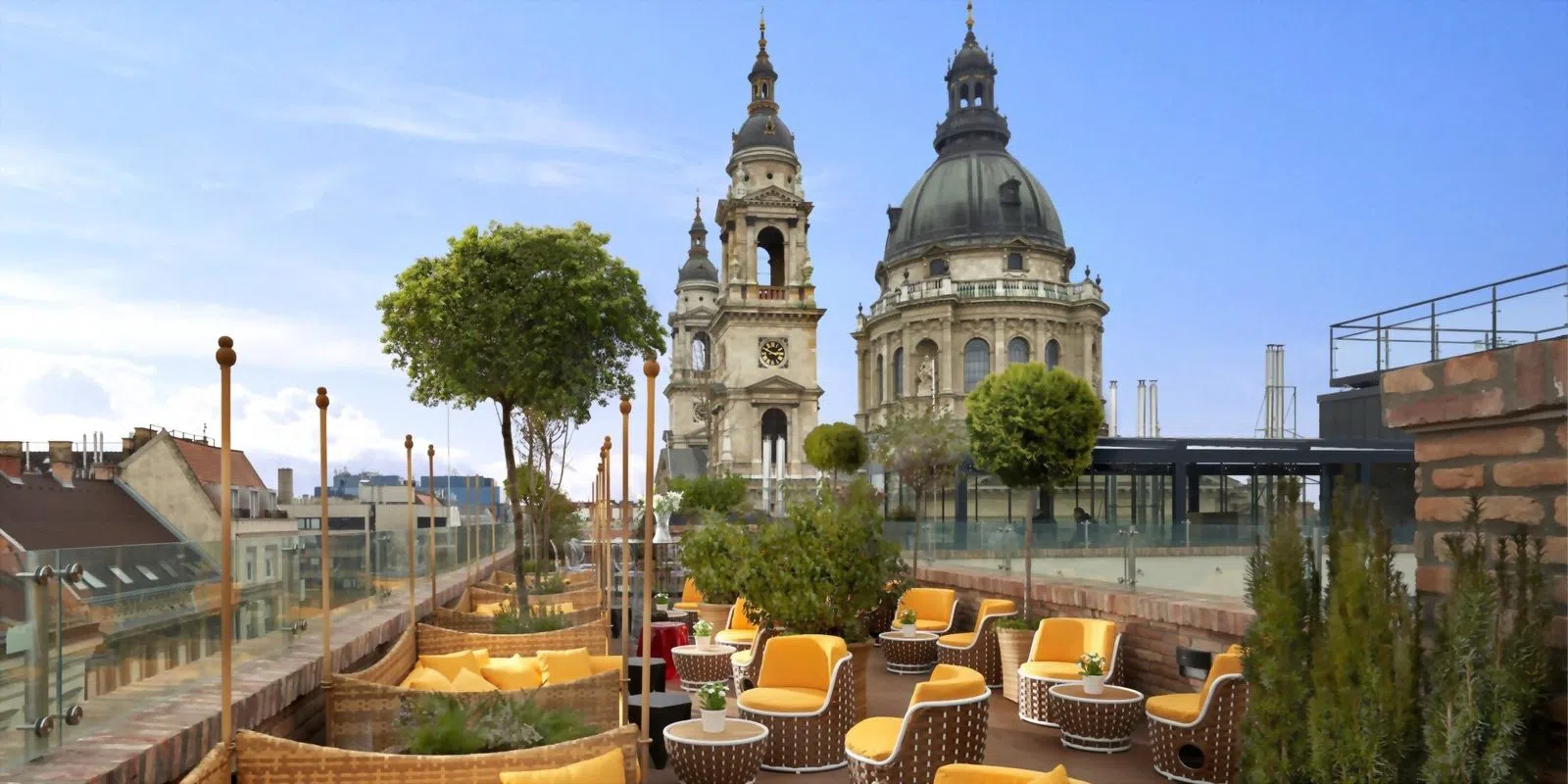
St Stephen's Basilica panorama terrace, Lipótváros, District V. The only high viewpoint on the Pest side, and the only one that shows you the flat half of the city that both Gellért Hill and the Bastion look down on. A lift takes you to drum level and a short stair does the rest. Terrace and treasury cost 5,000 HUF (about €12), with a combined ticket at 6,800 HUF. It closes at 19:00 daily, which is well before midsummer golden hour, so this is an afternoon stop rather than an evening one. The gallery is narrow and runs one way when busy; groups are admitted but will be strung out.

High Note SkyBar (Aria Hotel Budapest), a minute from the Basilica, District V. No bar in the city gets closer to the dome, which makes it the Pest counterweight to a Buda-side walk. It opens year round, a Champagne bar was added on the level above in 2025, and evening reservations are effectively mandatory at sunset. Cocktails run 5,000 to 7,000 HUF. Four people who booked will be comfortable; eight who did not will be turned away.
Seeing both banks without walking them twice
Legenda City Cruises, Dock 7 by the Marriott, near Elisabeth Bridge, Belváros. The one-hour evening sailing, the Danube Legend, costs roughly €25 to €35, runs year round with an audio guide in thirty languages, and is set up properly for groups with group rates and private charter. Dinner cruises cost considerably more and are a different kind of evening.
The public BKK river boats on the D11 and D12 routes no longer run, so a commercial operator is now the only way onto the water. Use it on a second night, or on the night the rain arrives.
Practical notes
Leave Kossuth Lajos tér ninety minutes before sunset. Allow twenty minutes at Parliament, ten at the shoes, thirty along the promenade, ten on the bridge and fifteen for the climb. That puts you on the Bastion terrace as the floodlights come up.
A single BKK ticket is about 450 HUF and a 24-hour travelcard about 2,500 HUF, valid on tram 2, the buses and the metro. The funicular is not covered by either, nor by the standard Budapest Card. Nothing on this walk needs a taxi.
Cards work almost everywhere, and the Fisherman's Bastion gate takes card only. Keep a few thousand forint for a kiosk or a tip. Always pay in forint and decline the terminal's offer to charge you in your own currency.
Expect cobbles the whole way through the Castle District, stairs and slopes at Várkert Bazár, and loose gravel on Gellért Hill. This is not an evening for new shoes.
The walk itself is free apart from a tram ticket. Add the funicular one way, the Bastion towers and one rooftop drink and you are at roughly 11,000 to 15,000 HUF a head. Skip the funicular, climb through the gardens and arrive after 21:00 in summer, and the same evening costs the price of the tram.
Anywhere between Kossuth tér and the Chain Bridge on the Pest side puts you inside a ten-minute walk of the start; Clark Ádám tér and the Castle District put you at the finish, which is quieter but steeper. Compare rates and locations with a Budapest hotel search, and read the rest of the city in our Budapest guide.
Before you go
What time is golden hour in Budapest?
It shifts a long way across the year. In late June the sun sets around 20:45, by late September nearer 19:00, and in December before 16:00. The last hour of daylight falls on the Pest facades, and the thirty to forty minutes after sunset on the Buda ones. Look up the day's exact sunset time and set off ninety minutes before it.
Is Fisherman's Bastion free?
The lower terrace is free and open 24 hours a day. The upper towers are ticketed at 1,700 HUF (about €4) between 09:00 and 21:00 from June to September, and are free outside those paid hours. Come after 21:00 in summer and the towers cost nothing, which is also when the Parliament floodlights come on. The gate takes card only and does not accept cash.
Do I have to book the Hungarian Parliament tour in advance?
Yes, if you want to go inside. The interior is guided-tour only, in timed groups of about thirty, and tours sell out weeks ahead from April to October. The 45-minute tour costs 4,000 HUF for EU citizens and 8,000 HUF for others. Groups should book through the Visitor Centre. You can walk the square outside at any hour without a ticket.
Should I take the funicular up to Buda Castle or walk?
The funicular takes ninety seconds and costs 4,000 HUF one way or 5,000 HUF return. Queues at Clark Ádám tér run long in the late afternoon, the cabins hold about 24 people, and neither BKK passes nor the standard Budapest Card are valid on it. It also closes for maintenance on odd-week Mondays. The terraced gardens at Várkert Bazár are free, open until midnight and fitted with lifts and escalators, which is usually the better choice when you are on the clock.
Is the Citadella on Gellért Hill open again?
Yes. It reopened to the public in spring 2026 after eleven years closed, though plenty of older guidance still describes it behind hoardings. The inner park, terraces and walking routes are free and barrier-free, the exhibition hall is ticketed, and there is a café inside the walls. It has the highest all-city panorama in Budapest.