The Budapest issue
What a Day in Budapest Actually Costs in 2026
Real 2026 forint prices for baths, canteens, Parliament tickets and the river, plus the places where the same thing costs half as much.

By Marek NovákNeighbourhoods, baths and the slow way round

The Danube splits Budapest into a hill and a plain, and the prices split just as cleanly. The same thermal water costs around 6,000 forints in one bathhouse and 15,800 in another on a Saturday; the same lunch is 2,800 forints standing at a butcher's counter and three times that on a terrace ten minutes' walk away. Almost nothing here has a single price, which is why two people can spend the same week in the city and come home with very different arithmetic.
The cheapest part of the trip is getting around

BKK (Budapesti Közlekedési Központ) runs the metro, trams, trolleybuses and buses across the whole city, and it is the best value on any Budapest bill. A single ride is 500 HUF bought in advance and 700 HUF bought on the spot, a 40 percent penalty for not planning thirty seconds ahead. Install the BudapestGO app before you arrive and the question never comes up. A 90-minute ticket, valid across changes, is 850 HUF. A 24-hour travelcard is 2,750 HUF; a 72-hour is 5,750 HUF, and that second number is the one to hold on to, because three days of unlimited travel costs less than a single weekend day ticket at the city's most famous bath. A monthly pass is 8,950 HUF.
From the airport, the 100E bus into the centre costs 2,500 HUF and needs its own dedicated ticket; a travelcard does not cover it.
Groups move freely on the network, in the sense that nobody stops you boarding together, but every person needs their own ticket or card and every ticket must be validated before you ride. Inspectors work the metro barriers and the tram doors, and being a visitor is not a defence.
Plan your Budapest trip
Live prices from our booking partners.
Free cancellation on many rooms. We may earn a commission when you book.
The baths are a price ladder
Most budgets for this city assume the thermal baths are one line item. They are three.
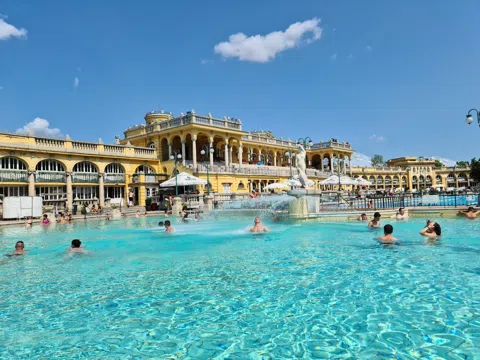
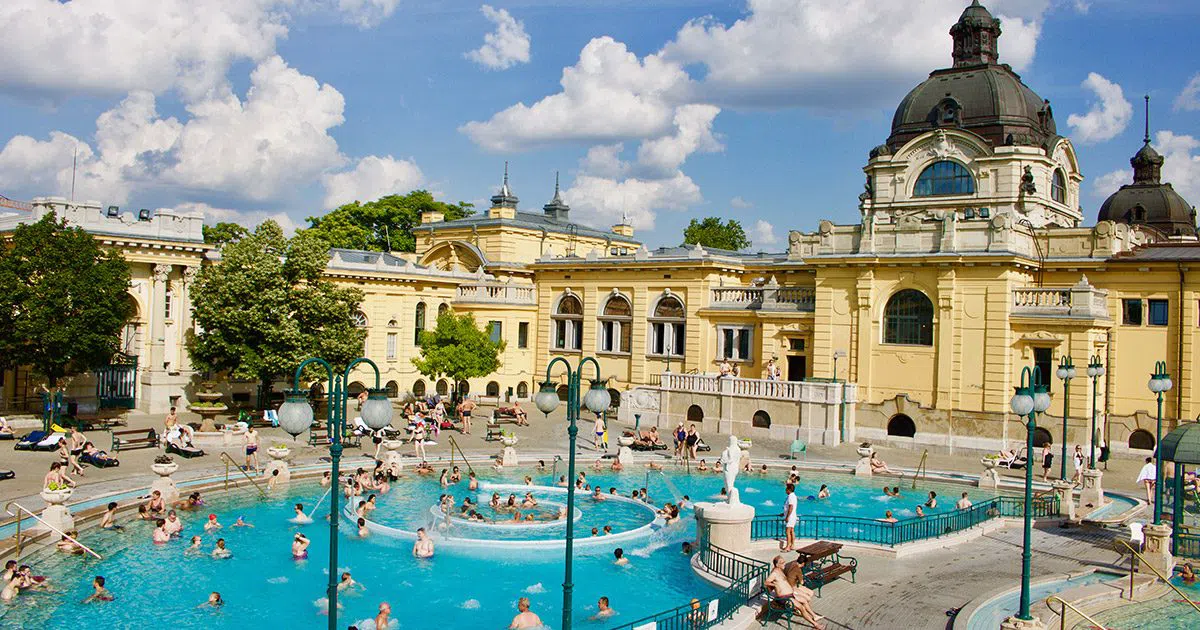
Széchenyi Thermal Bath (City Park, District XIV) sits at the top. A weekday day ticket with locker is 13,200 HUF and a weekend one is 15,800 HUF; online fast-track runs 15,200 to 17,800 HUF. The saving worth having is the early-bird entry before 9am at 10,500 HUF, which is close to 3,000 HUF off the weekend gate and buys you the outdoor pools before the crowds arrive. Groups need no booking, but cabins and lockers are sold per person with no group rate, and the queue at the gate on a Saturday morning is long enough to eat an hour.
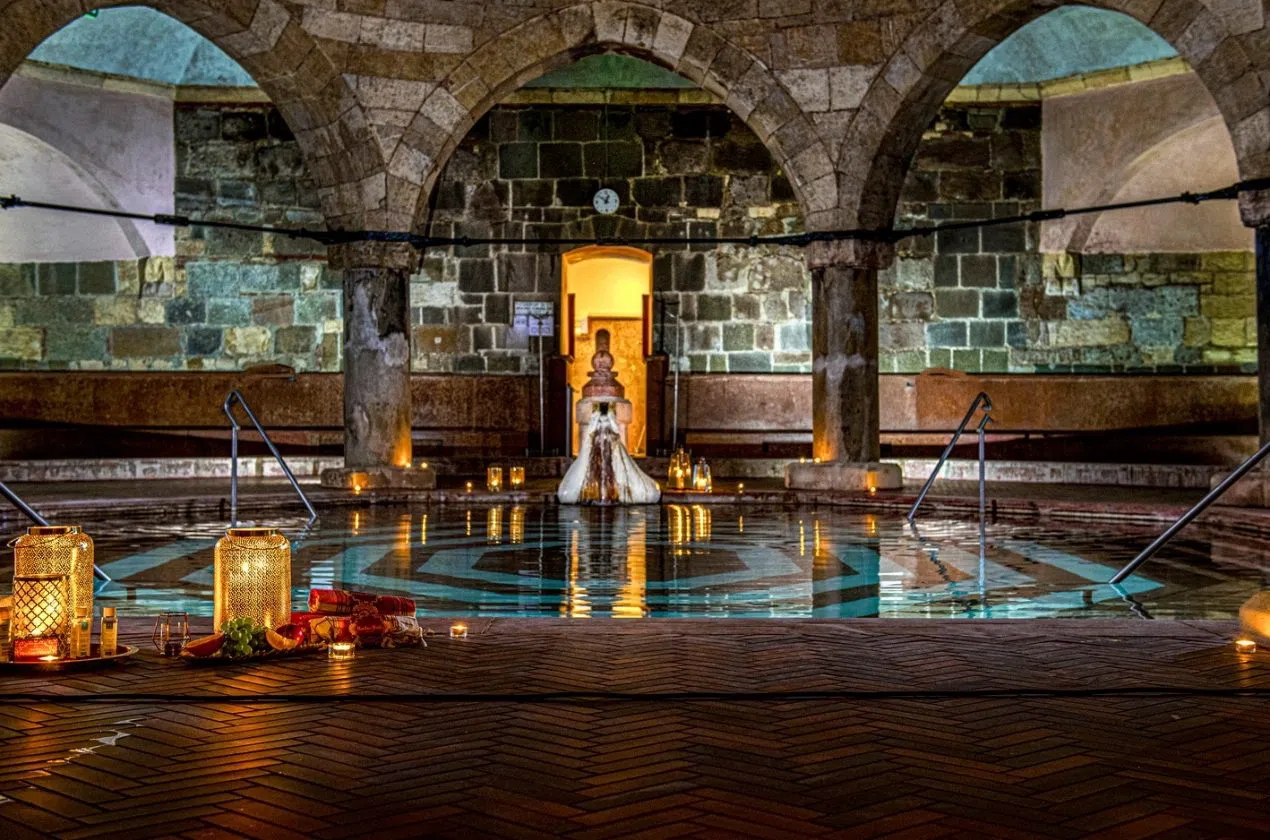
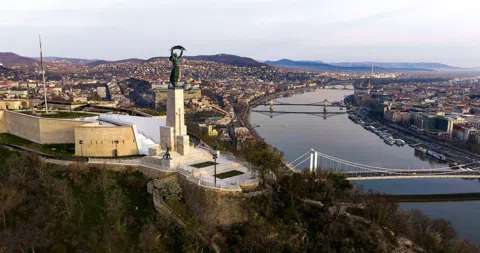
Rudas Thermal Bath (Buda riverbank, below Gellért Hill) is where to go for the view rather than the scale. All-zone entry is 12,000 HUF on a weekday, 15,000 HUF at weekends and 16,000 HUF on 2026 holiday dates; Friday and Saturday night bathing is 15,000 HUF and sold online only, so a group has to book ahead rather than turn up. The rooftop pool at dusk, with the river below and the Pest bank lighting up, is the best-value view in the city. Two honest caveats for 2026: the thermal-area shower is closed from 2 to 28 September, and the salt chamber is out of order.
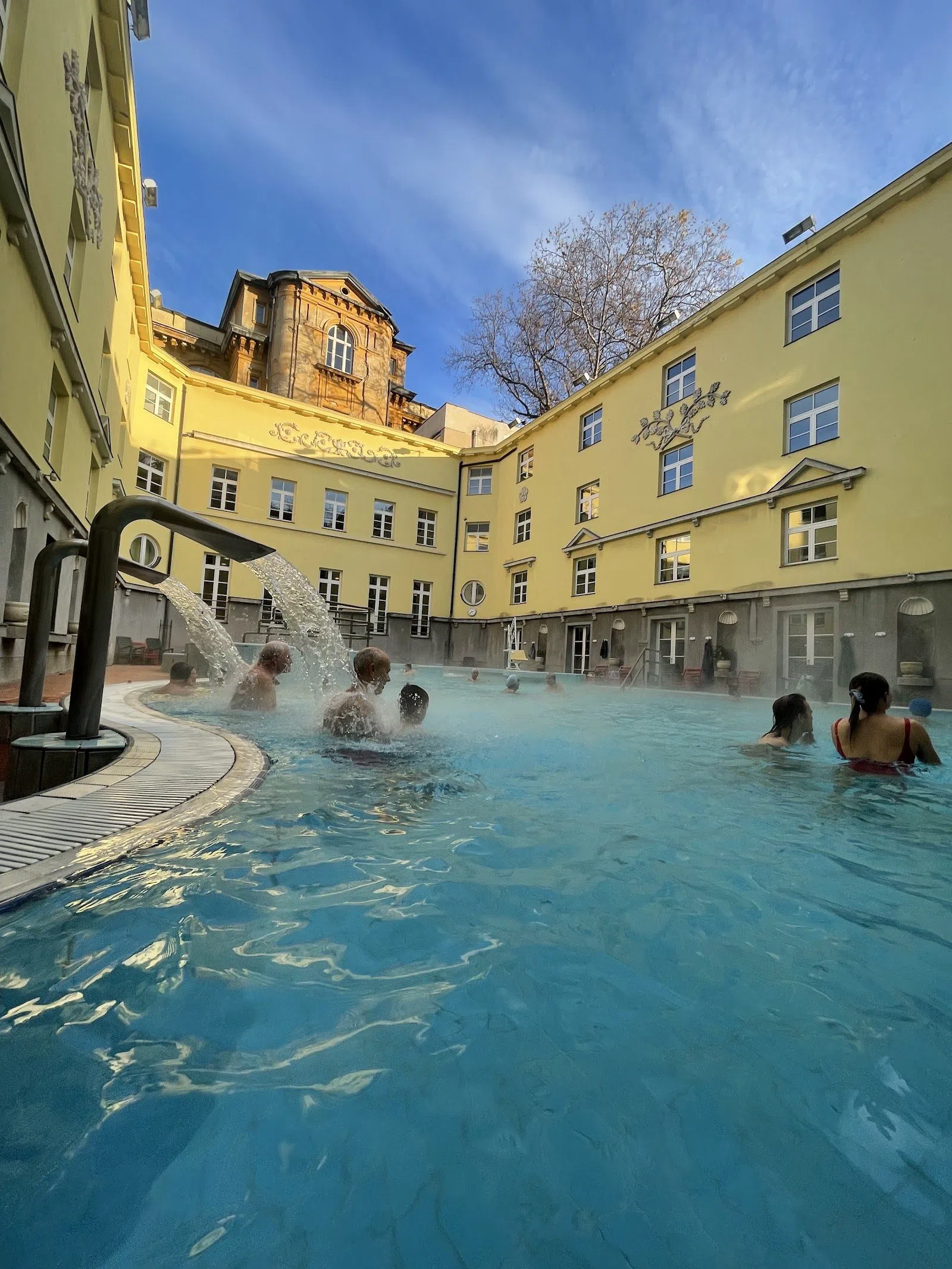
Lukács Thermal Bath (Buda, District II) is the price floor. Full-day entry with a locker runs roughly 6,000 to 8,300 HUF, with afternoon and weekend rates differing at the counter, and it is walk-in with no reservation. That is about half the Széchenyi gate price for the same category of thermal water. It is also quiet and largely local, which cuts both ways: a couple will have a better morning here than anywhere else on this list, and a loud party of ten will not.
Where the city eats lunch
The complaint that Budapest has become expensive to eat in is usually a complaint about a specific hundred metres of it. Step off that strip and the numbers change completely.
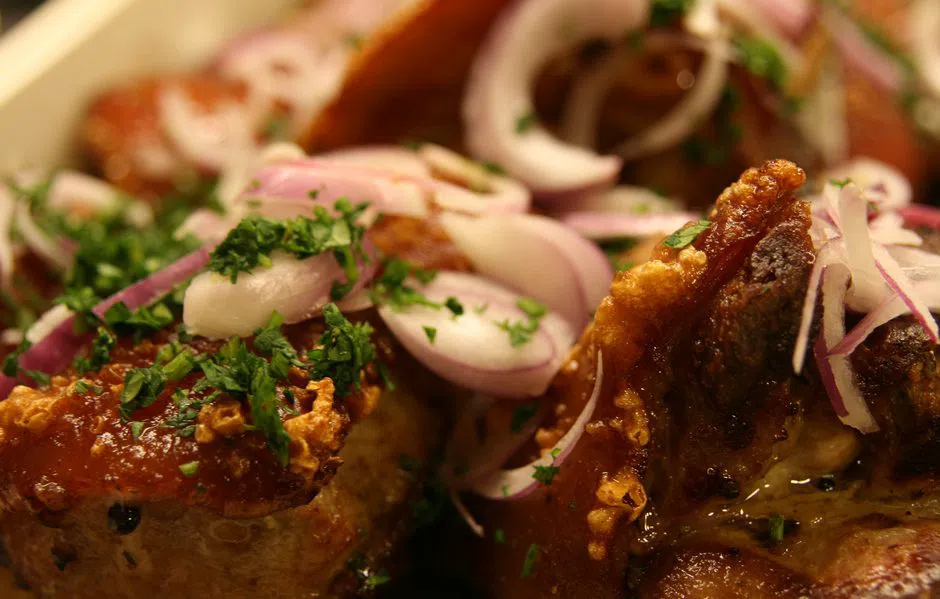
Belvárosi Disznótoros (branches on Károlyi Mihály utca in District V and Király utca in District VII) is the strongest rebuttal available. You point at raw meat at a butcher's counter, it is grilled, and you eat it standing. The daily three-course menu is 2,800 HUF; mains run 2,800 to 5,000 HUF, soups and vegetable dishes around 2,100 HUF, salads around 1,000 HUF. It holds nine Gault&Millau points at those prices. Walk-in only, no reservations, and a group works here provided everyone accepts they are eating on their feet.
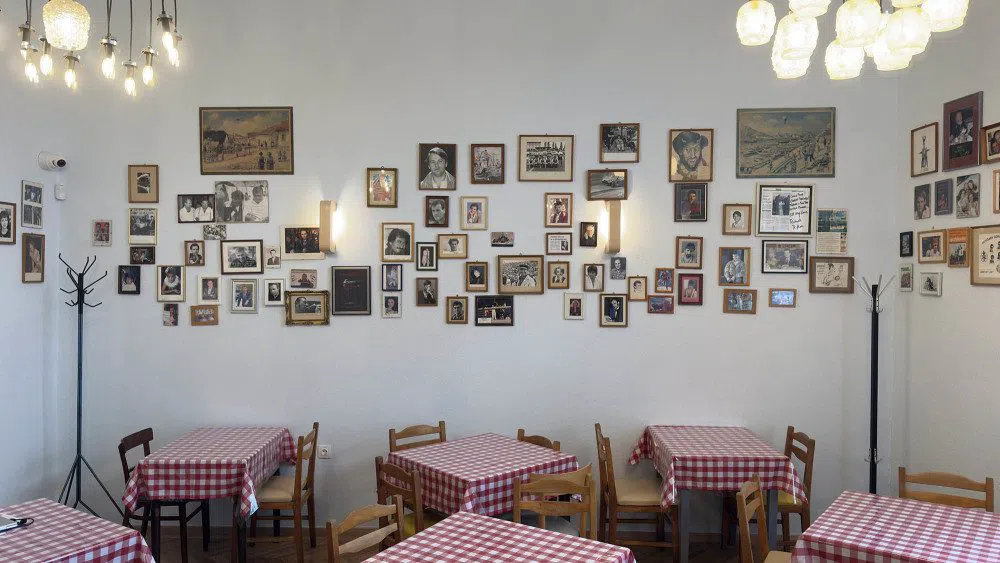
Kádár Étkezde (District VII) closed through the pandemic and reopened in 2025 in its original form, so any guide written before that is describing a ghost. It is a canteen in the true sense: breakfast 8:30 to 10:30, lunch 11:00 to 17:00, Tuesday to Saturday, dine-in only. A soup-and-main lunch here lands well under the price of a single main in a mid-range restaurant, and it is where the sólet and főzelék benchmark sits for the whole city. Reservations cover seats rather than tables, which matters: a group of six may well be split across the room, and there is no takeaway.
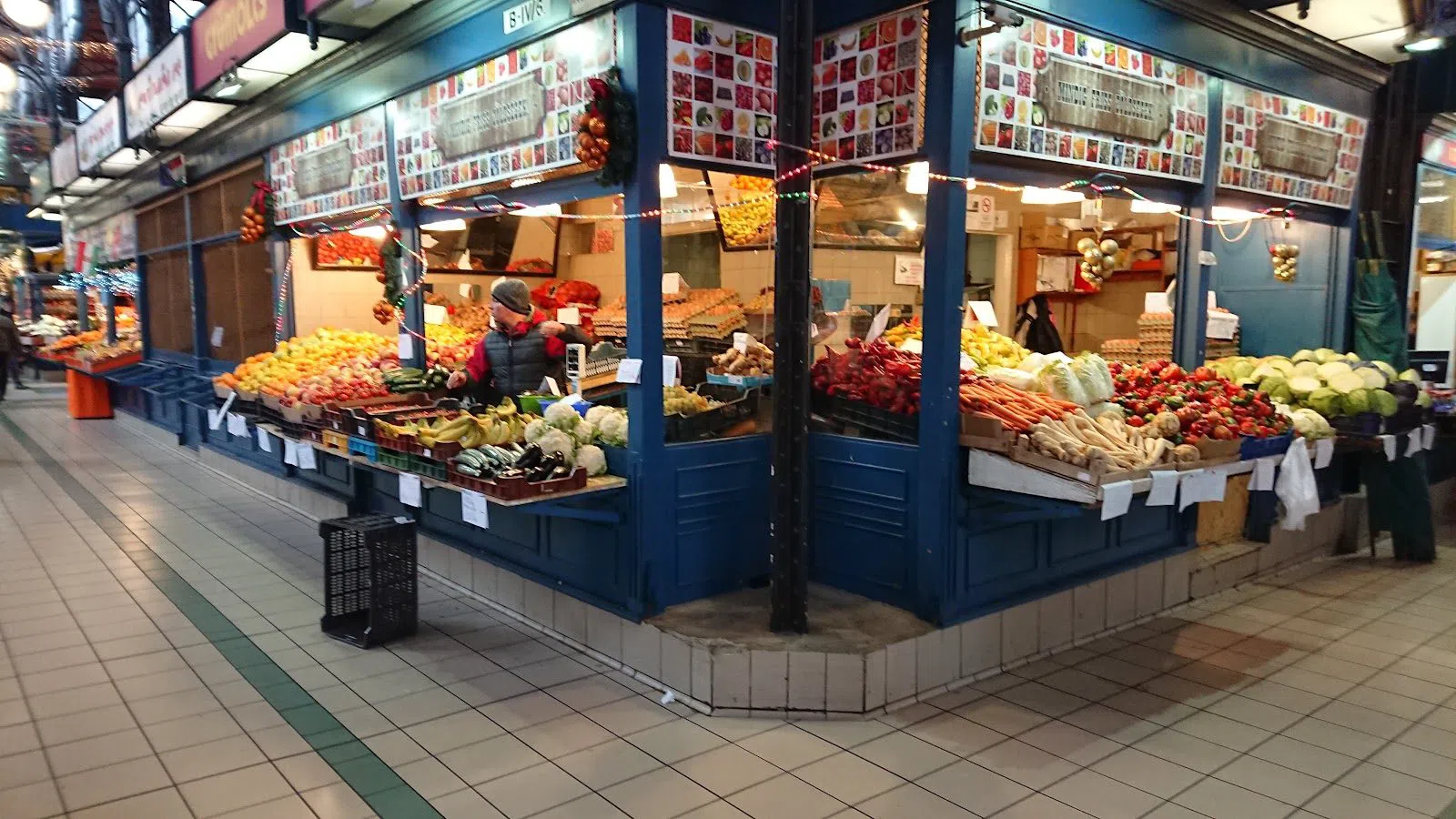
Great Market Hall (Nagyvásárcsarnok) (Fővám tér, District IX) is free to enter and shows the two-tier economy inside one building. The ground floor is where Hungarians shop, with paprika, salami and produce at something close to local prices, while the gallery upstairs is priced for visitors at 1,700 to 3,200 HUF for a main, and lángos and chimney cake carry a clear markup. The efficient move is to buy downstairs and eat elsewhere. Groups are fine on the ground floor; the upstairs stalls are counter-service with very little standing room.
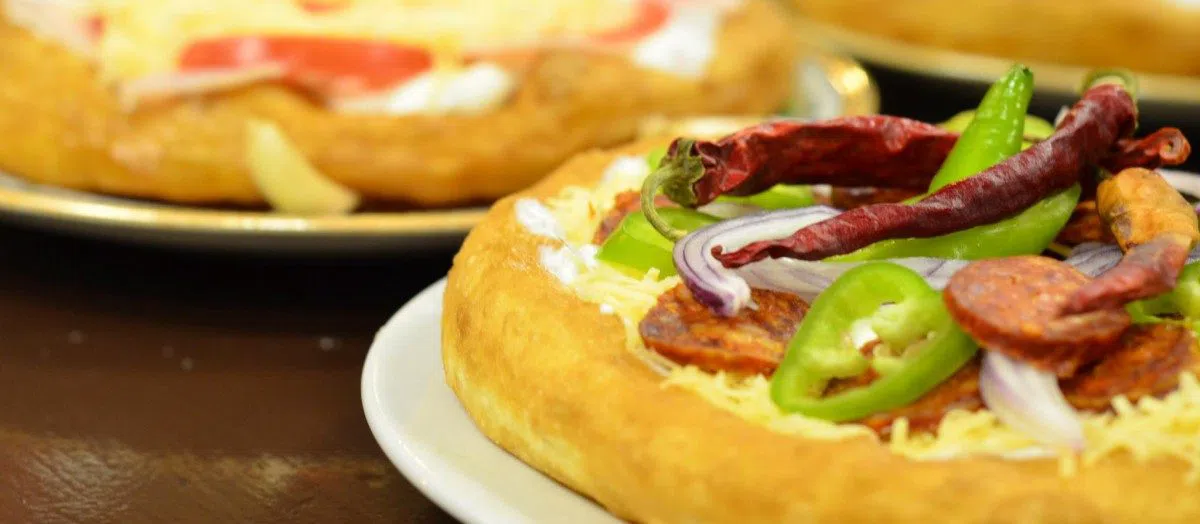
Retro Lángos Büfé (central Pest) sets the benchmark for what a filling street meal actually costs in the middle of the city: roughly 2,000 to 4,000 HUF a head, with more than thirty lángos varieties including vegan and gluten-free versions. It is counter-service and standing room only, which suits a group queuing and eating on the pavement and suits nobody who wants to sit down. It stays open until 6am on Friday and Saturday, making it the sane end-of-night alternative to District VII prices.
Dinner in District VII without the District VII markup
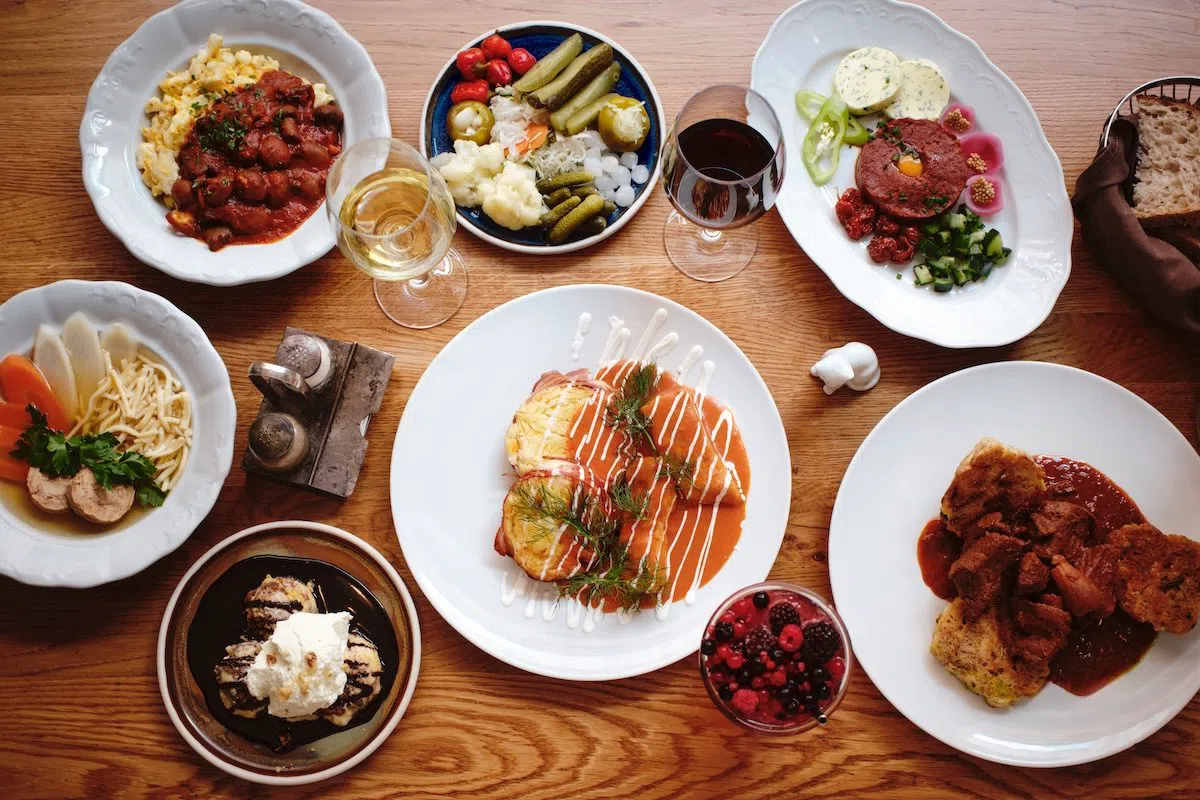
Gettó Gulyás (Jewish Quarter, District VII) is the mid-range anchor and the number to hold every tourist-strip menu against. Stews run 3,390 to 5,590 HUF and a realistic dinner with drinks lands at 6,000 to 8,000 HUF per head. It opens daily from noon to 23:00, fills every night, and walk-in waits are long, so book. The room is tight, a place for two to six people rather than a party.
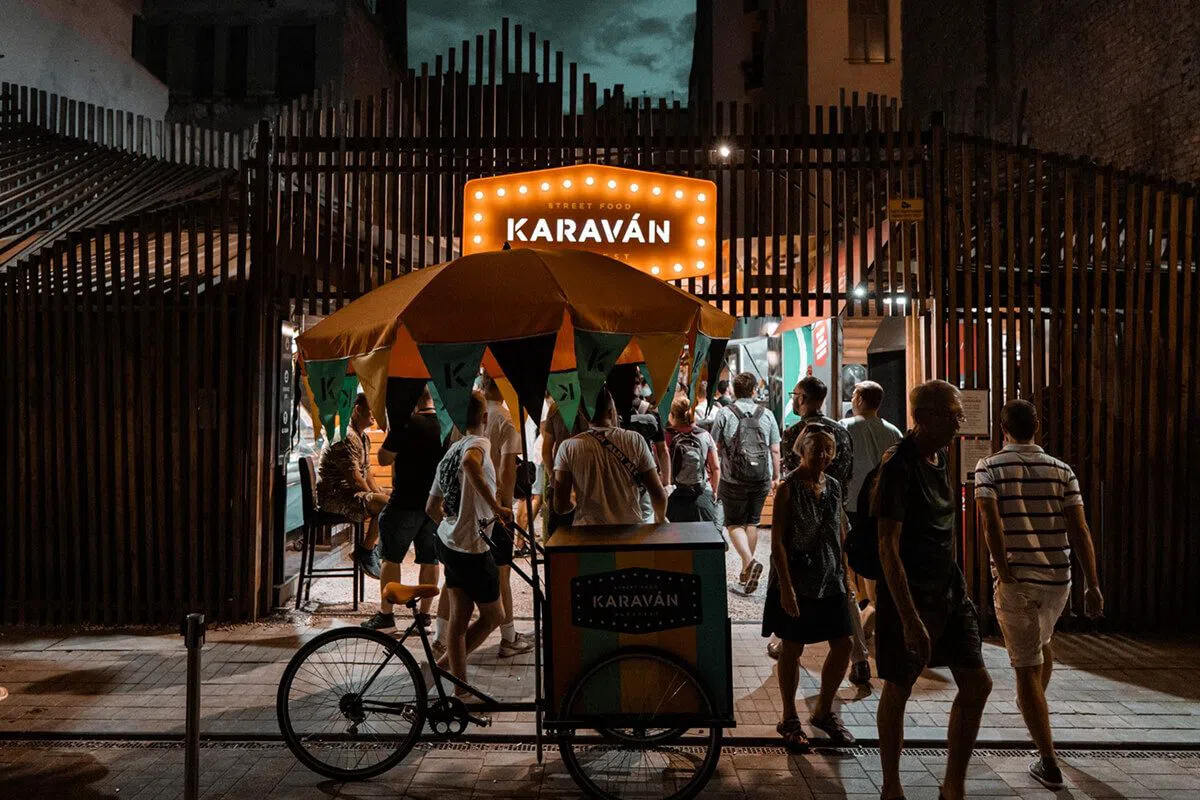
Karaván Street Food (District VII, immediately next to Szimpla) is the practical answer for a group with mixed appetites and mixed budgets. It is an open yard of trucks, no door policy, no booking, with mains at roughly 2,500 to 5,000 HUF, a clear tier below the sit-down restaurants either side of it. The bars in the yard sell beer at ruin-bar rates.
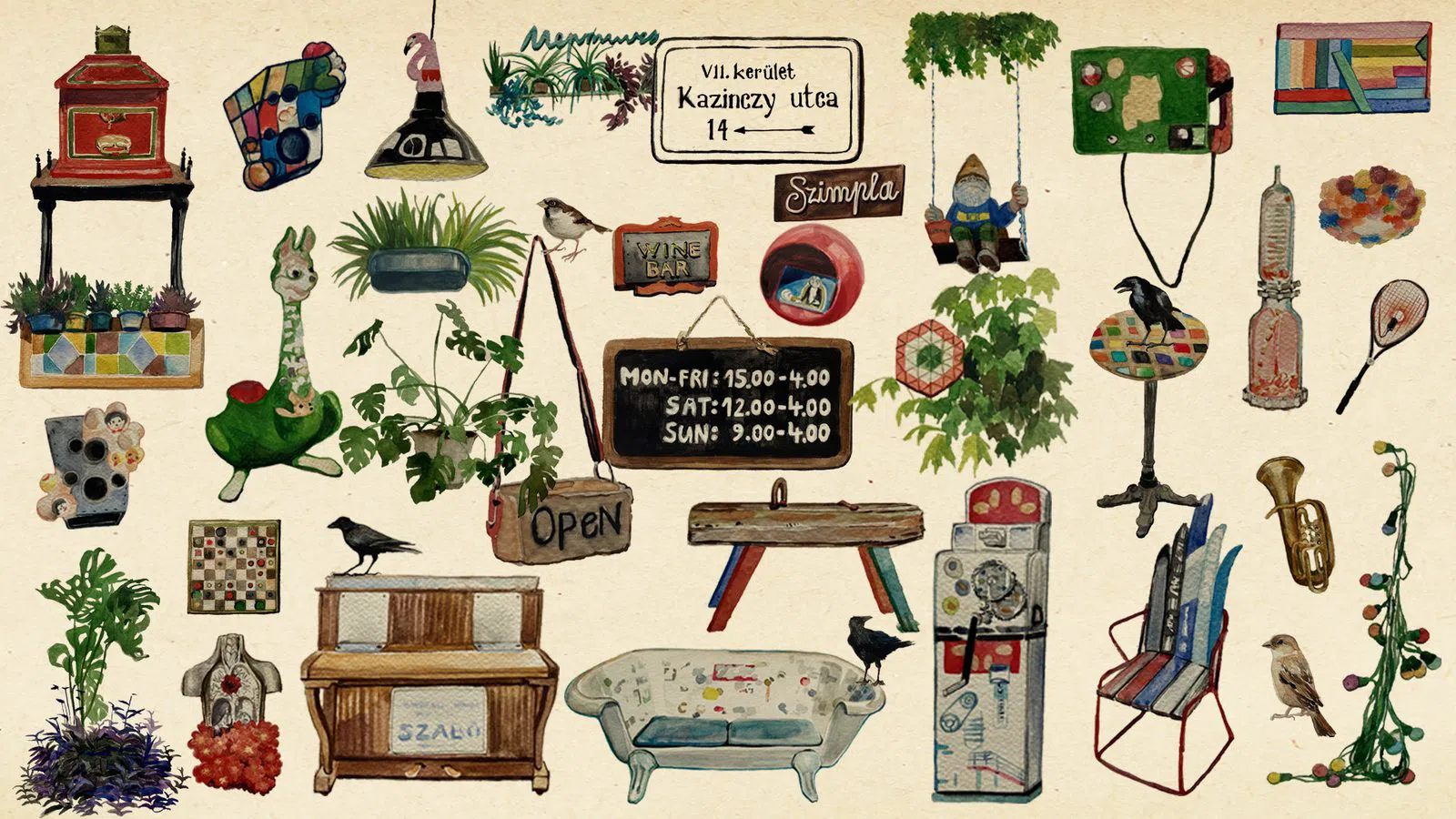
Szimpla Kert (District VII) is free to enter, takes no reservations and welcomes groups. Beer is 950 to 1,350 HUF and there is no cover charge, which is a fair price for the original ruin bar in the middle of the party district. It is also the place where the drink-price complaint usually starts, and the pattern is consistent: pay by card, read the tab before you sign it, and treat any price quoted to you in euros rather than forints as a warning about the venue, not a convenience. Before 6pm, and during the Sunday farmers' market from 9am to 2pm, it is a family-friendly courtyard.
The sights where your passport changes the number
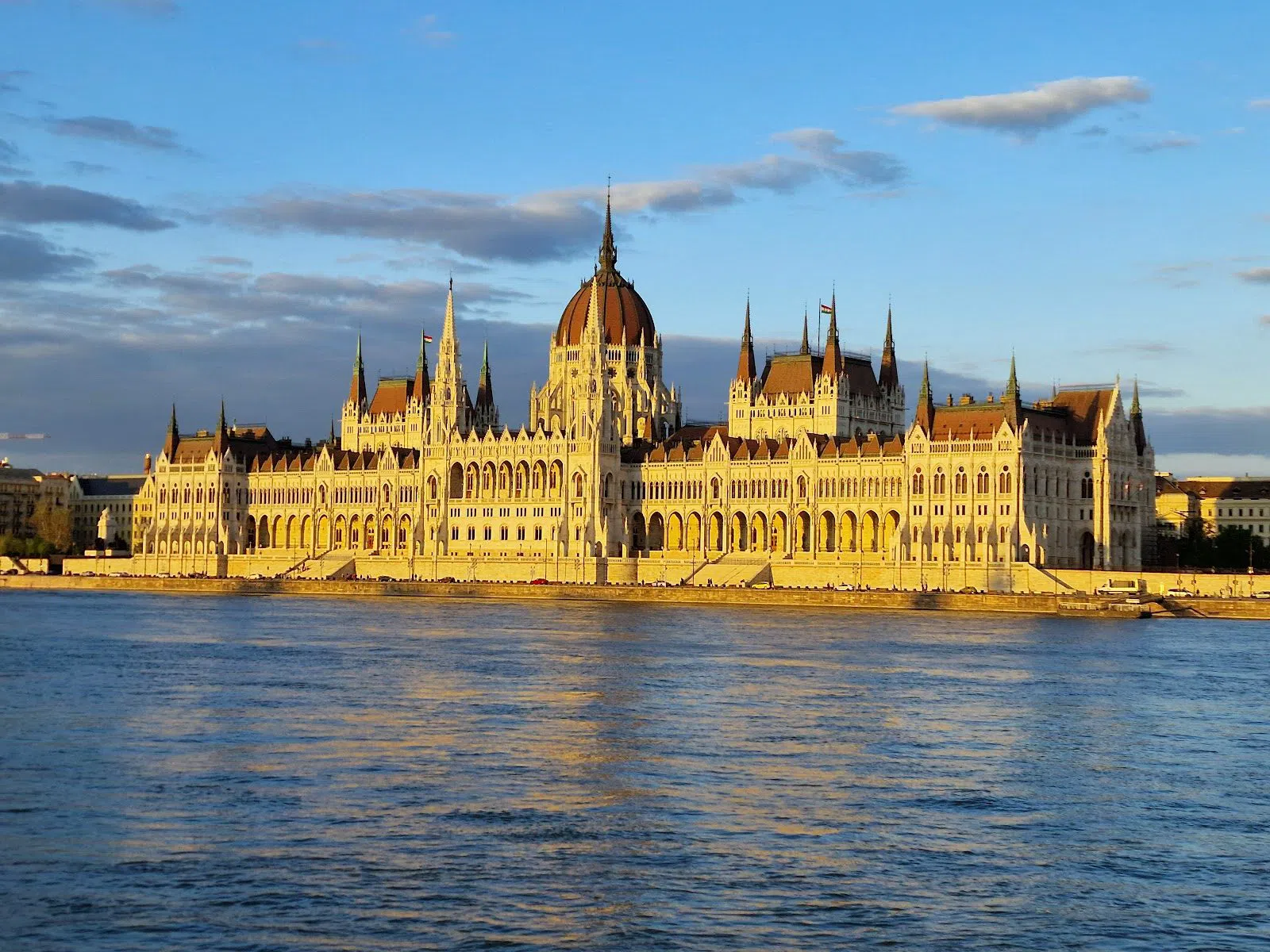
The Hungarian Parliament Building (Kossuth tér, District V) is the cost shock for most international visitors. From 1 January 2026 the guided tour costs 7,000 HUF for EU and EEA citizens and 14,000 HUF for everyone else, with student rates of 3,500 and 7,000 HUF and free entry for under-sixes. The distinction is checked at the desk, so bring your passport and budget the 14,000 HUF rather than the single figure older guides quote. Tours run in fixed language slots on timed tickets and sell out days ahead in season; group bookings have to be made in advance.
The Hungarian State Opera House (Andrássy út, District VI) is the best value in this entire article. Performance tickets start around 900 HUF for rear balcony standing and climb to about 25,000 HUF for premium seats, so a night inside a restored nineteenth-century opera house can cost less than two beers in the ruin-bar district. If you would rather see the building than sit through a performance, English guided tours run at 13:30, 15:00 and 16:30 for 10,500 HUF, with the Hungarian-language tour at 5,800 HUF. Tours are capped per slot and groups are seated by ticket category.
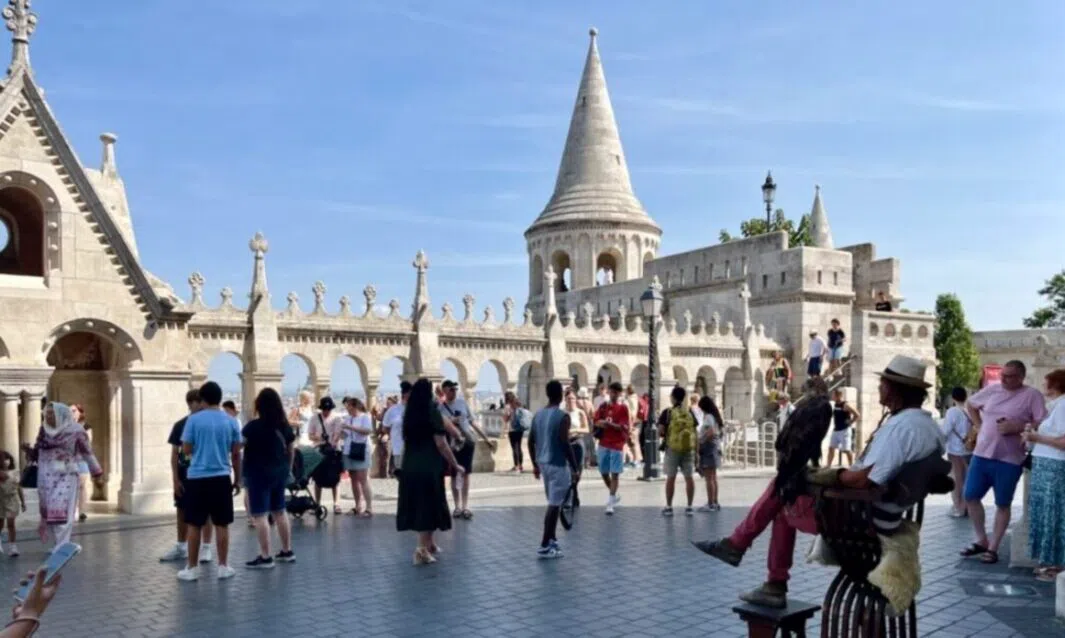
Fisherman's Bastion (Halászbástya) (Castle Hill, Buda) belongs here for its timing rather than its ticket. The lower terraces are always free and always open; only the upper turret terrace is ticketed, at 1,700 HUF. That upper terrace is also free before 9:00 and after 19:00 (after 21:00 from June to September), and on 15 March, 20 August and 23 October. The same view, an hour either side of the paid window, costs nothing and comes with better light.
An hour on the river, priced in advance
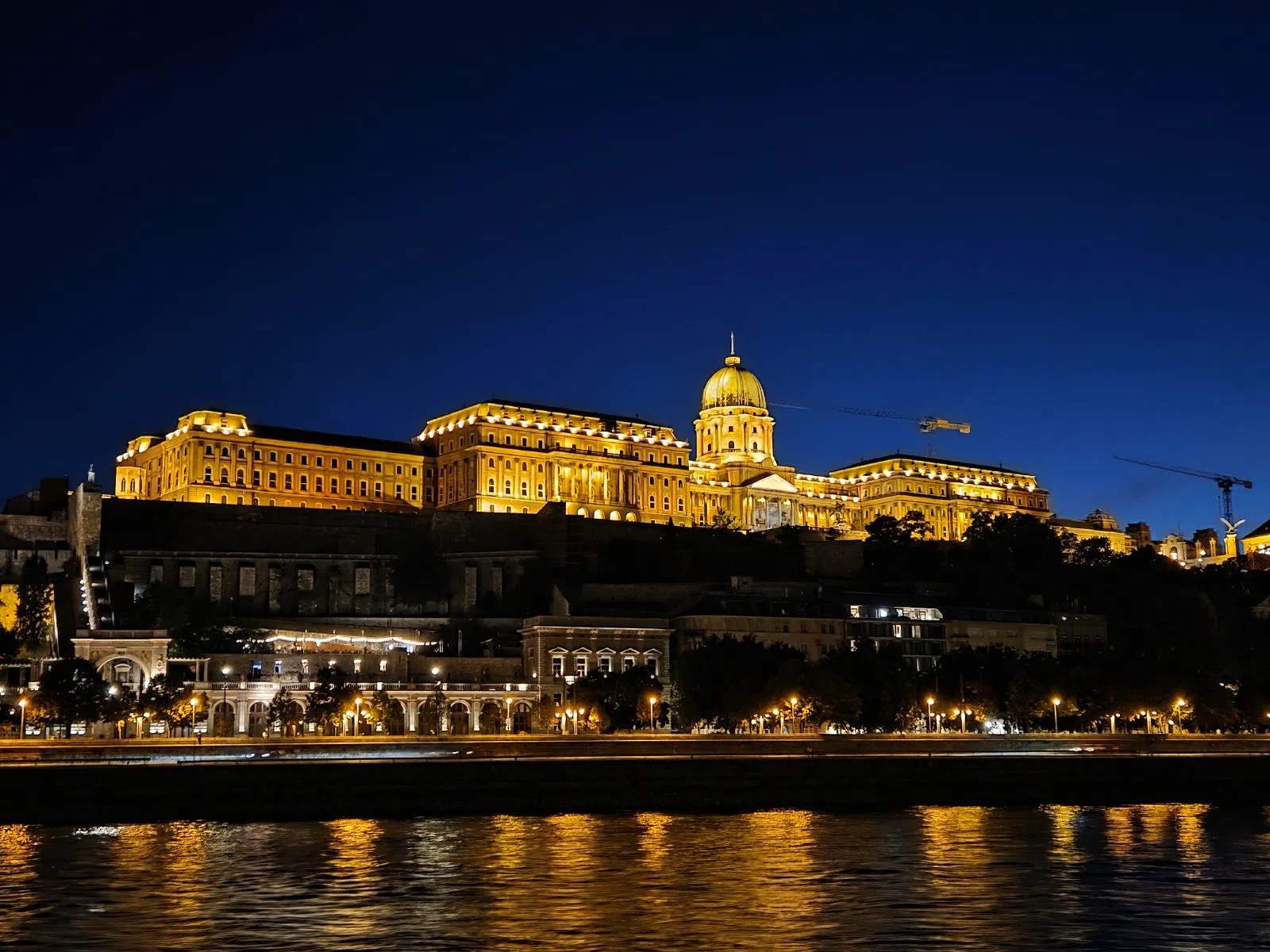
Legenda City Cruises (boarding from the Pest embankment) sells two named boats and quotes in euros. The Duna Bella daytime cruise is €20 for adults, €18 for students, €14 for children aged 10 to 14 and free for under-tens. The Danube Legend evening cruise is €25, €22.50 and €17.50 respectively, and includes a drink; dinner cruises start at €110. The evening run is the one worth the extra €5, and the fixed departure times, online group booking and audio guide in thirty languages make it the sensible option for a mixed-language party, as well as the reason it undercuts the people selling tickets on the embankment.
The top of the ladder
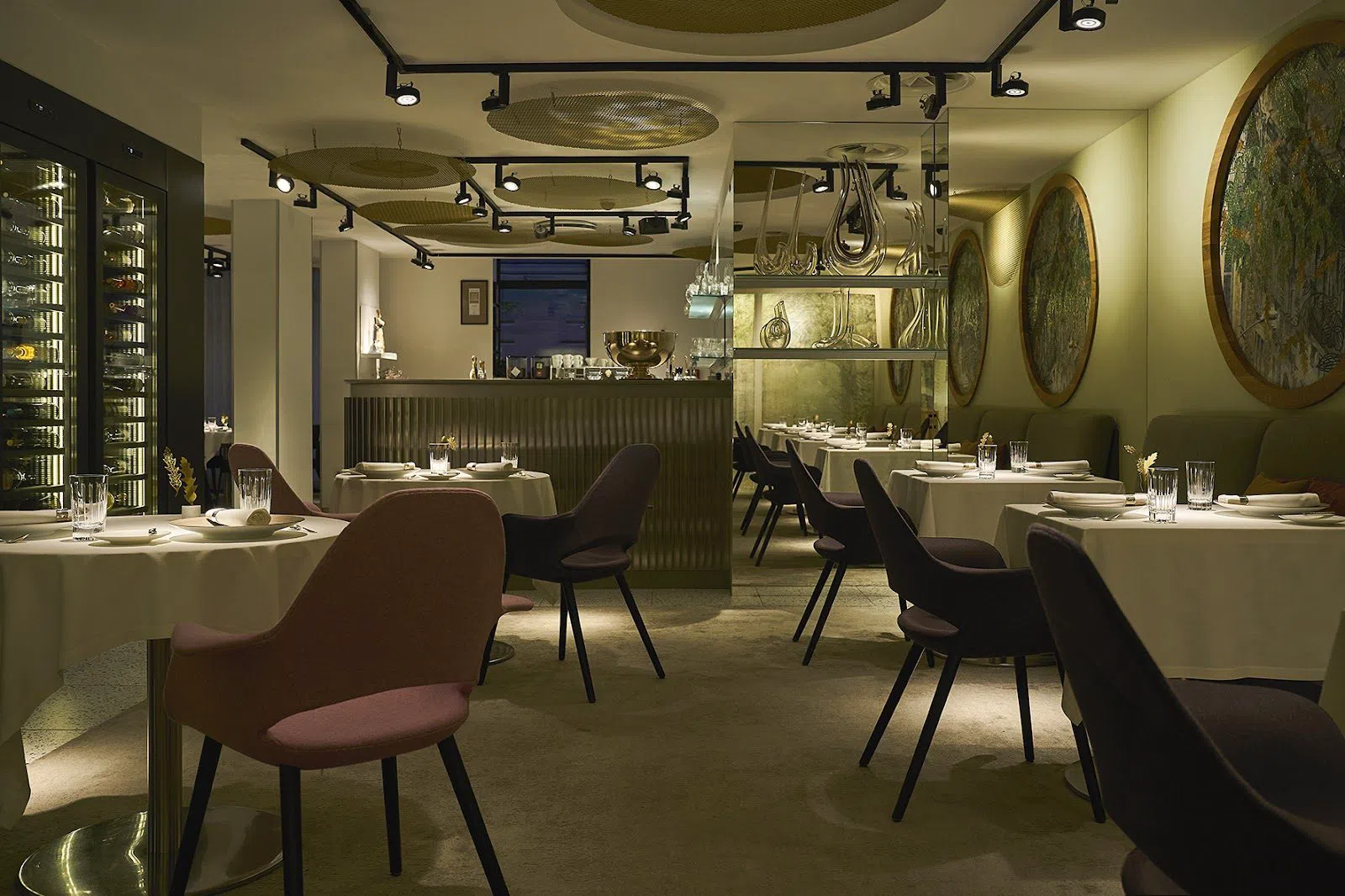
Stand (District VI) is the city's only two-Michelin-star restaurant, and the eight-course chef's menu is 89,500 HUF per person, roughly €246, with a shorter lunch menu also served and Saturday lunch now running. Reservations go through SevenRooms up to sixty days ahead and it sells out; small parties only. Very few readers will book it, but it is worth stating plainly, because it fixes the scale: in one city, on one evening, the range runs from a 900 HUF standing ticket at the Opera to a 89,500 HUF dinner.
What to sort before you arrive
Buy transport in the BudapestGO app on day one. The 72-hour travelcard at 5,750 HUF pays for itself in six rides and removes the on-the-spot markup. Cards are accepted almost everywhere, including at the baths and on the boats, but keep a few thousand forints in cash for market stalls, counter service and cloakrooms. Never change money on the street or accept a price quoted in euros in a forint venue; the exchange is always against you.
On tipping, around 10 percent is normal in sit-down restaurants and bars with table service. Check the bill first, because many places already add a service charge of roughly 12 percent, and paying it twice is the most common way visitors overspend without noticing.
For timing, the pattern is consistent across the city: baths before 9am, Fisherman's Bastion before 9:00 or after 19:00, Parliament booked days ahead, dinner reserved rather than walked into. A realistic mid-range day (travelcard share, a canteen lunch, a mid-tier bath, a sit-down dinner) sits somewhere around 15,000 to 20,000 HUF per person before accommodation, and it drops considerably if you take the Lukács-and-Disznótoros version of the same day. Compare rates for your dates with a Budapest hotel search, and the wider Budapest guide covers what to do once the budget is settled.
Before you go
Is Budapest still cheap in 2026?
It depends on which version of the city you use. Transport is cheap: a 72-hour travelcard is 5,750 HUF, and a three-course daily menu at Belvárosi Disznótoros is 2,800 HUF. But a weekend day ticket at Széchenyi is 15,800 HUF and the Parliament tour is 14,000 HUF for non-EU visitors, so tourist-facing prices have moved well ahead of everyday ones.
How much should I budget per day in Budapest?
Roughly 15,000 to 20,000 HUF per person per day before accommodation covers a travelcard share, a canteen lunch, a mid-tier thermal bath and a sit-down dinner at somewhere like Gettó Gulyás. Choosing Lukács over Széchenyi and eating at counters rather than terraces can bring that down by a third.
Do non-EU visitors really pay double at the Parliament?
Yes. From 1 January 2026 the guided tour is 7,000 HUF for EU and EEA citizens and 14,000 HUF for everyone else, with student rates of 3,500 and 7,000 HUF. Citizenship is checked at the desk, so carry your passport and budget the higher figure.
Do I need cash in Budapest, or is a card enough?
Cards work almost everywhere, including the baths and the river cruises. Keep a few thousand forints for market stalls, counter service and cloakrooms. Avoid street currency exchange, and treat a price quoted to you in euros inside a forint venue as a sign to check the bill closely.
How much do you tip in Budapest?
Around 10 percent is standard for table service. Read the bill first: many restaurants already add a service charge of about 12 percent, and paying on top of that is an easy way to overspend without realising it.