The Great Market Hall opens before most of Budapest has managed its first coffee, and for that first hour it belongs to the market itself: paprika sellers stacking tins into red pyramids, delivery men wheeling in crates of pike-perch off the overnight truck from Lake Balaton, and the handful of locals who know that lángos dough tastes different — better — when the frying oil is still clean. I have eaten breakfast under that steel-and-glass roof more mornings than I can count, and it has never once served the same version of itself twice. That inconsistency, oddly, is the whole point.
Reading the Market Before You Eat In It
The Nagy Vásárcsarnok — the Great Market Hall — sits at the Pest end of the Liberty Bridge, a red-brick, tiled cathedral to produce that opened in 1897 and still runs on three tiers: a ground floor of stalls under the vaulted roof, a basement given over to fish, wine and game, and an upstairs gallery that's mostly food court and lángos counters. It has a reputation, deserved in parts, as the most touristy market in the city — tour groups do file through by 10am, and a slice of the ground floor exists purely to sell fridge magnets. But arrive at opening, work the edges rather than the main aisle, and it's still the place Budapest buys its Sunday roast. For the wider shape of a Budapest trip around it, the Budapest guide is the place to start.
Ground Floor: Paprika, Cheese and the Market's Public Face
The Ground-Floor Paprika & Spice Row (Ground Floor, main aisle) is the first thing every visitor photographs — net bags and tins of paprika stacked in red pyramids under the arches — and it's worth five minutes of an actual conversation with a stallholder rather than a snap-and-go. The distinction that matters, and that most foreign guides skip, is édesnemes versus csípős: édesnemes is the sweet, deep-red paprika that goes into everything from goulash to a simple fried-egg breakfast, csípős is the hot version, and a decent stall will let you smell both before you buy. Tins and packs run €2–8, so it's a low-risk way to bring something genuinely local home rather than a keyring.
A few stalls along, the Ground-Floor Cheese & Dairy Stalls (Ground Floor) split into two distinct shops worth knowing apart. Toward the front, several counters sell imported European cheese, often discounted because it's close to its sell-by date; it's perfectly good, just not the reason to be here. Further back, Hungarian farmhouse dairy takes over: raw milk cheese, fresh goat cheese, curd you can taste before buying. I always ask for a sliver of the farmhouse juhtúró (sheep's curd) — sharp, salty, nothing like the supermarket version — at €3–15 a portion depending on what you're buying and how much. Groups can browse together here without any friction; nobody's queuing for a table.
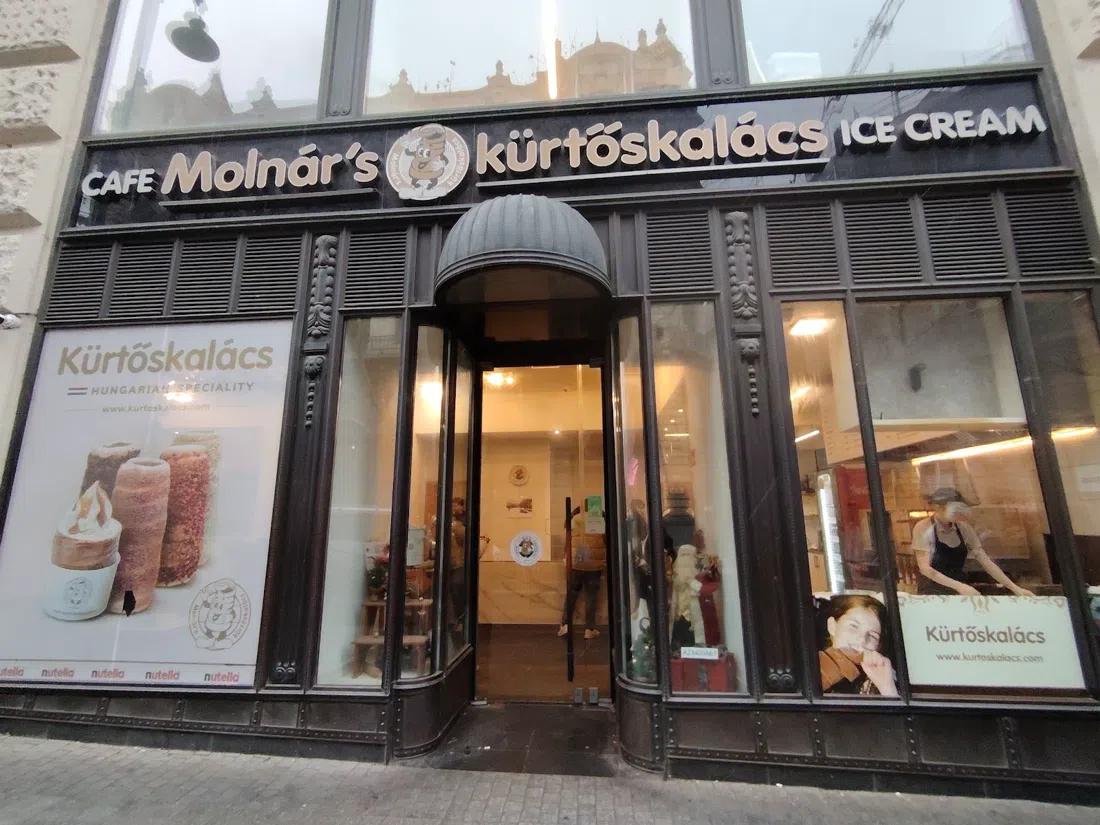
For something sweet on the way through, the Kürtőskalács & Rétes Stand (Ground Floor, main aisle) has been turning out chimney cake and strudel on this spot for more than a decade, which in market terms counts as an institution. The kürtőskalács — a yeasted dough wound around a spit, roasted until the sugar coating caramelises, then rolled in your choice of cinnamon, walnut or coconut — is best eaten within minutes of coming off the spit, while the outside is still faintly crisp. At €2–5 a piece it's the market's cheapest genuine treat, and it's the natural stop to make on the way in rather than the way out, so you're not carrying a warm pastry through an hour of grocery browsing.
Upstairs: Where Breakfast Actually Happens
Climb the stairs at the north end of the hall and the market changes character completely. This is where actual breakfast lives, and where a first-time visitor should be spending the most time and the least amount of forward planning.
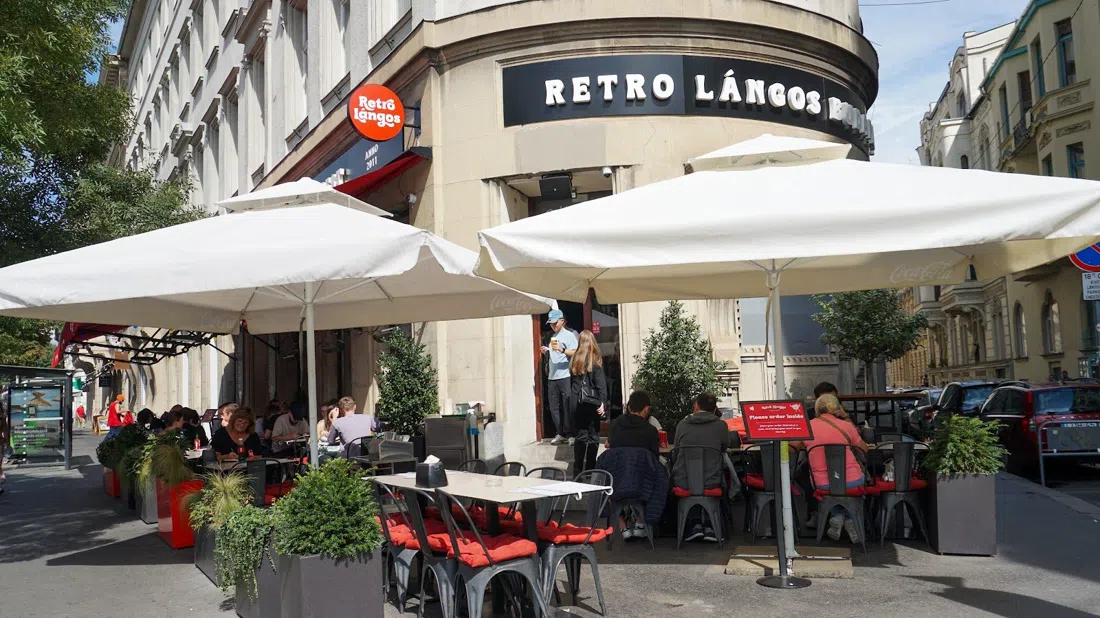
Upstairs Lángos Row (Upstairs gallery) is the reason most people climb those stairs in the first place — roughly thirty stalls and counters, each running its own list of toppings, from the classic garlic-rubbed, sour-cream-and-cheese version Hungarians actually eat, up through bacon and sausage to, at the more tourist-facing end, caviar. A plain garlic lángos is €2–4; loaded versions with three or four toppings run €6–9. My honest order, the one I'd tell a friend to get first: garlic oil, a proper layer of sour cream (tejföl, not the thin stuff), and grated cheese — the base combination the whole dish was built around, before anyone thought to put smoked salmon on it. There's no booking system and no need for one; it's walk-up counter service, which makes it fine for a group that wants to split off and each order something different, but expect a real queue forming by mid-morning. Go before noon on a weekday if you want the freshest dough and don't want to stand for fifteen minutes for a sheet of fried bread that's best eaten hot.
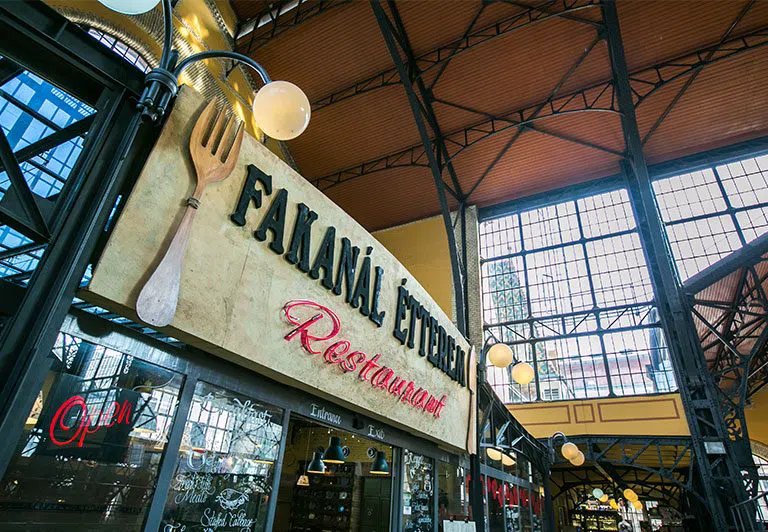
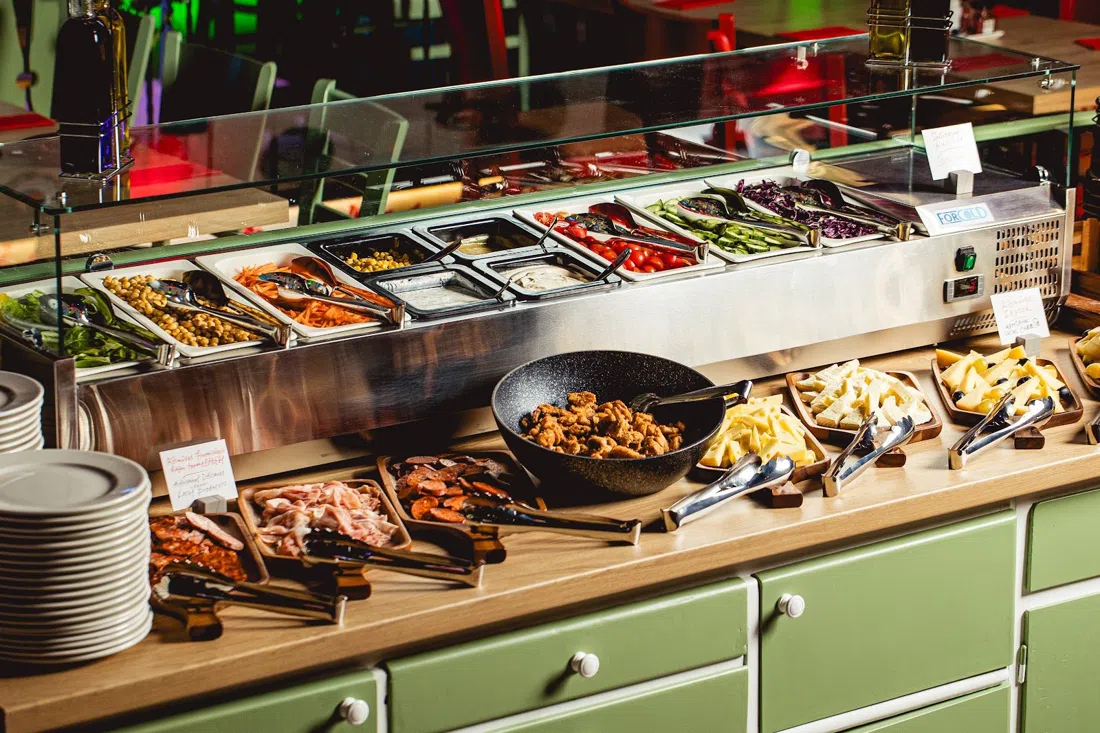
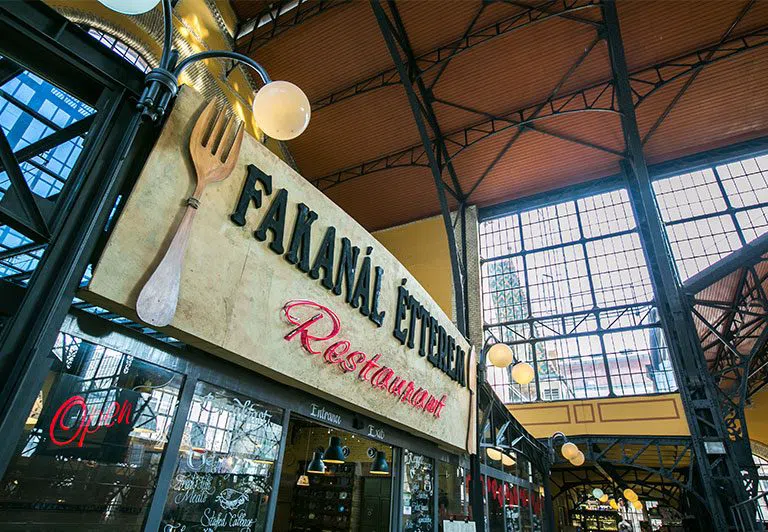
Just along the same upper level, Fakanál Étterem (Upstairs, food court) is the hall's one proper sit-down option — the only air-conditioned restaurant inside the building, and it's been running for more than twenty-seven years, which makes it the closest thing the market has to an anchor rather than a snack stop. It's set up deliberately for groups: it runs guided tasting programs, company parties, and — genuinely — team-building sausage-stuffing sessions for corporate visitors, alongside normal cafeteria-tray service for anyone who just wants goulash and a seat. A plate runs €6–14, which for a sit-down meal inside a market this central is fair rather than cheap. I keep coming back for the goulash tray specifically — it's dependable in a way the counters upstairs aren't obliged to be. If a group wants an actual table and a menu rather than eating standing at a lángos counter, this is the only venue in the building built for it — everything else here is counter and queue.
The Butcher and the Specialists
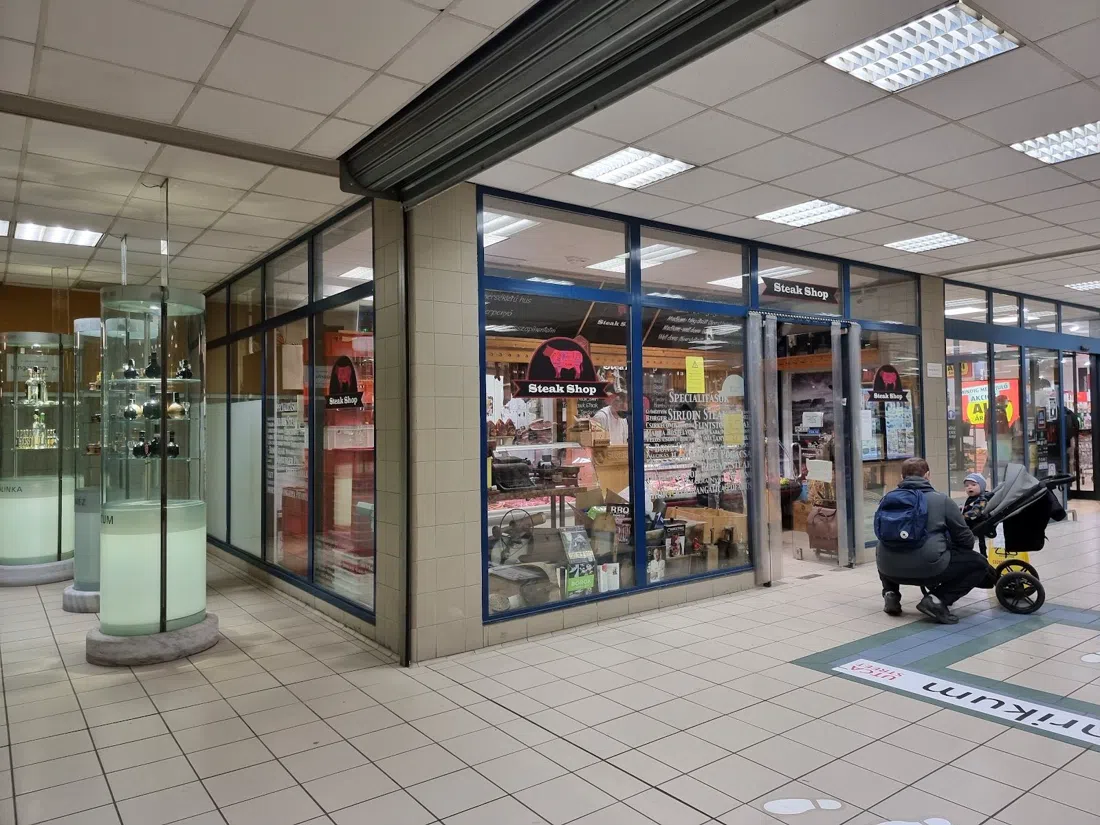
Downstairs and toward the Fővám tér end, the Steak Shop (Ground Floor, butcher counter) is where the market stops being about breakfast and starts being about what Budapest actually cooks at home. It's counter service only, no reservation needed or possible, and the staff are genuinely useful if you tell them what you're planning to do with the meat — travelling with it, cooking that night, or freezing it — they'll cut and wrap accordingly. Everyday cuts start around €15 a kilo; Hortobágyi Angus sits in the middle of the range; Japanese wagyu tops out well past €60 a kilo. It's a locals-trusted counter rather than a display case for photographs, which is exactly why it's worth knowing about for anyone self-catering an apartment stay rather than eating out every meal.
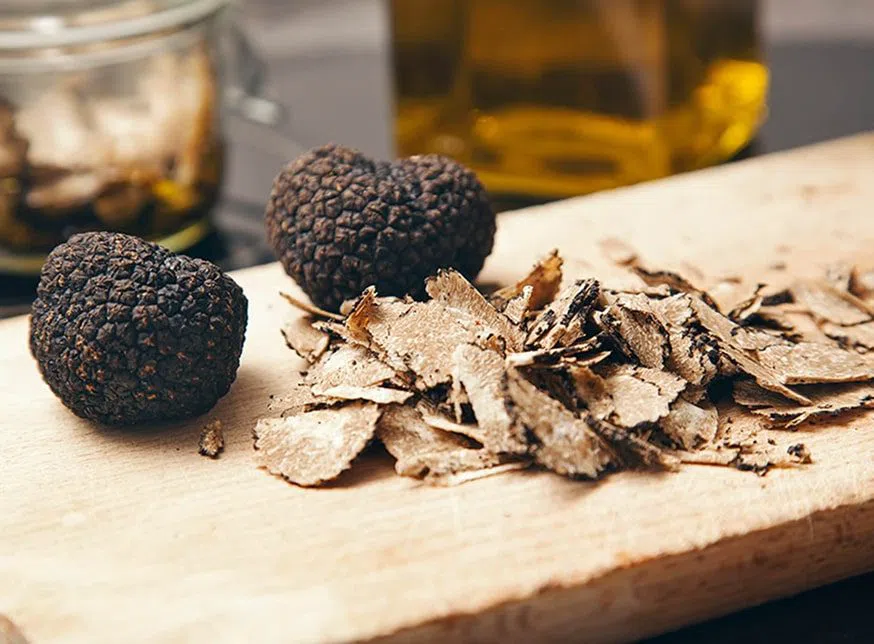
Nearby, Triffla (Triffla Gombabolt, Ground Floor) is the market's genuine specialist stop rather than a novelty stall — hand-processed Hungarian truffle and wild mushroom products, jarred and packed by the same operator who forages and prepares them. It's a small counter, comfortable for two or three people to taste and talk through what's on offer, but it isn't built for a tour group of fifteen; go in a pair, ask what's in season, and expect to leave with a jar of something at €5–20 rather than a bag of ten. I've bought from Triffla on separate trips two years apart and the quality held both times, which is the only reason it's on this list at all.
The Basement: The Market Hungarians Actually Shop
Most tour groups never make it down here, which is precisely the argument for going. The Basement Fish & Game Vendors (Basement) is a working fishmonger rather than a stop built for browsing tourists — crates of Balaton pike-perch, carp for a Christmas Eve fish soup, seasonal game in the colder months, priced at €8–25 a kilo. It's fine to look, and the staff won't chase you off, but this is the part of the hall that operates at the pace of people doing their actual weekly shop, not a photo opportunity, and it's worth arriving with that expectation rather than a tourist one.
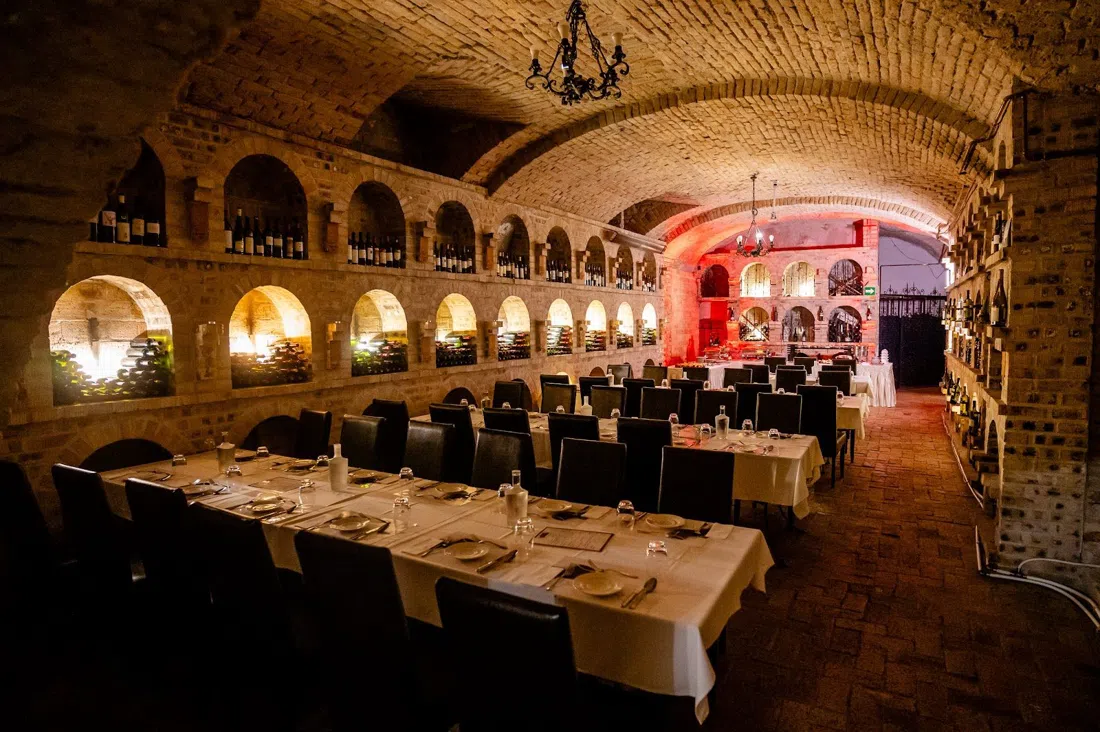
Next to it, the Basement Wine & Hungaricum Exhibition (Basement) does something no other counter in the building does: it explains what's in the glass before you buy it, walking you through Hungary's wine regions — sweet golden dessert wines, crisp dry whites, deep structured reds — with the kind of context a shelf display never gives you. Bottles run €6–25, and the room is small, better suited to a handful of people working through a tasting conversation than a formal group session. It sits directly next to the Hungaricum food display, so the two make sense as one stop rather than two separate errands — wine context on one side, the products it pairs with on the other.
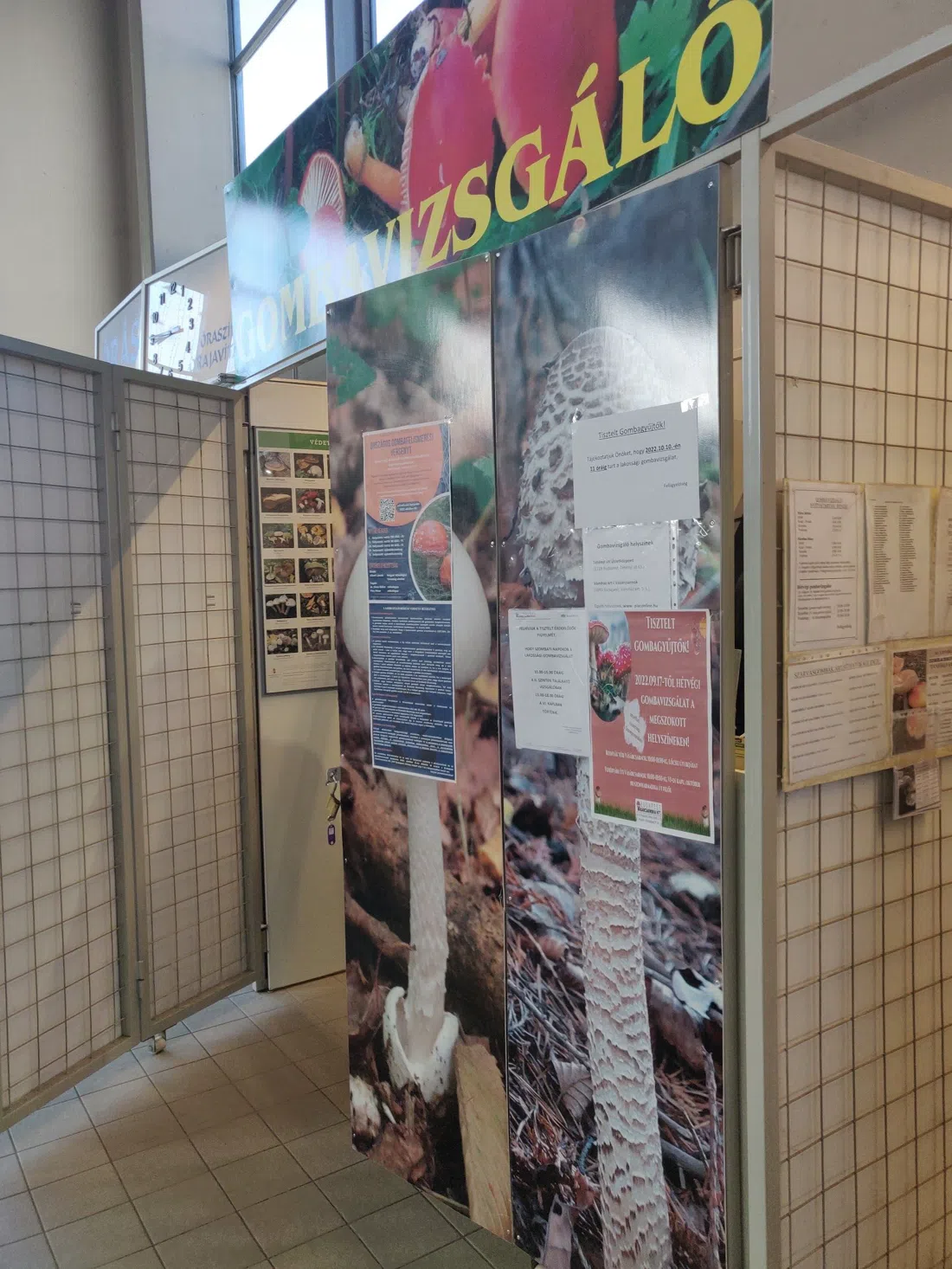
Also in the basement, and stranger than almost anything else in the building, is the Wild Mushroom Stand & Gomba-vizsgáló (Basement) — a stall selling foraged wild mushrooms at €4–15 a kilo, sitting beside a genuinely public service: a free municipal mushroom safety inspection counter, where anyone who has foraged their own mushrooms can bring them in and have a specialist check they're not toxic before eating them. It's browsing only, not something a group interacts with as an activity, but it's the single most Budapest detail in the entire hall — a market that still runs a free poison check as a civic service, decades after most cities dropped anything like it.
Souvenirs on the Way Out
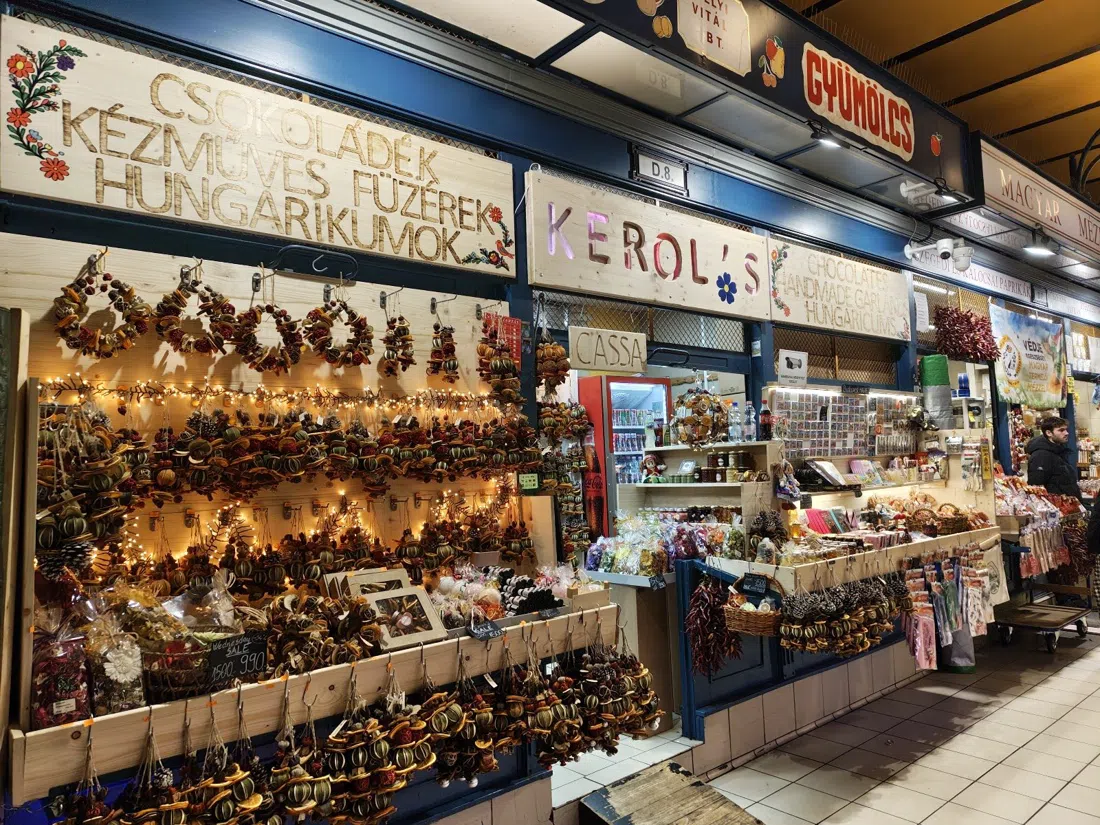
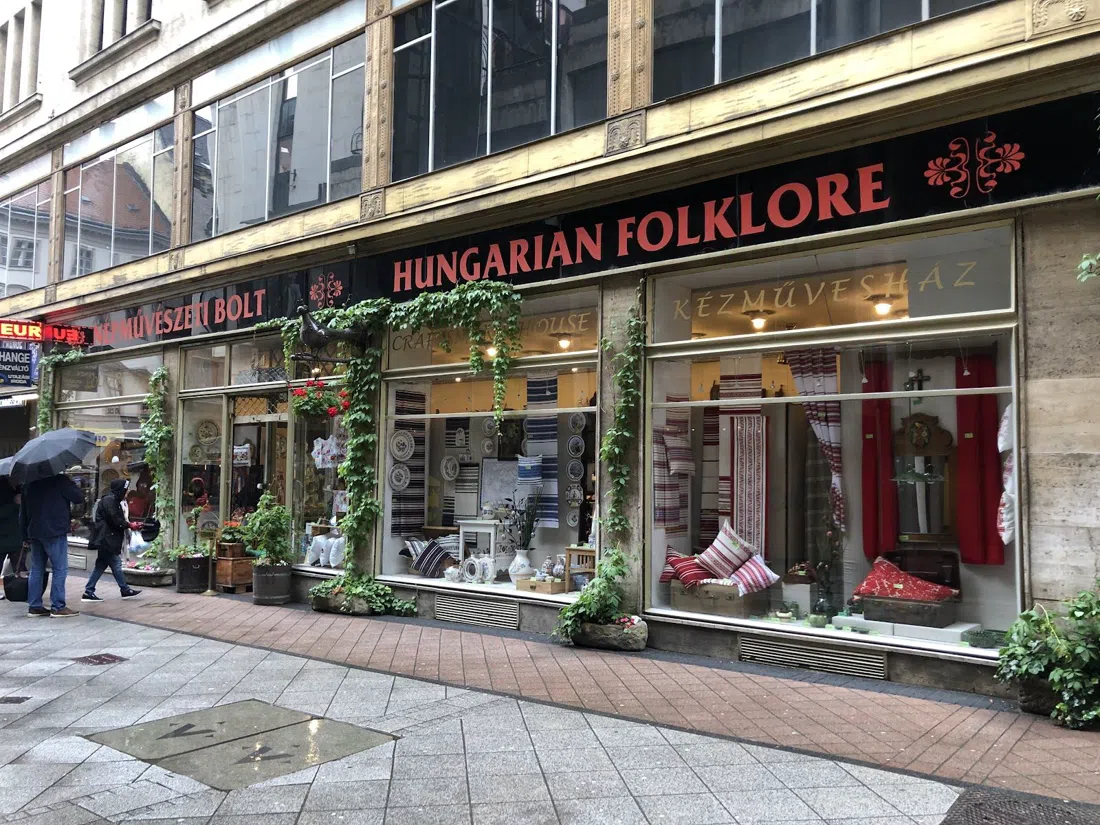
By the time you've eaten your way through the ground floor and basement, the Upper-Floor Folk-Art & Souvenir Row (Upper floor, opposite the lángos stalls) is what catches most visitors on the way back down — embroidered textiles, painted eggs, folk ceramics and the usual market souvenir mix, priced anywhere from €3 for something small to €40 for a proper piece of folk art. Quality and price both swing hard from stall to stall here, more than anywhere else in the building, so it's worth being plain with yourself: compare two or three stalls before buying anything you actually want to keep, and don't be shy about the cash haggling that's normal practice on this row. It's browsing-only, easy for a group to drift through together, with none of the queue pressure the food counters have.
Practical Information
Getting there: the hall sits right at the Pest end of Liberty Bridge, a two-minute walk from the Fővám tér tram and metro stop (tram 47/49, metro line M4). It's walkable from most central Pest hotels; if you're still choosing where to stay, this Budapest hotel search covers options within easy reach of the market.
Timing: the hall opens early on weekdays (roughly 6am) and stays busiest between 9am and noon; it's closed Sundays. Go right at opening for the calmest version of the market — stallholders still setting up, the freshest lángos dough, no tour-group crush — or accept the crowd if a mid-morning visit is the only slot that fits your day.
Cash and cards: most stalls, including the lángos counters and smaller food stands, still prefer cash (Hungarian forint); card acceptance has spread but isn't universal, especially at the smaller specialist counters like Triffla or the wild mushroom stand. Bring some forint rather than assuming a card will work everywhere.
Budget: a proper breakfast — a loaded lángos plus a kürtőskalács — runs roughly €8–13 per person; add a sit-down plate at Fakanál and you're looking at €15–20 for a full, unhurried market meal. Self-catering shoppers buying steak, cheese and wine to take back to an apartment should budget considerably more, depending on how much wagyu ends up in the bag.
Groups vs couples: Fakanál is the only venue genuinely built for large groups wanting a table; the lángos row and food stalls handle groups fine as long as everyone's happy to split off and order separately; the specialist counters — Triffla, the wine room, the mushroom stand — are built for two or three people at a time, not a coach party.