
Beneath the villas and chestnut avenues of the Buda Hills runs a maze of limestone corridors, carved not by rivers but by rising thermal water — the same slow chemistry that still feeds the domes of Lukács Baths a few hundred metres away. Budapest sits on one of Europe's densest urban cave networks, well over two hundred documented systems threaded through District II alone, and while the baths above ground get the postcards, the caves below keep a quieter record of the same geology. This is a guide to visiting that record, from lit galleries a coach party can walk in flat shoes to a thermal-water passage only certified divers are allowed to enter.
Most European show caves were cut by rainwater working its way down through limestone from the surface. Buda's were cut the other way round: warm, mineral-rich water rising from deep thermal springs dissolved the rock from below, a process geologists call hypogenic karstification. It is the same mechanism that still fills Budapest's bathhouses, which is why the caves and the baths are best understood as two visible ends of one continuous system rather than separate attractions that happen to share a hillside.
The Show Caves: Pálvölgyi and Szemlőhegyi
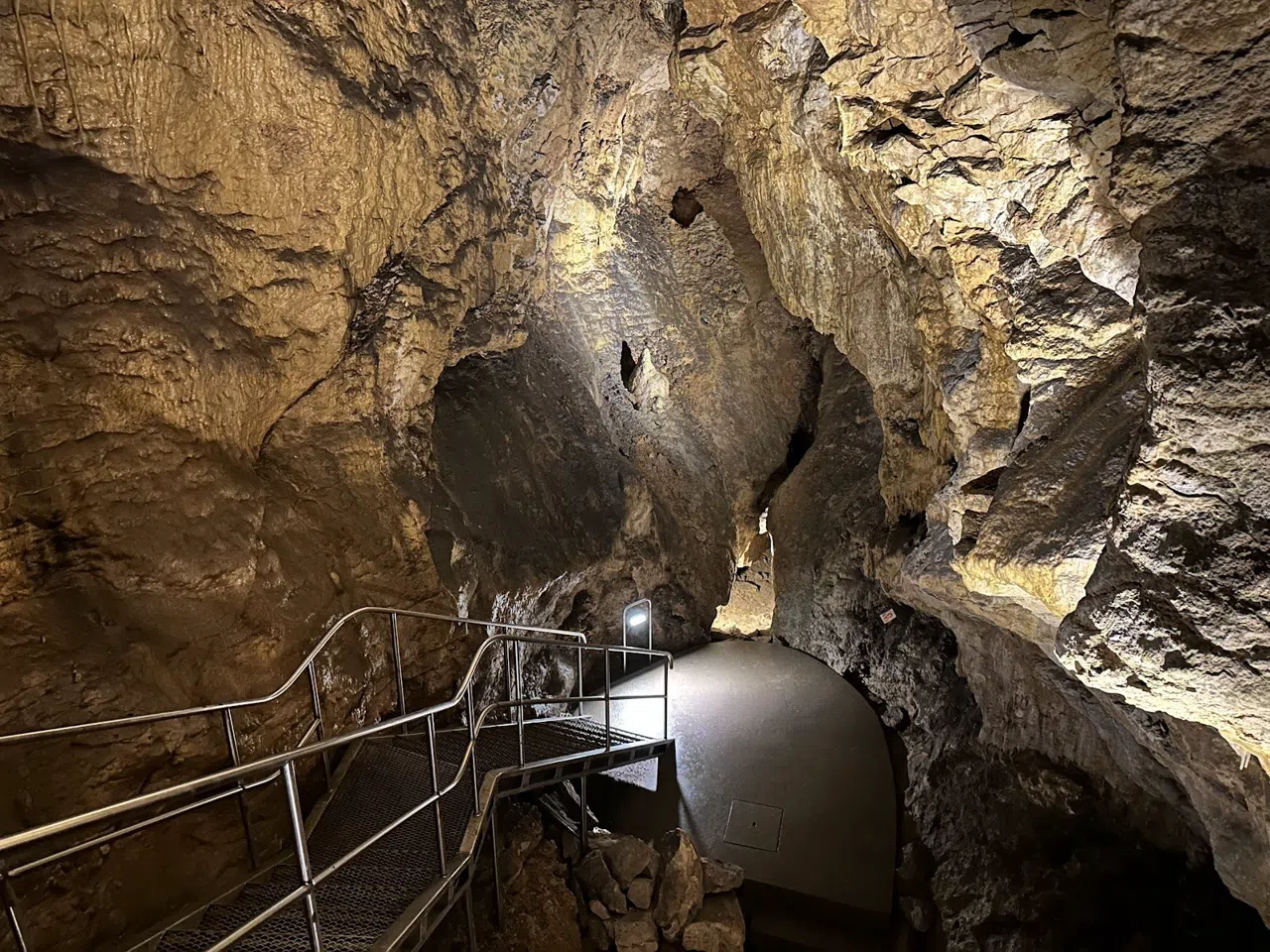
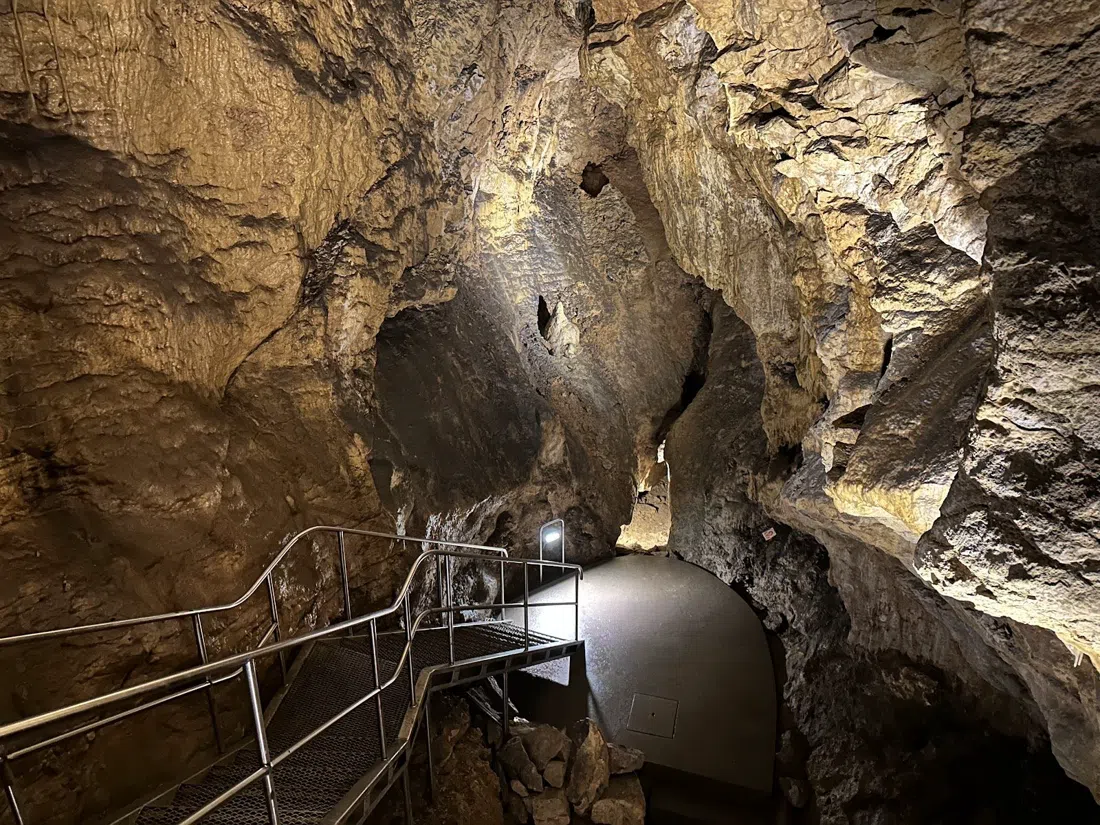
Pálvölgyi Cave (Pál-völgyi-barlang, District II) is the flagship show cave of Duna-Ipoly National Park and the natural anchor of any underground itinerary here. Tours run hourly and take groups of up to about thirty-five people through lit galleries of stalactites and flowstone, with a good half-hour of stairs and narrow passages — sturdy shoes matter more than any particular fitness level. Standard entry is HUF 3,900, reduced HUF 2,800, and the cave is closed on Mondays, which is worth building into any itinerary that only allows one pass through Budapest. For groups of ten or more who want more than the standard walk-through, a private ninety-minute professional guided tour can be arranged with advance booking; it goes deeper into the system's history and geology than the hourly tour has time for.
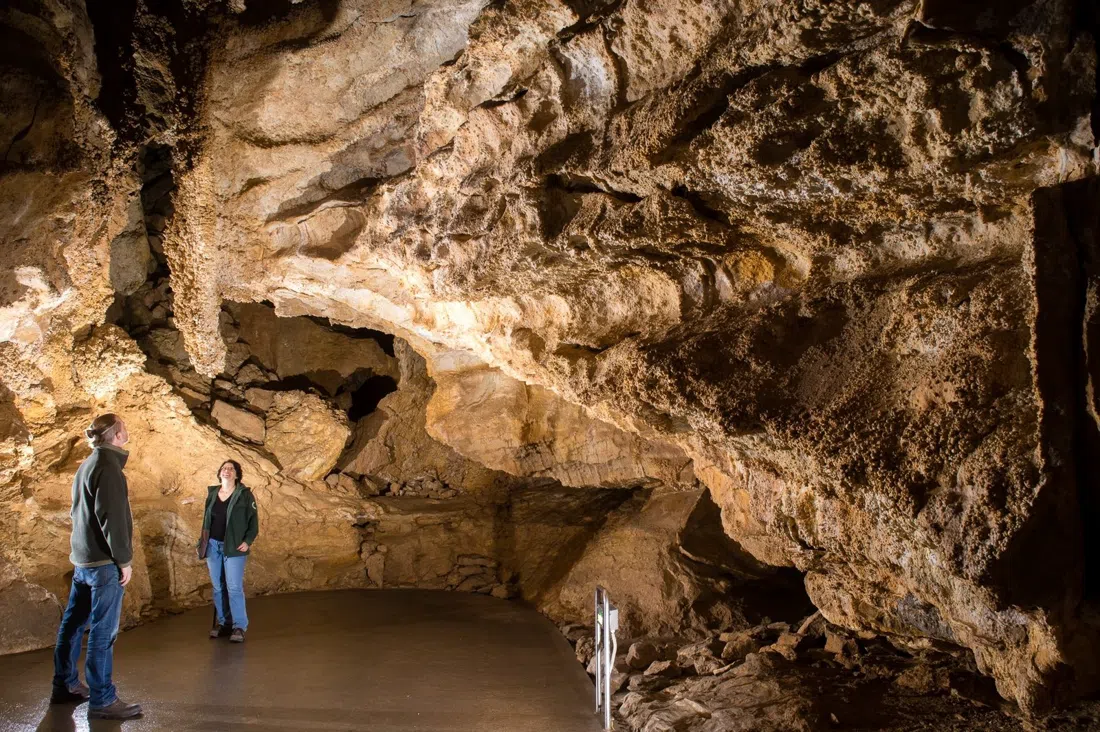
A short walk away, Szemlőhegyi Cave (Szemlő-hegyi-barlang, District II) is smaller and gentler, and it is the one to choose if the group includes anyone who struggles with stairs or narrow squeezes. Its corridors are unusually wide and level for a limestone cave, wheelchair and stroller accessible in a way Pálvölgyi is not, and the forty-minute hourly tours run year-round. What makes it worth the detour on its own merits is the mineral decoration: thermal water here deposited "cave popcorn" and grape-like clusters of aragonite found in almost no other show cave anywhere, which is why locals call it the flower garden. Standard entry is HUF 1,300, reduced HUF 1,000. Buy the combined ticket for both caves — about HUF 5,900 — if the plan is to see them back to back, which is the efficient way to do it: the two entrances sit close enough together in the hills above Óbuda that a single morning covers both without rushing. Both are reachable by local bus from the Kolosy tér transport hub in Óbuda, or by a short taxi ride from central Pest; neither has significant parking, so public transport or a taxi is the practical choice either way.
Beyond the Lit Path: Adventure Caving
The lit galleries at Pálvölgyi open only a narrow, floodlit slice of a genuinely large system — the Pálvölgyi–Mátyás-hegyi network runs to roughly thirty-two kilometres of mapped passage, and most of it looks nothing like a show cave. Adventure Caving (run by caving.hu, same District II hillside) is the way to see the rest of it: two and a half to three hours of crawling, climbing and squeezing through undeveloped passage, in overalls, helmet and headlamp supplied on-site, led by guides certified through the Hungarian Caving Association. It suits small groups and solo travellers alike — both private and shared group departures run — though most routes set a minimum age somewhere between nine and fourteen depending on the specific passage chosen, so families should confirm the exact route before booking rather than assuming. Pricing runs about HUF 24,000 per person (roughly €65–70), which covers the overalls, helmet, lamp and cave entry fee. This is the article's honest answer to "caving beneath the city": the show caves are a comfortable introduction, this is the actual thing.
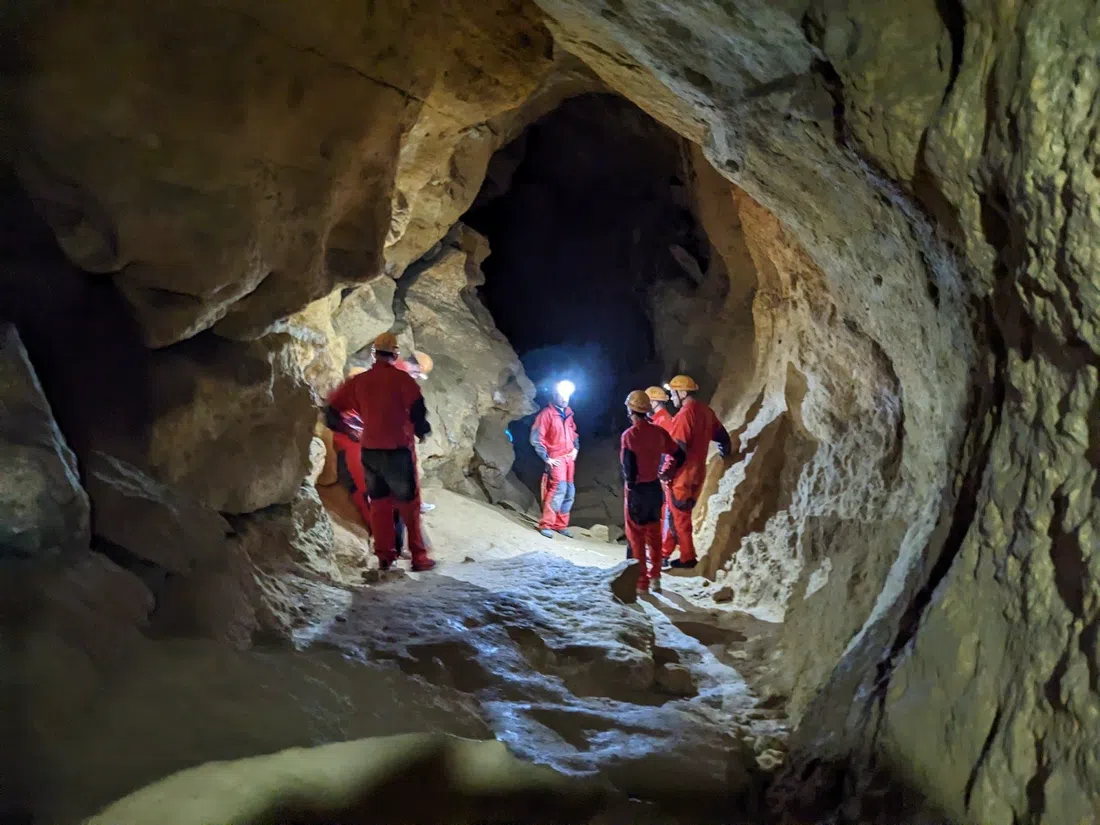
For a second adventure-caving option away from the crowds around Pálvölgyi, Solymári-ördöglyuk (Solymár Devil's Hole Cave, just past the city line in Solymár) sits in the same Buda Hills karst system but runs on its own, more low-key terms. It takes small groups by prior phone booking only, with tours going out on Saturdays; helmets and headlamps are provided and the minimum age is around eight. Book by calling +36 20 396 0092 ahead of the weekend you want — there is no online booking system, which is part of its appeal for travellers who have already done the more commercial tour and want something rougher and quieter on a return visit.
The Thermal Water Beneath: Molnár János Cave
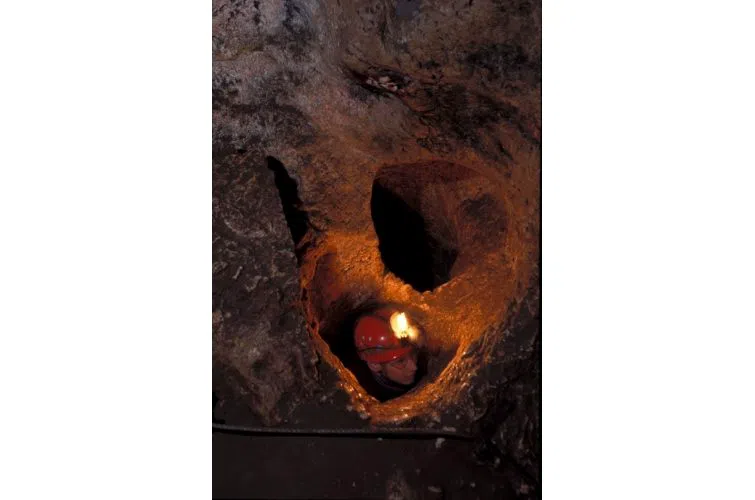
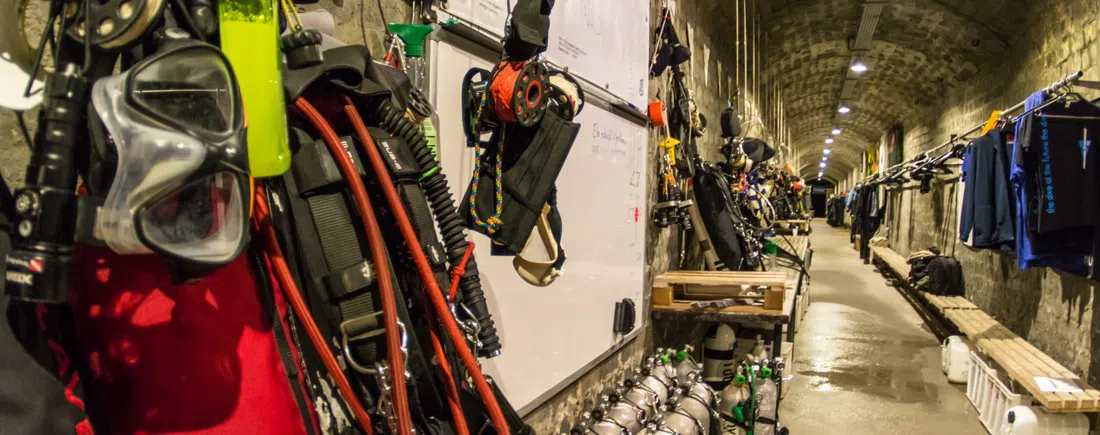
If the headline of this piece — thermal limestone — has a literal address, it is Molnár János Cave (by Lukács Baths, Frankel Leó út, District II). This is one of only a handful of active thermal-water cave systems in the world open to diving, and the water inside is the same warm spring water that surfaces in Lukács Baths a short walk away: divers are, in effect, swimming through the plumbing that has fed a Budapest bathhouse for centuries. Access is strictly for certified cave divers — documentation and insurance are checked before anyone enters the water — and non-diving companions cannot follow them in, though they are welcome to wait at the site or spend the time at Lukács itself next door. A dive costs roughly €60–70 plus about €40 for gear rental, with deeper or longer dives running €70–170. This is a niche entry by design: most visitors to Budapest will never dive it. But no honest account of the city's underground geology skips it, and for readers who do hold cave-diving certification, it is one of the more distinctive dives available anywhere in Europe.
Free and Easy: Two Caves Anyone Can Walk Into
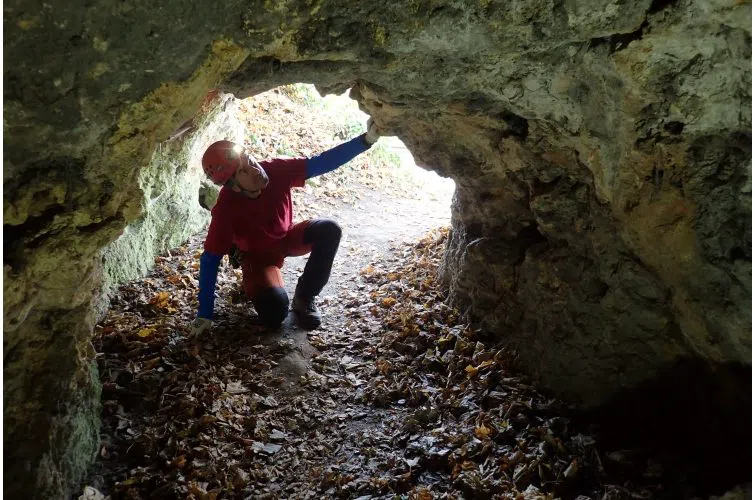
Not every cave here needs a ticket or a guide. Remete-barlang, out at Hűvösvölgy in the western hills, is freely accessible year-round with no booking and no fee — bring a torch, follow the short path from the Hűvösvölgy bus terminus, and it suits families, casual walkers and groups of any size who just want to feel Buda's karst underfoot without committing to a tour. There is nothing lit or interpreted inside; it rewards curiosity rather than convenience.
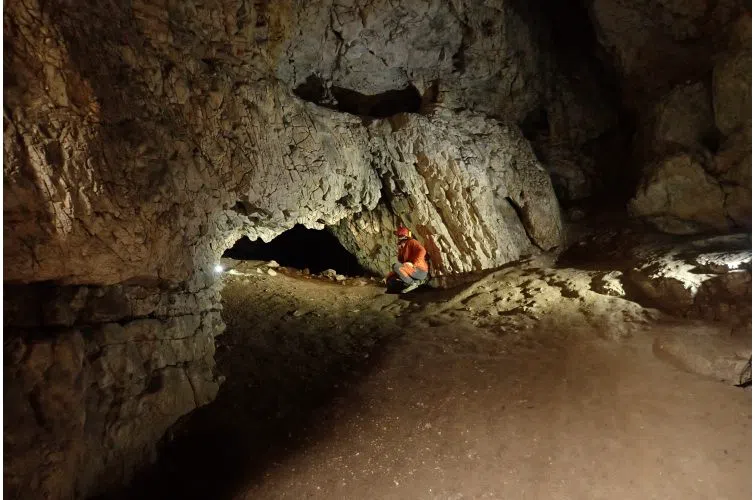
János-hegyi-átjáróbarlang (János Hill Passage Cave), up on János Hill near the Zugliget chairlift, is the other free option and arguably the easier one to fold into a day already built around the hill's lookout tower. It is one of Budapest's oldest thermal-origin caves and needs no guide to enter — it works well as a fifteen-minute add-on for anyone riding the chairlift up for the view and wanting one more thing to do at the top before heading back down.
Caves With a Human Story
Not all of Buda's karst is about geology. Three sites turn the same limestone into a story about how people have used it.
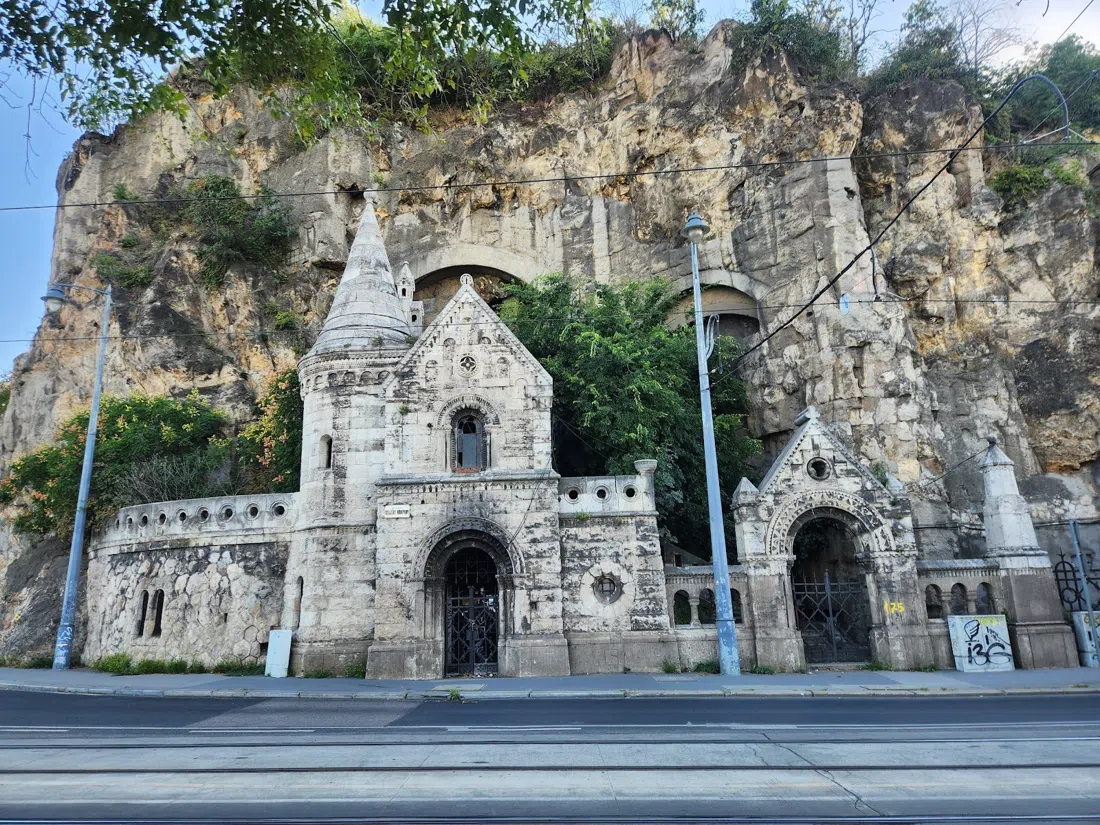
Gellért Hill Cave Church (Sziklatemplom, Gellért Hill, District XI) is a natural cave still functioning as a chapel, run by the Pauline order, and it is proof this landscape is not only for scientists and divers — it is lived-in. Guided tours are available and take groups comfortably, though access is reduced during religious services, so it is worth checking service times before planning a visit around it. Entry runs roughly HUF 1,000–1,500, making it one of the cheaper stops on this list and an easy pairing with a walk up Gellért Hill itself.
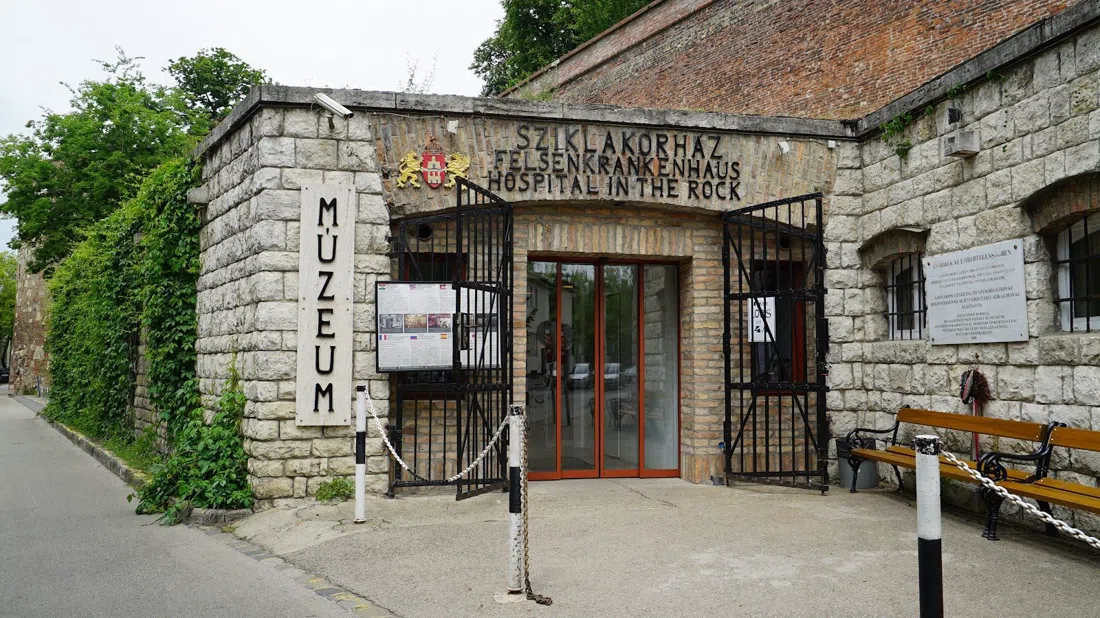
Hospital in the Rock Nuclear Bunker Museum (Sziklakórház, Castle Hill, District I) takes the human-history angle furthest: natural cave passages under Castle Hill were converted first into a secret military hospital during the Second World War, then expanded into a nuclear bunker during the Cold War, and the museum today walks visitors through both eras in the same tunnels. Hourly English-language tours run through the day, and groups can book ahead via [email protected]. At HUF 6,000–7,000 (roughly €15–20) it is pricier than the geological caves, but the tour is substantial and unlike anything else on this list.
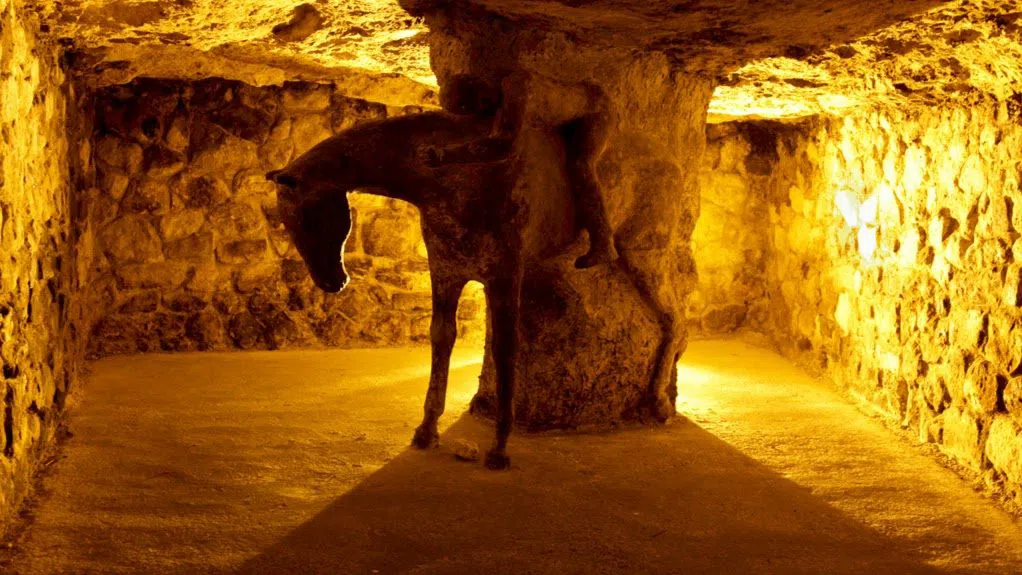
Buda Castle Labyrinth (recently rebranded Panoptikum after a legal dispute over its former name, Castle Hill, District I) is the one to approach with the right expectations. The cave system underneath is genuine historic passage, but the current attraction leans hard into wax-museum theming that will not suit every traveller — it is closer to a curiosity than a serious geological or historical tour. It opens daily 11:00–18:00 with tickets sold at the booth, no advance booking required, for roughly HUF 5,000–6,500. Worth including for completeness and because the door is easy, but go in knowing it is the kitsch entry on this list, not the scholarly one.
Planning the Underground Route
Budapest's caves cluster in two groups that make sense to treat separately. The geological caves — Pálvölgyi, Szemlőhegyi, the adventure caving routes, Remete-barlang and János-hegyi-átjáróbarlang — sit in the western Buda Hills, mostly District II, and reward a full morning or afternoon devoted just to them, ideally starting early since the show caves run on fixed hourly departures and the last tour of the day fills first in summer. The historical caves — the Cave Church, Hospital in the Rock, the Castle Labyrinth — sit on Gellért Hill and Castle Hill respectively, close to the rest of central Buda's sightseeing, and slot naturally into a day already built around the Castle District.
Bring cash. Several of the smaller and family-run operations, including the Solymár tour, are not set up for card payments, and even the national park's show caves are easier with forint in hand. Layers matter more than people expect: cave temperatures sit in the low teens year-round regardless of what Budapest is doing outside, so a light jacket is worth carrying even in August. None of the show caves or the Cave Church need advance booking for solo visitors or couples turning up within opening hours, but anyone travelling as a group of ten or more, or wanting the private Pálvölgyi tour, the adventure caving trip, or Molnár János diving, should book ahead — same-day availability on those is not guaranteed, especially at weekends.
Budget for a single show cave visit is modest, under ten euros a head at current forint rates; a half-day combining Pálvölgyi and Szemlőhegyi with lunch in Óbuda comes in well under fifty euros per person. Adventure caving and cave diving sit in a different bracket, sixty to a hundred-plus euros, reflecting the guiding, equipment and certification checks involved rather than any premium on the caves themselves.
Timing is worth a little thought. The geological caves run year-round at a near-constant temperature, so there is no real off-season for them the way there is for outdoor sightseeing, though summer weekends bring the largest crowds and the tightest same-day availability at Pálvölgyi. Winter, by contrast, is a good time to have Szemlőhegyi's mineral galleries largely to a small group. Families travelling with young children should default to Szemlőhegyi and the two free caves over Pálvölgyi's stairs and squeezes, and should check age minimums directly with caving.hu or the Solymár operator before booking either adventure route, since the exact figure moves with the specific passage chosen for that day.
For where to base a stay near this side of the city, see the Budapest hotel search; for the rest of what the city offers above ground, the Budapest guide covers it.