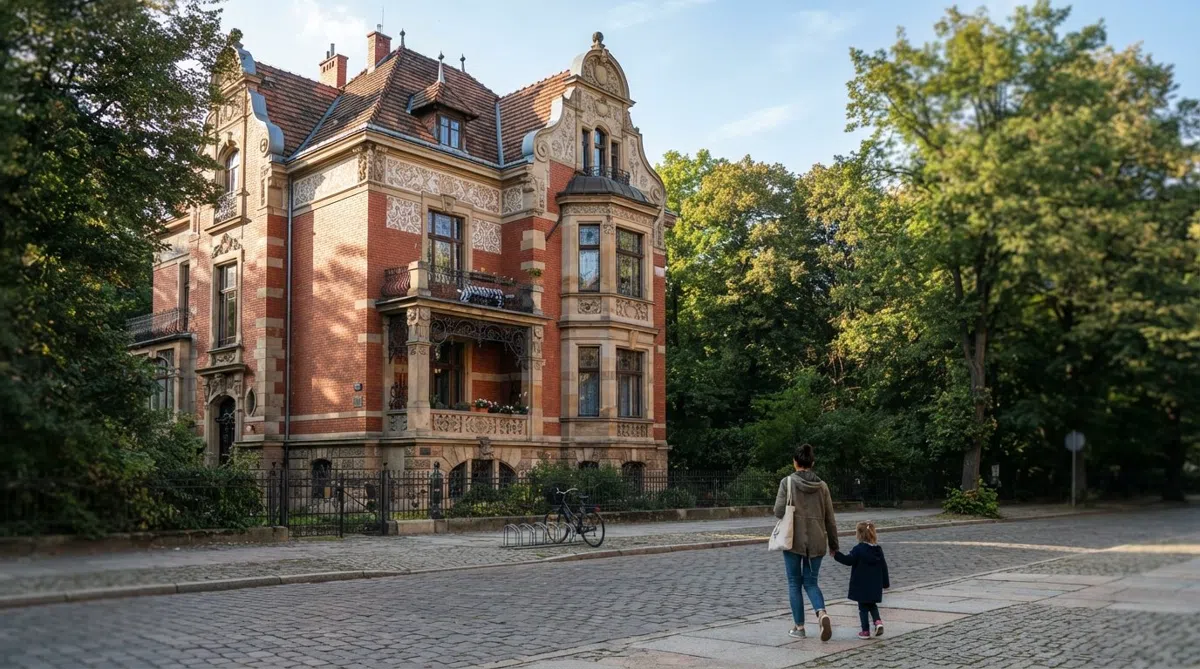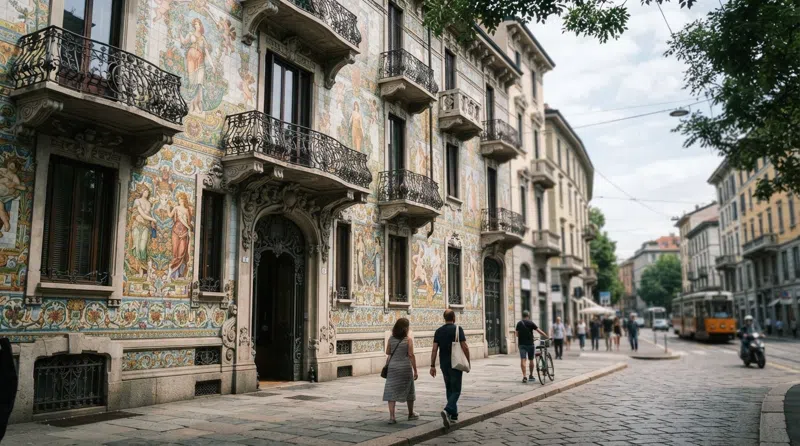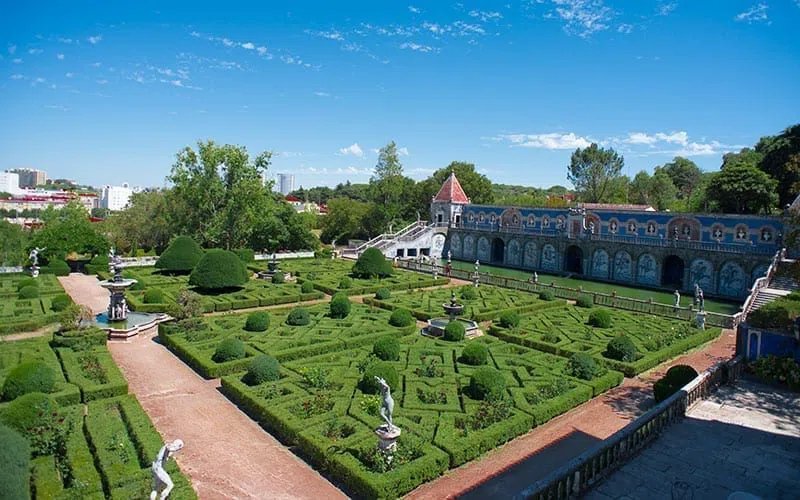

Budapest wears its turn-of-the-century decade like a costume it never took off. Between roughly 1896 and 1910, a generation of architects looked at the city's new wealth, its national anxieties, and its access to a single ceramics factory in Pécs, and decided that Budapest would not simply copy Vienna's Secession or Paris's Art Nouveau. It would build its own, folk-motif-laden, folded-roof, gold-and-peacock-blue version, led by one uncompromising architect who believed Hungary needed a national style and set out to invent it. What follows is a walking trail through the buildings that resulted, grouped so you can cover them on foot without crossing the same bridge four times.
Ödön Lechner's own grammar: the two buildings he designed to prove a point
Start with the man himself. Ödön Lechner trained as an engineer, travelled through England and studied Indian and Persian ornament, and returned home convinced that Hungary's future national style should draw on its own folk-art and Eastern roots rather than imitate Gothic or Baroque revival. He found his material in Zsolnay ceramics — the pyrogranite tiles and glazes from the Pécs factory that could survive Budapest's frost in a way ordinary terracotta could not — and used them to cover roofs and facades in patterns no other European capital was attempting at the time. Contemporaries mocked the results as "Gypsy" and "gingerbread"; a century on, those same roofs are the reason coach parties still stop in the street to look up rather than walk on.
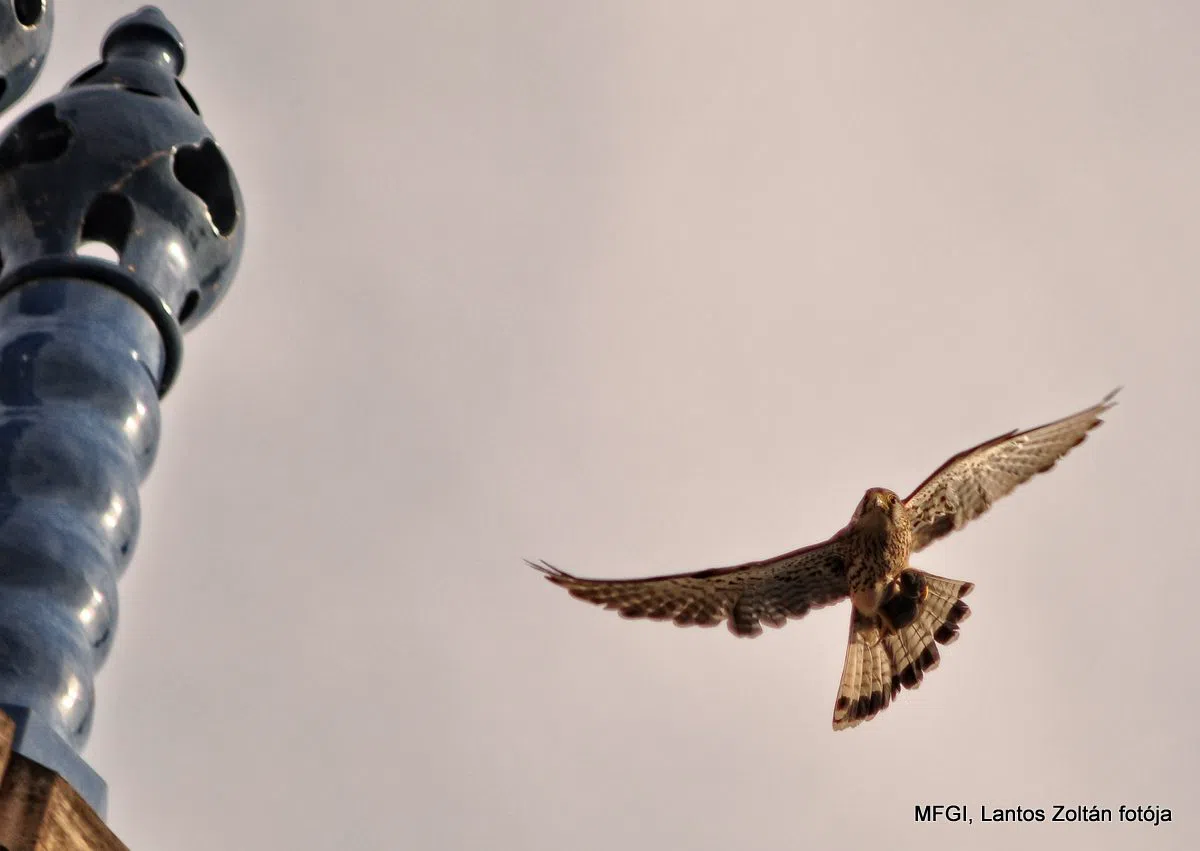
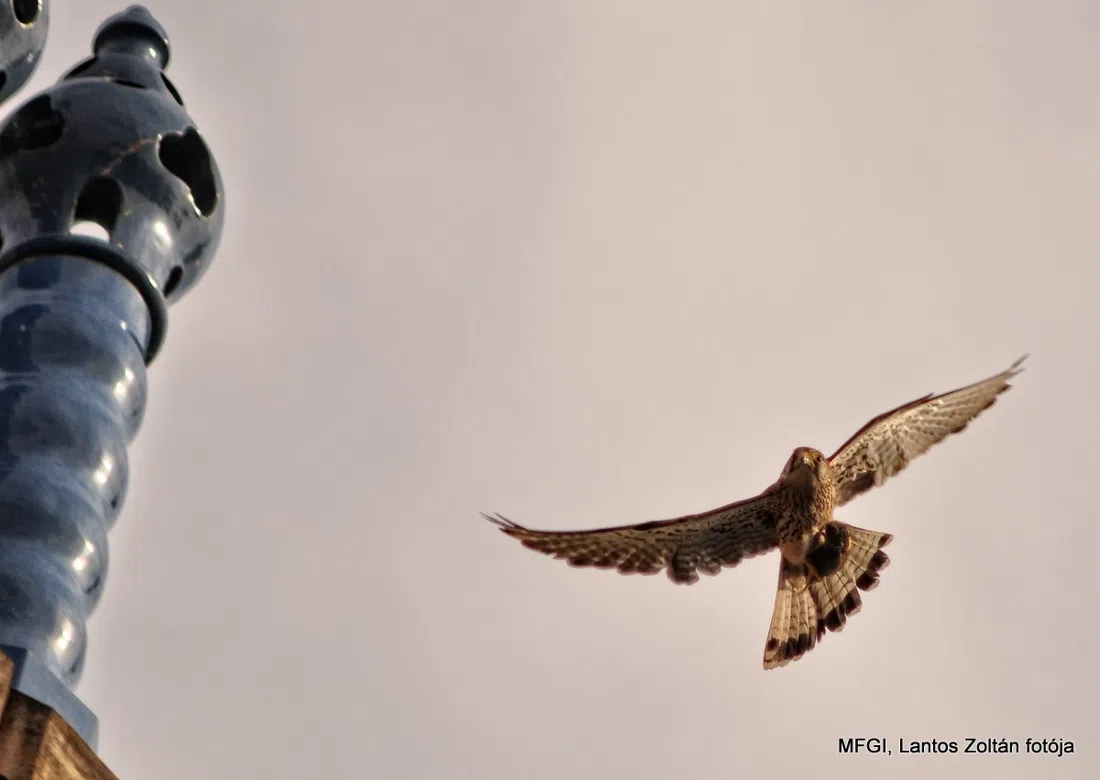
The Mining and Geological Survey of Hungary — Lechner Building (former Hungarian Geological Institute), out toward the eastern edge of City Park, is by most accounts Lechner's own favourite among his works and the best-preserved of the group. The roofline is the whole reason to make the trip: a rolling wave of blue-green Zsolnay tiles topped with an Atlas figure holding up a globe, folk-pattern majolica bands running beneath the eaves, and a symmetry that reads as much like a pavilion as an office building. It still functions as a working geological institute with a free museum inside, and it welcomes small groups by advance email booking — best for parties under about 20 people, with a donation appreciated rather than an admission charged. Because it sits away from the main tourist paths, it rarely feels crowded even on a Saturday.
The second Lechner stop is the one every visitor photographs without necessarily knowing the architect's name: the Hungarian State Treasury building (former Royal Postal Savings Bank), a few streets behind St. Stephen's Basilica. This is Lechner's most photographed roof — a shimmering, almost reptilian pattern of green, yellow and blue majolica tiles crowned by ceramic bees climbing toward gilded beehives, a not-so-subtle metaphor for a savings bank collecting deposits. The catch: it is a working state institution with no public interior access, so this is an exterior-viewing stop only. The good news is that exterior viewing costs nothing and accommodates any group size, since you're simply looking up from the street. Pair it with a nearby rooftop-view spot, since Lechner built this roof to be seen from above as much as from the pavement, and ground level only gives you half the joke.
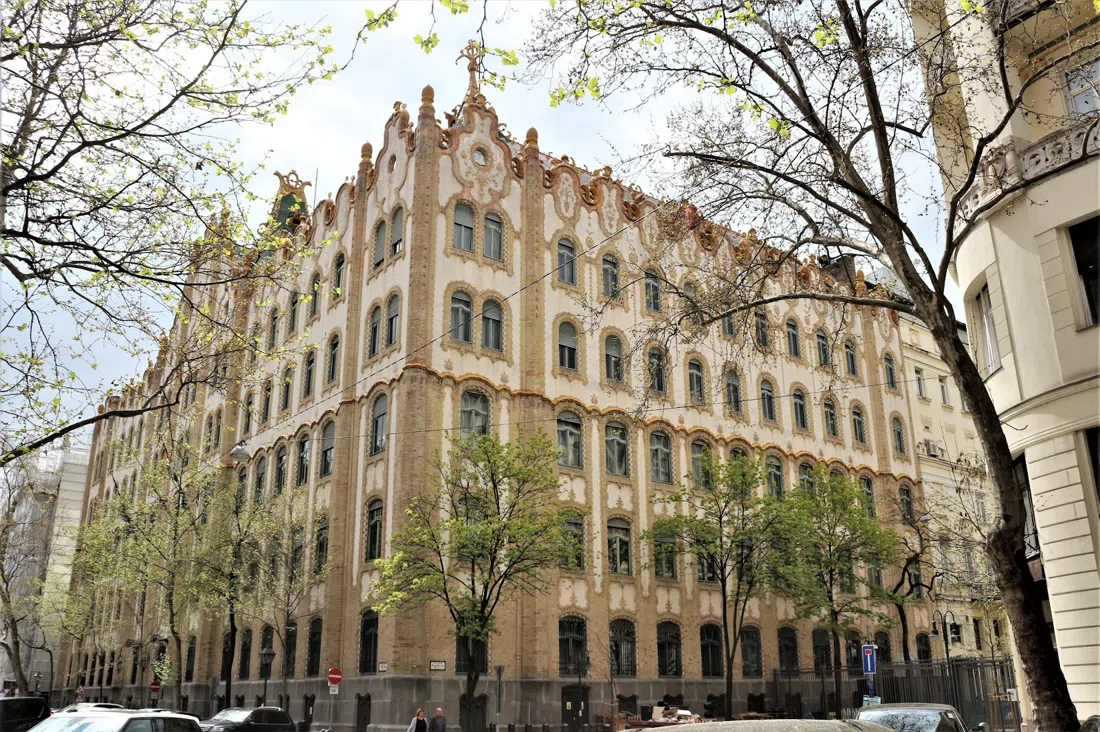
The grand arcades: where Art Nouveau meets hotel lobby
Two of Budapest's most photogenic Art Nouveau interiors happen to sit inside working hotels, and both are free to walk through, which makes them among the easiest wins on this trail.
The Four Seasons Hotel Gresham Palace, facing the Danube and Chain Bridge in the heart of the Belváros, is probably the building most people picture when they say "Budapest Art Nouveau." Built in 1906 for the Gresham Life Assurance Company, its Zrínyi Passage arcade — wrought-iron peacock gates, stained glass and mosaic floors — is freely walkable by small groups, and the lobby bar serves coffee and cocktails from around HUF 3,000 upward if you want a reason to linger rather than just pass through. Larger tour groups are welcome in principle but should stay discreet: this is a functioning five-star hotel with paying guests, not a museum, and front-of-house staff will manage flow if a coach party turns up unannounced.
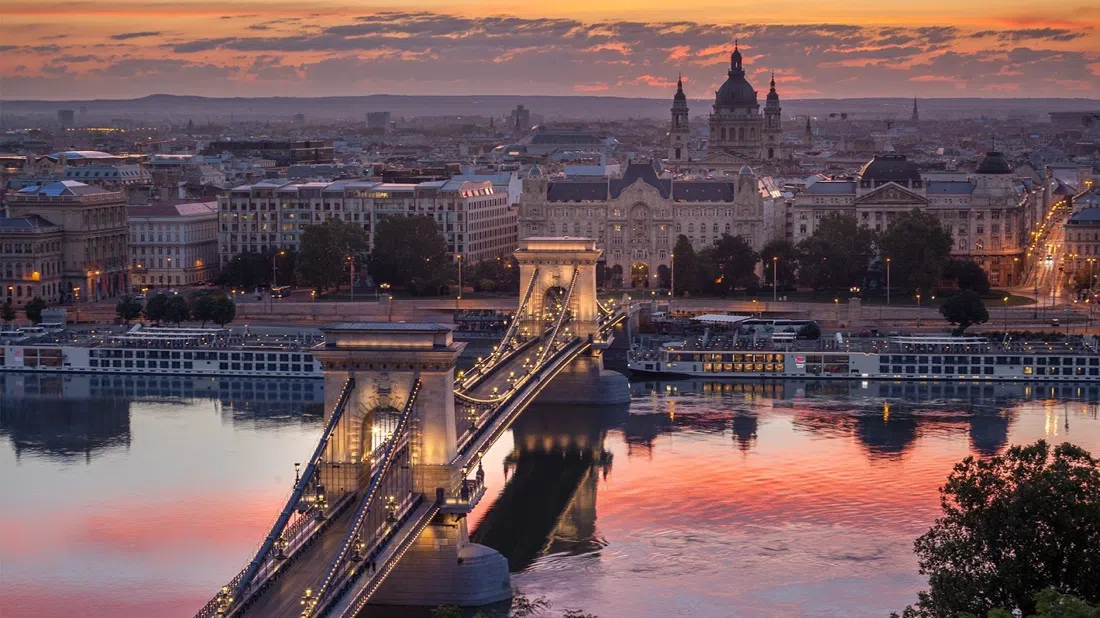
A short walk into the historic shopping district, Párisi Udvar (the Parisi Udvar Hotel arcade) makes a strong case for being the most photogenic indoor space on the entire trail — and it costs nothing to see. Built as a passage connecting two streets and restored in recent years into a hotel, its vaulted, stained-glass ceiling glows over a floor of coloured tile in a way few interiors in the city can match. The arcade is public and freely walkable for any group size; the hotel also runs ticketed architectural tours for anyone who wants the full history rather than a five-minute wander. Café prices inside run moderate-to-high, in keeping with the setting.
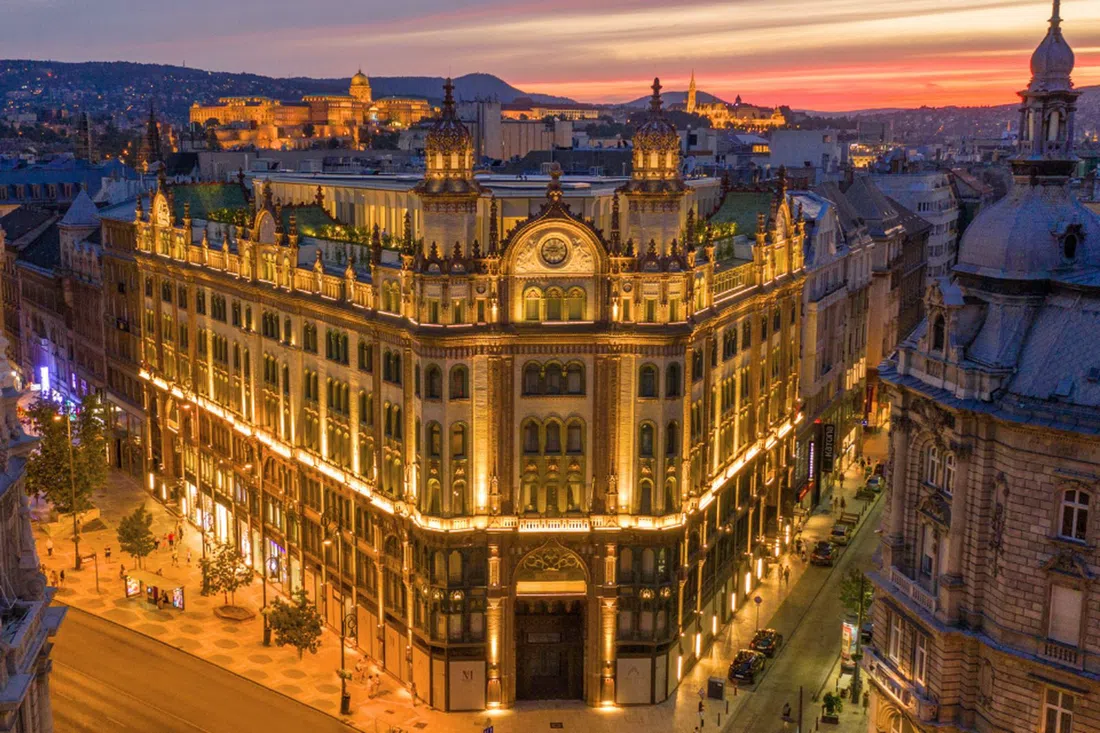
Institutions you can actually sit inside
Two stops on this trail reward slowing down rather than just glancing up, because both let you occupy the space rather than merely view it.
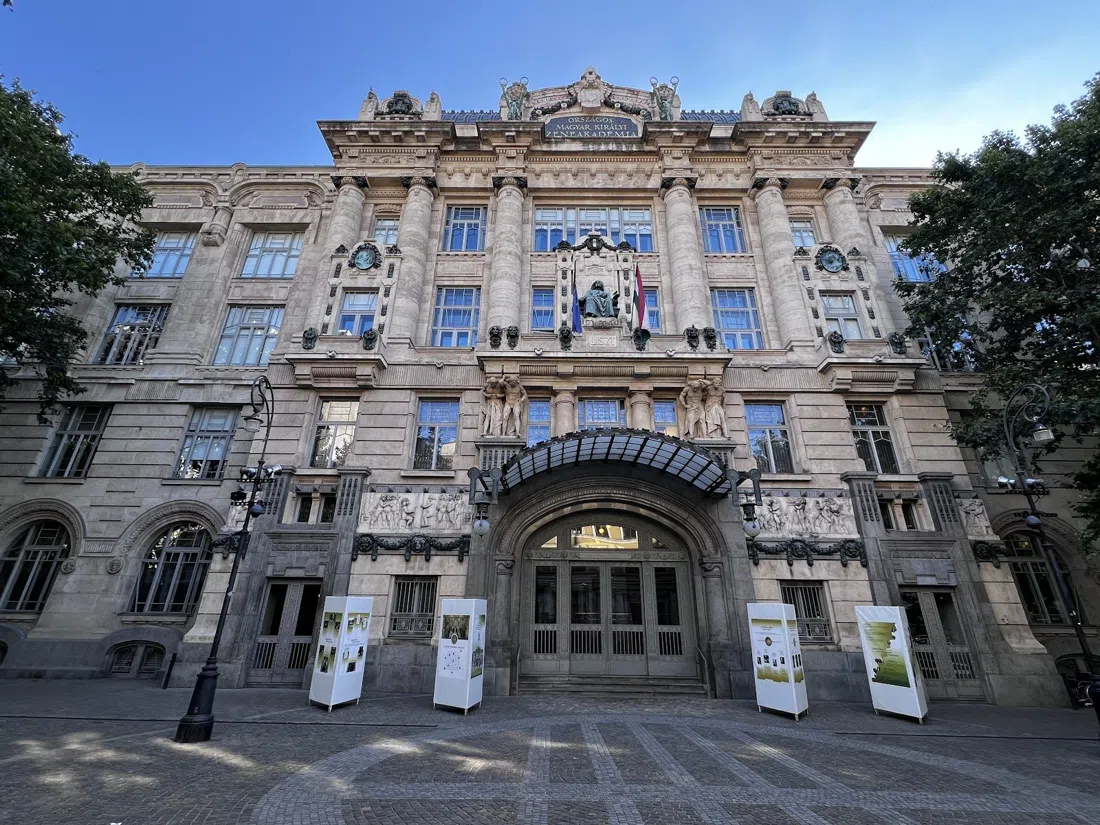
The Liszt Ferenc Academy of Music, just off Andrássy Avenue, is a working conservatoire rather than a preserved museum piece, which is exactly its appeal — a rehearsal drifting through the gilded, Zsolnay-tiled halls makes a stronger case for Lechner-era maximalism than any static exhibit could. Guided English-language tours run daily around 13:30 and should be pre-booked; groups are welcome, and the building is also open to anyone holding a concert ticket. Tours run roughly HUF 3,000–4,000, with concert prices varying by programme.
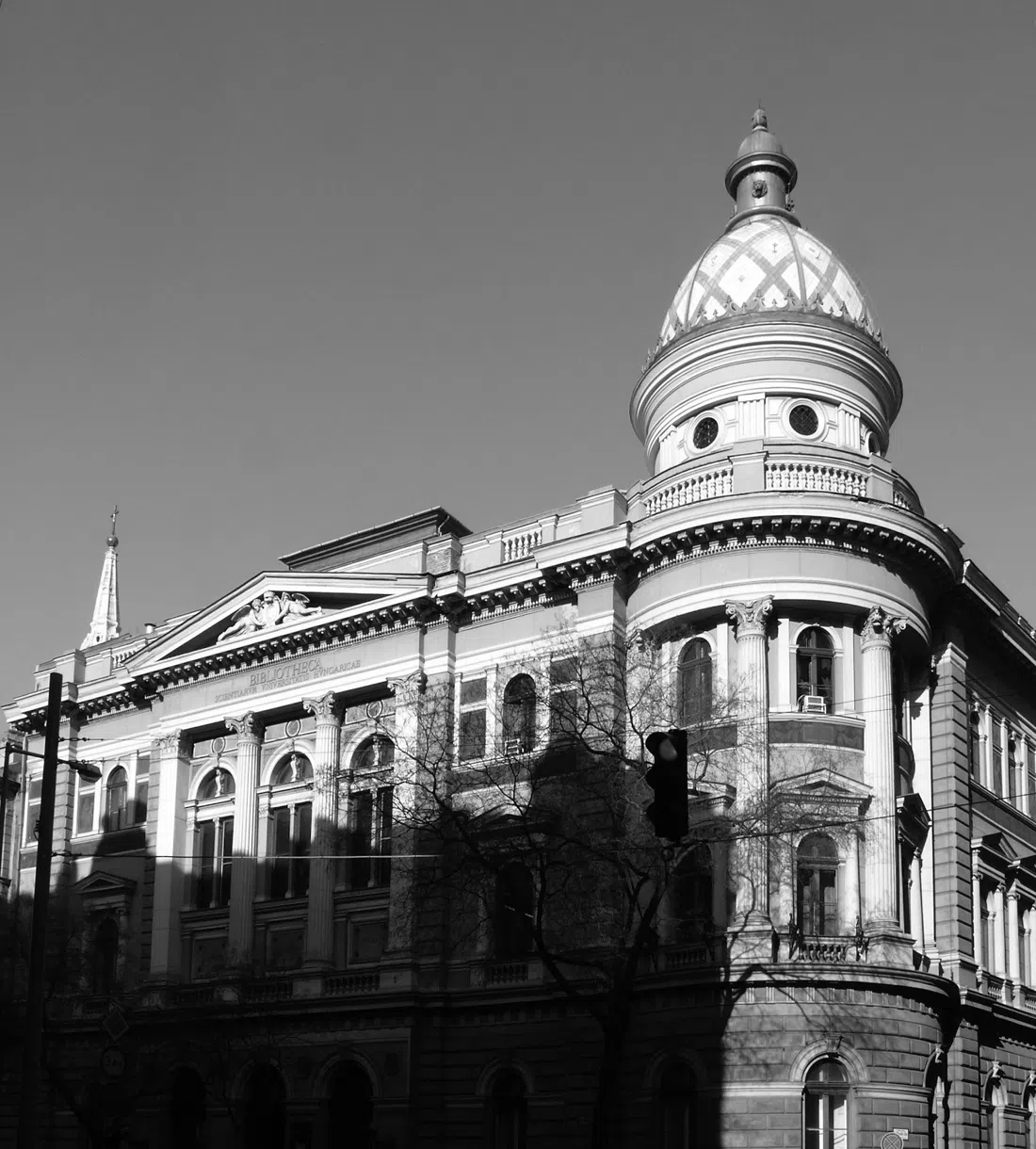
Across town in central Pest, a few minutes' walk from the Danube, the ELTE University Library (Egyetemi Könyvtár) holds what is arguably Central Europe's most Art Nouveau reading room — the Great Reading Hall, frescoed and galleried, still in daily use by students. It's one of the few stops on this entire trail where you can actually sit down and work under the decoration rather than just photograph it from a doorway. Individuals can join an audioguide tour for around HUF 2,000–2,500; groups touring the building need to register in advance.
Applied arts and the quieter, residential Art Nouveau
Not every important building on this trail is grand. Some of the most telling stops are small.
The György Ráth Villa, tucked into a quiet street near City Park, a residential-scale museum building housing the Museum of Applied Arts' Art Nouveau collection, is currently the single best place in the city to see Hungary's Art Nouveau decorative arts up close — furniture, ceramics, glass and metalwork rather than architecture alone. It stands in as a substitute while the main Museum of Applied Arts building remains shuttered, and it takes standard museum group tours by prior arrangement. It's open Tuesday to Sunday, 10:00–18:00, with admission around HUF 2,000–3,000.
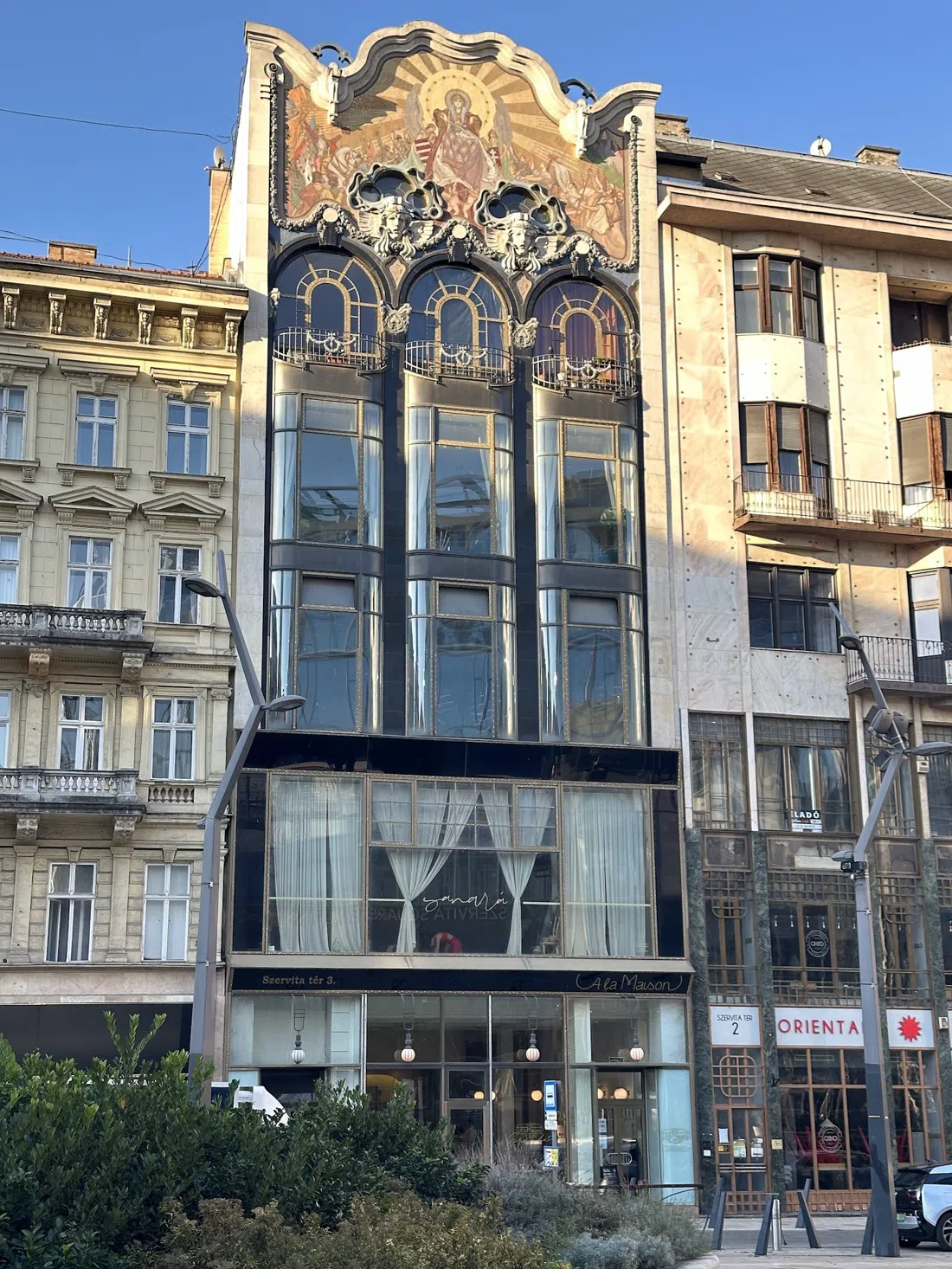
In the Belváros, at Szervita tér, the Rózsavölgyi House (former Török Bank House) is easy to walk straight past — which is precisely the point. Its gable mosaic, depicting Hungary's patroness offering protection to the nation, is one of the great hidden-in-plain-sight moments in the city. Small groups can view it from the street or the foyer of the still-operating record shop inside, at no cost, provided they don't disrupt the business going on around them.
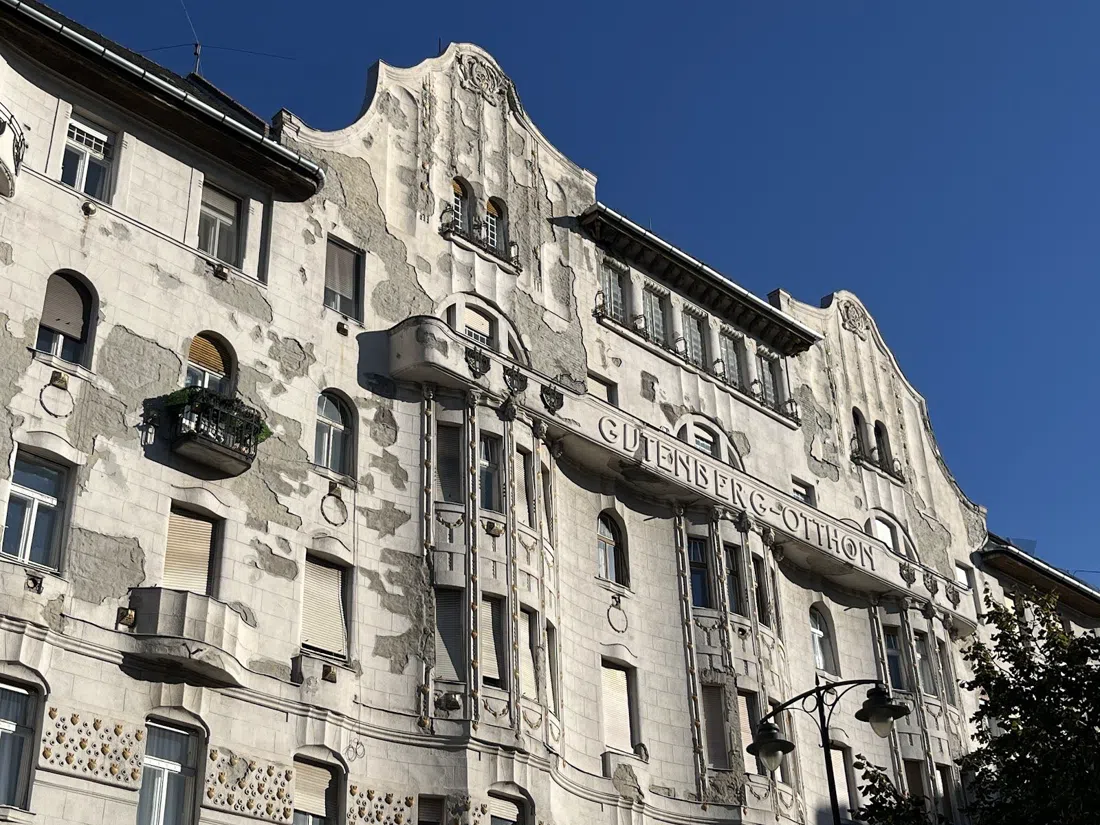
Out in up-and-coming District VIII, the Gutenberg-otthon on Gutenberg tér is a quieter, residential counterpoint to the trail's grander institutional stops — an apartment building Lechner himself consulted on. It's private, so this is an exterior and courtyard viewing stop only, taken in from the square, and it costs nothing and suits any group size.
Zsolnay tile in unexpected places: the zoo, the synagogue, the coffee house
Budapest's Art Nouveau wave didn't limit itself to banks and concert halls, and three stops make that case emphatically.
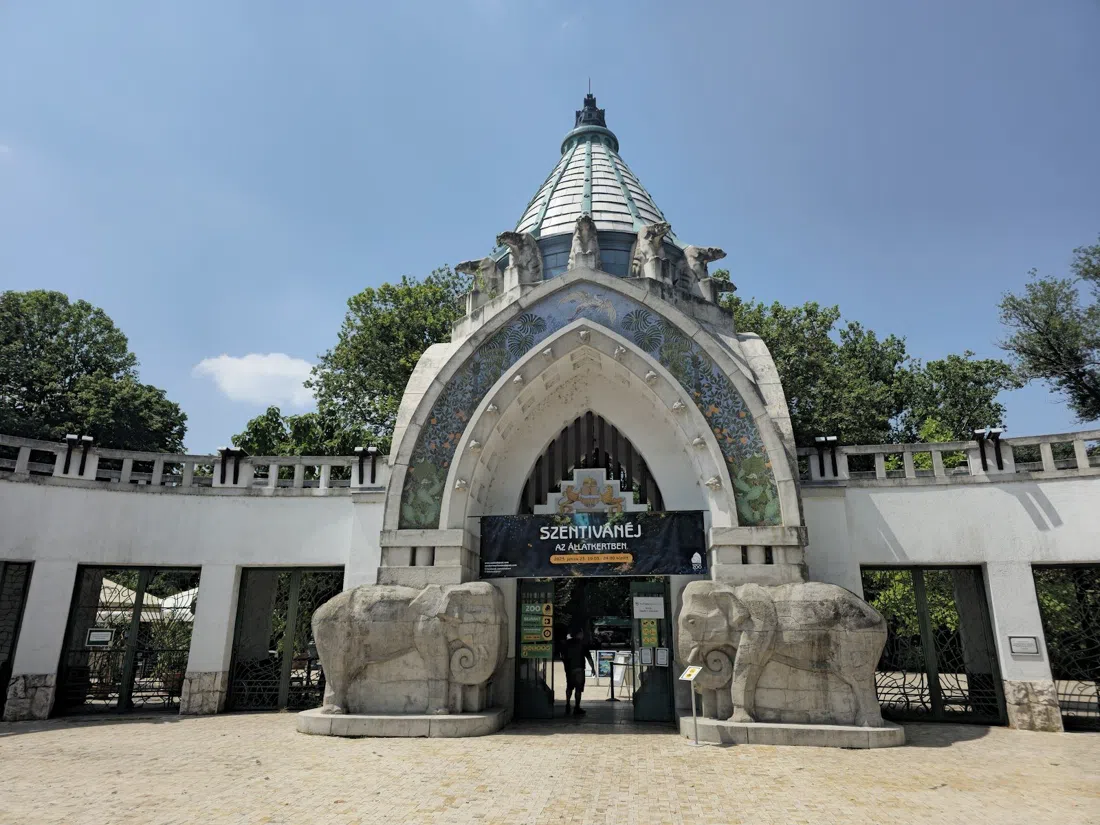
At the Budapest Zoo & Botanical Garden, in City Park, the 1912 Main Gate and 1909 Elephant House are genuine Zsolnay showpieces hiding in plain sight inside a working zoo — full of visiting families rather than architecture pilgrims. It's explicitly group-friendly, with parties of 15 or more qualifying for group rates; adult admission runs around HUF 5,000.
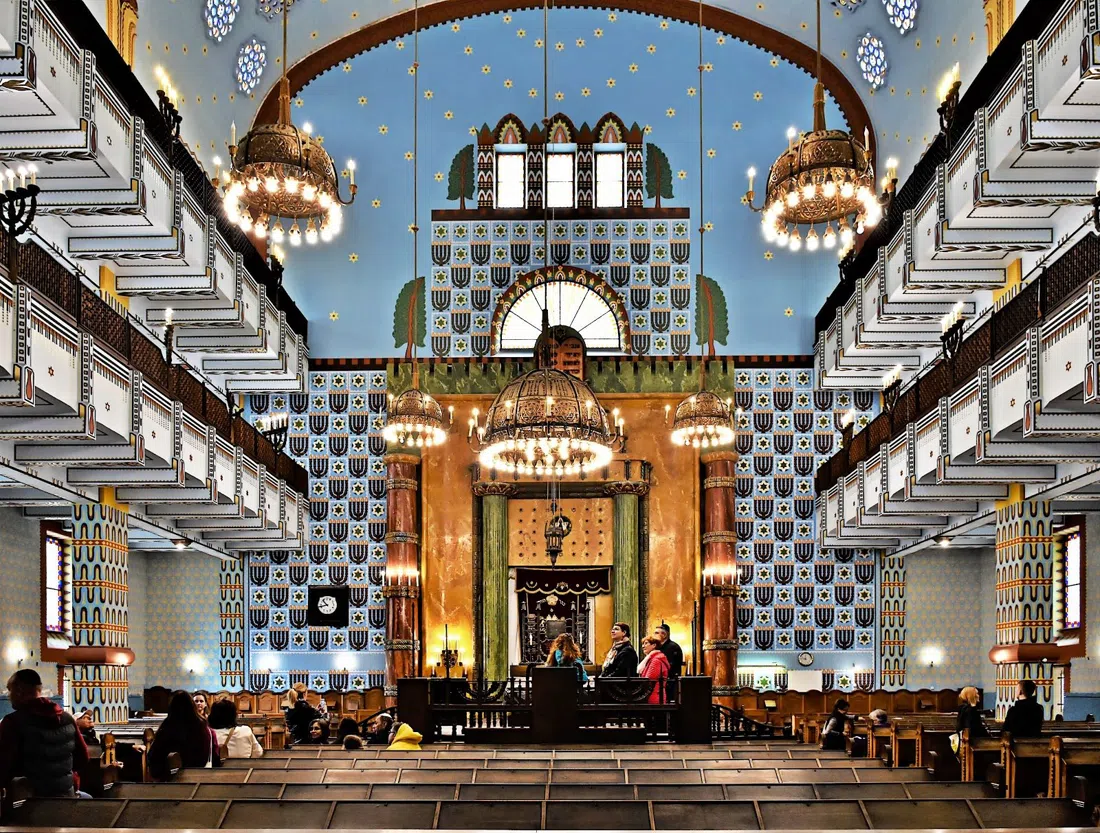
In Erzsébetváros, the Kazinczy Street Synagogue is Hungary's only Art Nouveau synagogue, proof the movement reached well beyond banks and bathhouses into sacred space. It's open to visiting groups, though modest dress is required — shoulders and knees covered, with head coverings provided on-site for men — and entry runs roughly HUF 3,000–4,000.
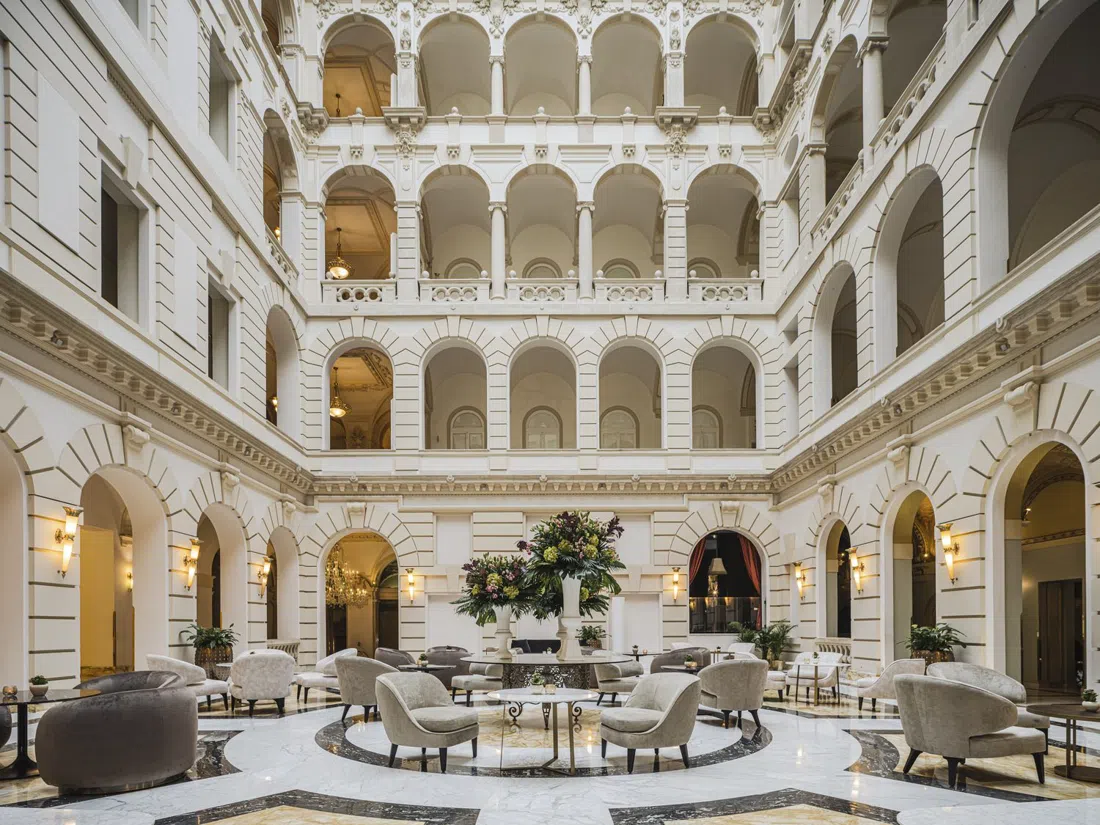
For a sit-down break amid all this walking, two historic cafés bookend the trail. Café Párisi, in the Lotz Hall inside the Andrássy Élményközpont (the former Párisi Nagyáruház department store — Hungary's first, opened in 1911), survives as a working café where you can order coffee and cake, from around HUF 2,000–3,000, under its original frescoed ballroom ceiling. Groups are welcome, though seating is limited, so reserve ahead for parties over six. And the New York Café, on the Grand Boulevard inside the Anantara New York Palace hotel, makes the trail's opulent coda — though it comes with an honest caveat: this interior is strictly eclectic Historicist with Art Nouveau touches rather than pure Secession, ornate rather than ideologically Lechnerian. It's famously pricey, with coffee from around HUF 3,000–4,000, takes group reservations, and is perpetually busy with tourists — book ahead or expect a wait.
Practical notes for walking the trail
Most of this trail sits within two zones: the Belváros/Andrássy Avenue corridor (Gresham Palace, Párisi Udvar, Rózsavölgyi House, the Treasury building, the Music Academy, Café Párisi and the New York Café) and a second cluster further out (the Lechner Building and the zoo near City Park, the Ráth Villa, the synagogue and Gutenberg-otthon in Erzsébetváros and District VIII, and the University Library toward the Danube). Splitting the trail into two days, rather than one long march, makes the distances comfortable on foot with metro or tram hops between clusters — Budapest's M1, M2 and M3 metro lines and its tram network cover this ground efficiently, and a 24-hour public transport ticket is worth buying if you're moving between both zones in a day.
Carry cash in smaller denominations of forint for café bills and entry tickets — most museums and cafés take cards, but street-level tips and small admission fees move faster with cash on hand. Interiors with paid entry (the Ráth Villa, the synagogue, the Music Academy tour, the University Library audioguide) are best pre-booked a day ahead in peak season, since group slots fill first. Early morning suits the exterior-only stops — the Treasury roof and Gutenberg-otthon photograph best in soft light before the streets fill — while the cafés and museum interiors are better saved for the warmer midday hours. Budget a full weekend for the complete trail with café stops included; a determined single day is possible if you cut the zoo and the University Library, but you'll be moving fast. Comfortable shoes matter more than a camera bag here — most of the distance covered is pavement, not gallery floor, and the buildings reward patience over speed.
If you're building a longer stay around this trail, our Budapest guide covers the rest of the city's neighbourhoods, and you can compare places to stay via Budapest hotel search — a base near the Belváros keeps most of this walk within twenty minutes of your front door.