
Forralt bor, mulled wine, costs about 1,500 forints at Budapest's Christmas markets, and it tastes much the same at a famous stall as at a neighbourhood one. What changes is everything around the cup: the length of the queue, the price of the plate beside it, and whether you're standing somewhere the city actually loves or somewhere it merely tolerates in December. This is the market season I'd hand a friend on a napkin: two big squares done at the right hour, the market Budapesters go to themselves, and the winter rituals that outshine every chalet stall.
Take the two famous squares at the right hour
The mistake isn't going to the big markets. It's going to both at six on a Saturday evening, when half of Europe has had the same idea.
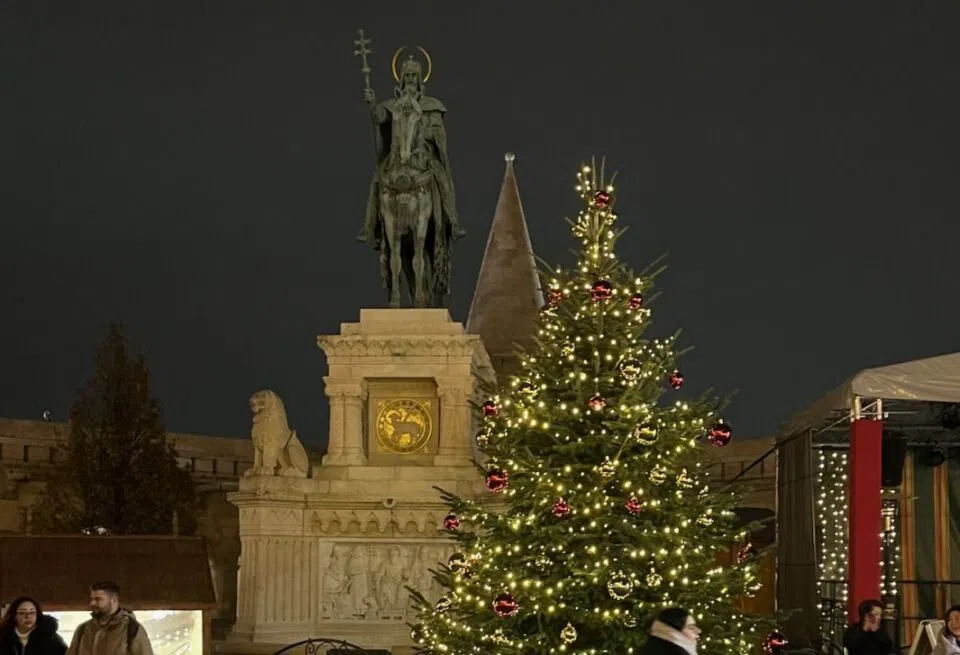
Advent Feast at the Basilica (Lipótváros) has been voted Europe's best Christmas market more than once, and standing in front of St Stephen's while the light show plays across the façade, you understand why. It also solves the calendar problem: it runs from mid-November right through to 1 January, covering the dead week between Christmas and New Year when most markets on the continent have packed up. Entry is free and groups wander in without ceremony. The catch is timing. The food-stall queues balloon after dark, just when the light show pulls the crowd in, so eat first, then watch. Mulled wine is around 1,500 forints, hot plates run 3,000 to 6,000, and children under 14 skate free on the small rink, which makes this the best-value hour of a family evening.

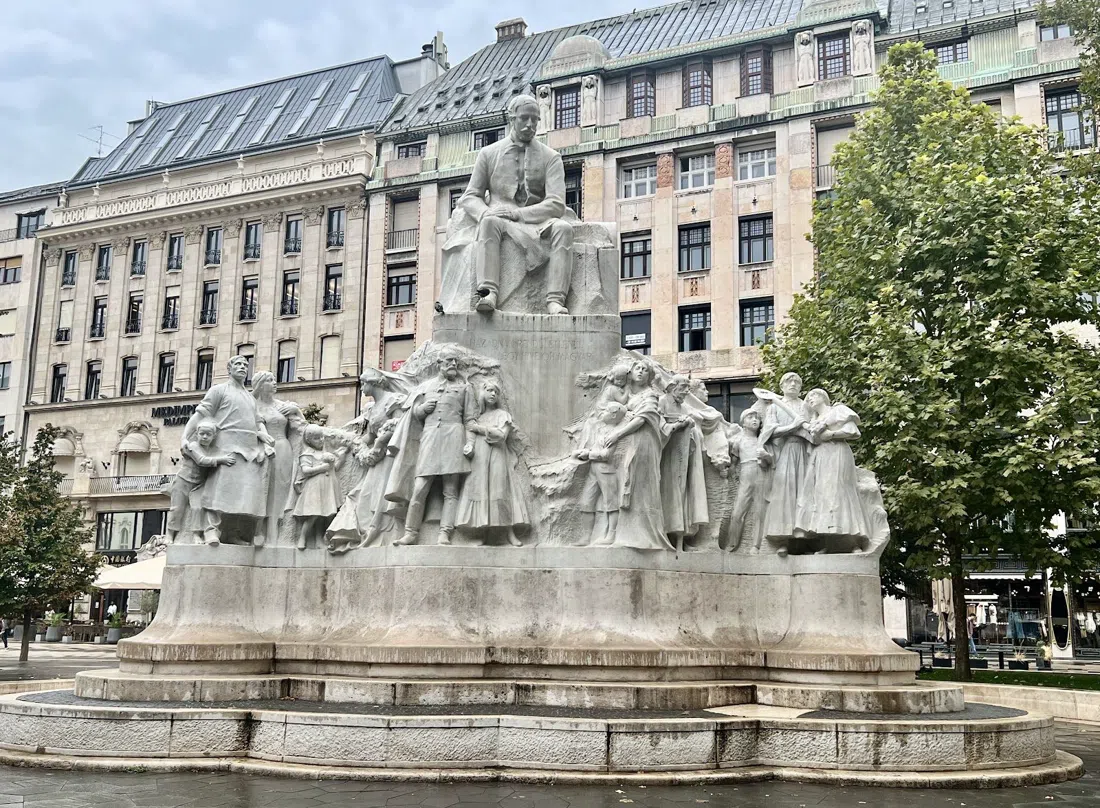
Vörösmarty Classic Xmas (Belváros) is the city's oldest market and its strictest. The stalls are jury-selected Hungarian craftspeople (the jury is not a marketing flourish; it shows), so this is the one market where the shopping is worth doing rather than politely pretended at. Come at midday, when the square is at its widest and calmest, before the after-work crush folds in. For lunch, order a lángos the proper way: fried bread slicked with garlic, sour cream and a snowdrift of grated cheese. Or take one of the paprika-dark stew plates ladled into bread; either lands between 3,000 and 6,000 forints. Free to enter, no door, easy with a group.
The warm-up room that predates the market
Café Gerbeaud (Vörösmarty Square) was serving cake on this square before the market existed, and it remains the correct place to thaw. Order the zserbó szelet, the walnut-and-apricot layer cake the house gave its name to, with a hot chocolate thick enough to stand a spoon in. You'll pay 2,500 to 5,000 forints, which is premium for Budapest but honest for what arrives. Two things matter in December: book a table, because the room fills with people who did, and time your visit for dusk, when the light-painting plays across Gerbeaud's own façade and the window seats become the best in the city. It even opens over 24 to 26 December, with shortened hours on Christmas Eve, which is worth knowing in a city where much else goes dark.
The markets the city keeps for itself
Advent Festival at Városháza Park (Belváros) is the official city-run fair, and it behaves like one: the giant tree, family programming, and the centre's longest-running ice rink, which takes group bookings and keeps going to the end of January, weeks after the fairy lights come down elsewhere. It's less polished than the Basilica and noticeably cheaper; skating runs roughly 2,500 to 4,500 forints. Travelling with children or a big group, start here.
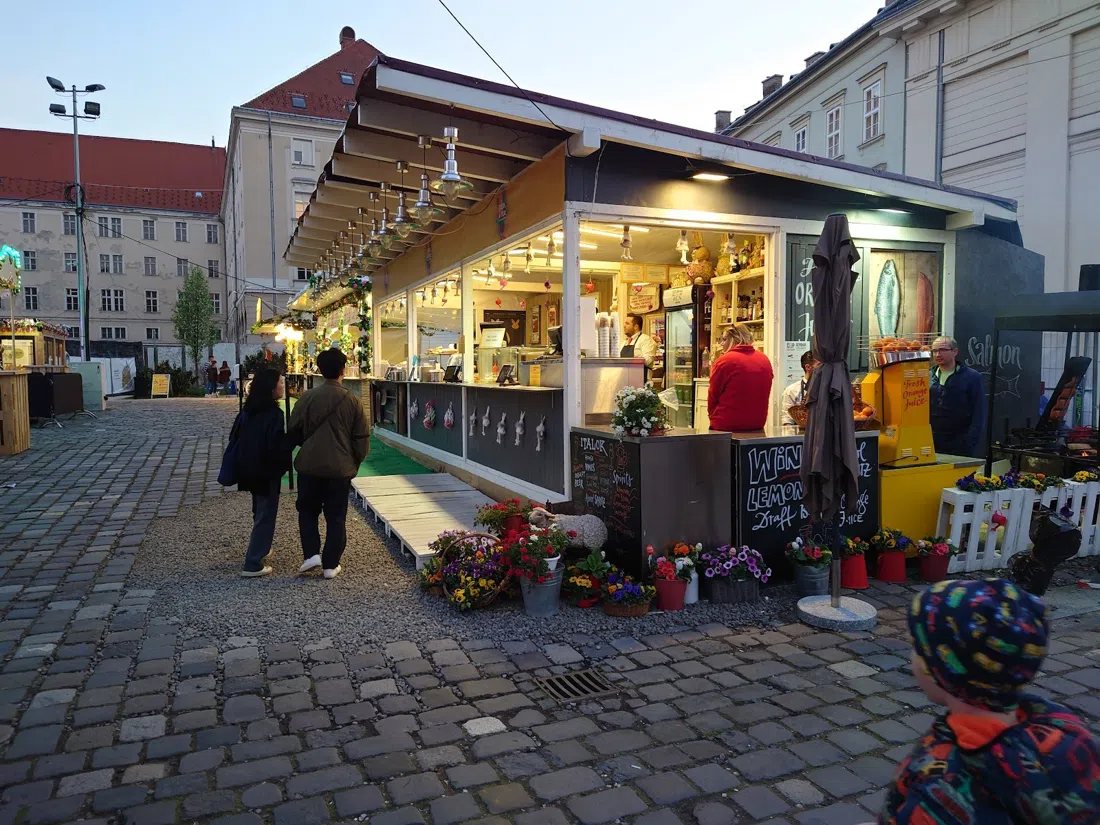
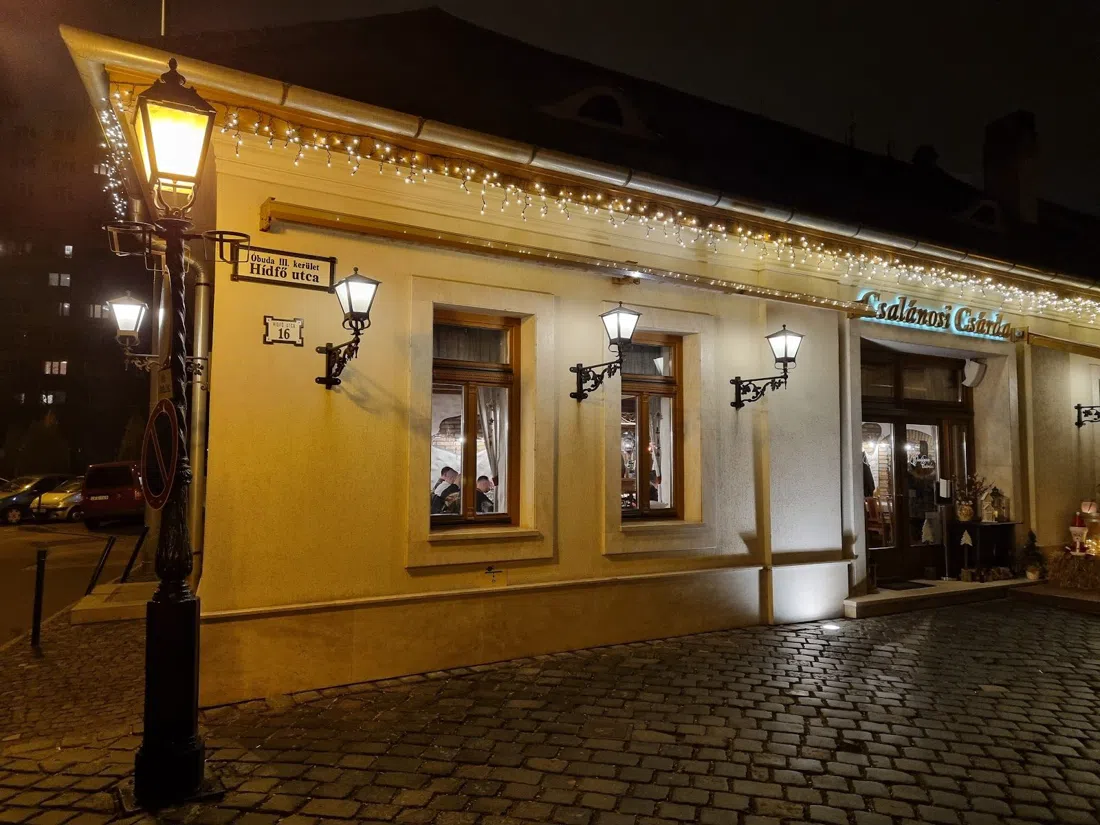
Advent in Óbuda (Fő tér) is the market locals actually go to. It sits in a cobbled square well north of the centre, runs family programmes, and stays uncrowded even on weekends, with food and drink cheaper than anything downtown. The one rule: it runs 28 November to 23 December, closing before Christmas Eve while the big two carry on, so put it early in your trip, not last.
Magical Advent in Buda (Szentháromság Square) is the daytime counterweight. A compact market in the Castle District (fine for a group, but tight), open 9:00 to 19:00 daily, it earns its place twice over: the view across the river, and the candle-lighting each Advent Sunday at 16:45, the most quietly moving fifteen minutes of the season. It runs into early January.
Skate under a castle, then boil yourself pink
The best things in a Budapest December aren't markets.
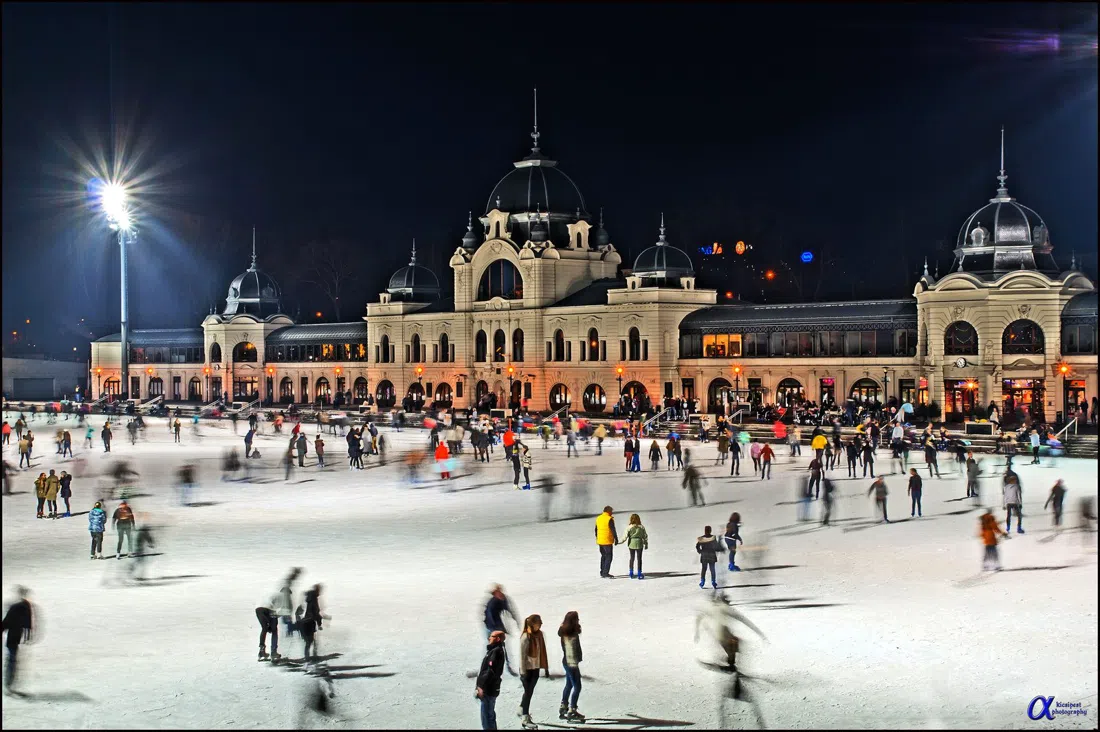
City Park Ice Rink (Városliget) is Europe's largest outdoor rink and one of its oldest, freshly refurbished for this season, with a floodlit fairy-tale castle rising at one end. The evening sessions are the atmospheric ones. Adults pay roughly 3,500 to 4,500 forints, students and pensioners 2,500 to 3,500, skate hire is on site, and they absorb large groups and school parties without blinking.
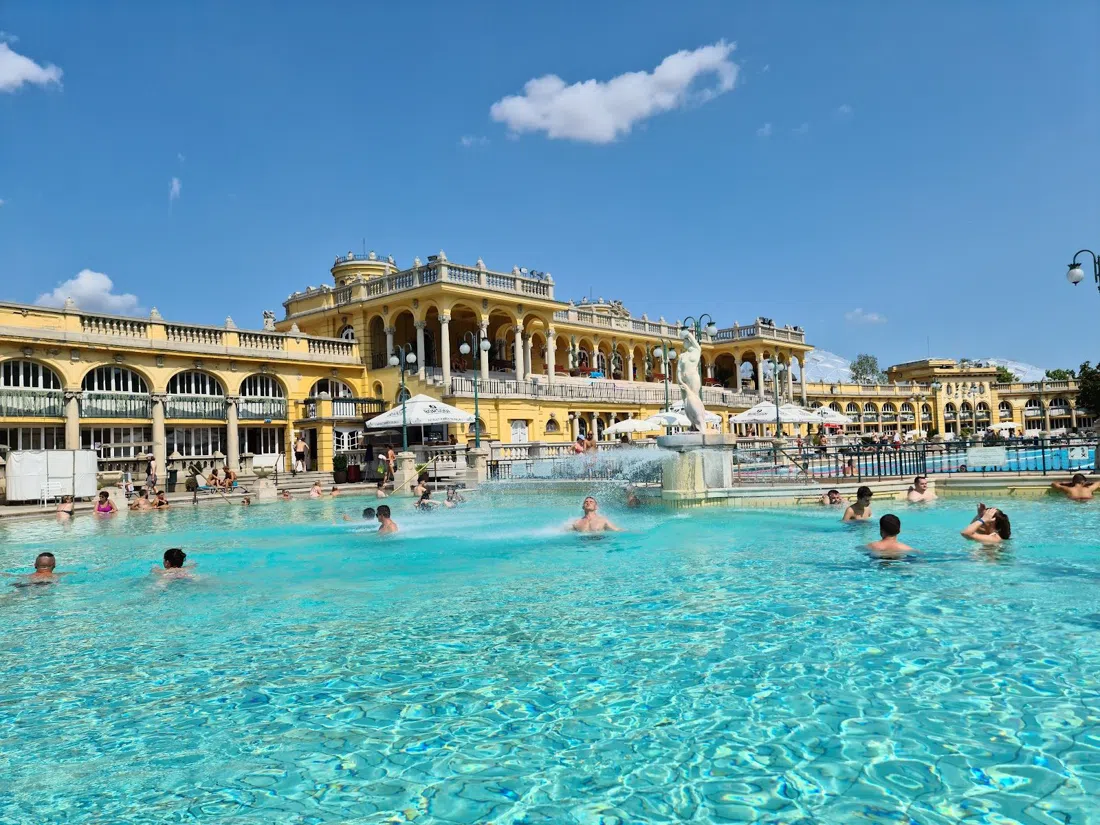
Széchenyi Thermal Bath (Városliget) is five minutes away on foot, and it is the whole argument for choosing Budapest in winter over any other European capital. Steam rising off hot outdoor pools into freezing December air, snow if you're lucky. No market anywhere touches it. Entry with a locker runs 10,000 to 13,000 forints, the outdoor pools stay open to about 19:40 daily, and in December you should pre-book a timed ticket rather than gamble on the door. Skate, then soak. That is the itinerary.
Spend pennies on the prettiest ride in town
The Festive Light Tram (line 2, Pest embankment), the Fényvillamos, is an ordinary city tram wrapped in tens of thousands of lights, and riding it along the Danube costs a standard BKK fare of about 450 forints. It runs nightly from late November to 6 January, skipping only 24 and 31 December; no booking is possible or needed, and any group size fits with an ordinary ticket. It outshines most paid festive experiences in the city, and I say that having paid for several.
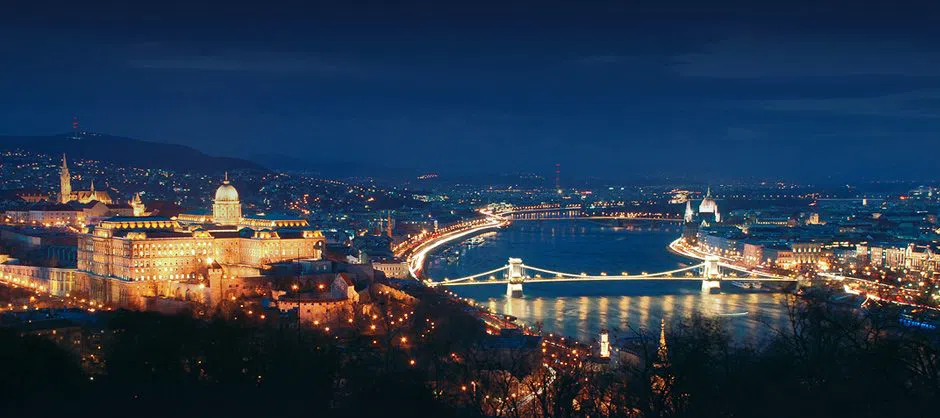
If you want the river itself, Legenda City Cruises (city-centre Danube docks) runs winter departures from November to March, and the UNESCO-listed panorama is genuinely better after dark in December: Parliament lit gold, the bridges strung with light. Sightseeing cruises run roughly €15 to €30, dinner sailings more; over Christmas and New Year, special festive sailings replace the normal timetable, so book ahead rather than strolling up. They handle groups and charters well.
Rainy mornings and gifts that aren't chalet trinkets
December rain happens. When it does, or when you simply want to buy food where the city buys it, you have two moves.
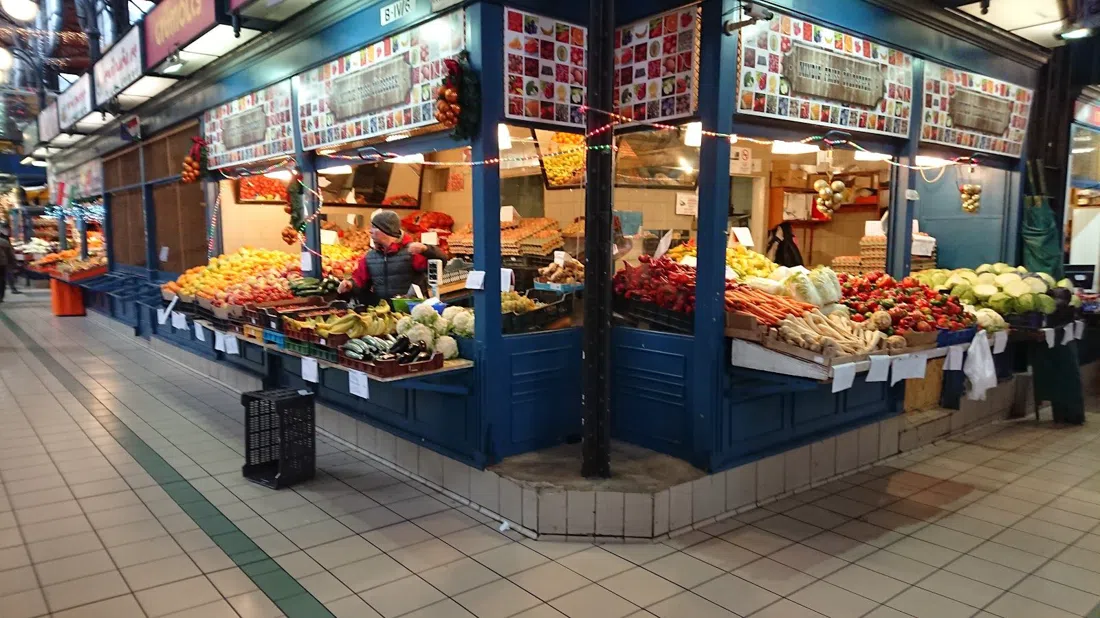
Great Market Hall (Fővám tér) is the covered, weatherproof answer to a washed-out market morning, a vast 19th-century hall at the foot of Liberty Bridge. Buy your paprika and winter salami here, where locals shop, at roughly half what a chalet stall charges for the same tin. Entry is free, coach groups pour through without strain, and lángos starts from a few thousand forints. Two scheduling notes: it's closed on Sundays and shuts early on Saturdays, so treat it as a weekday-morning errand.
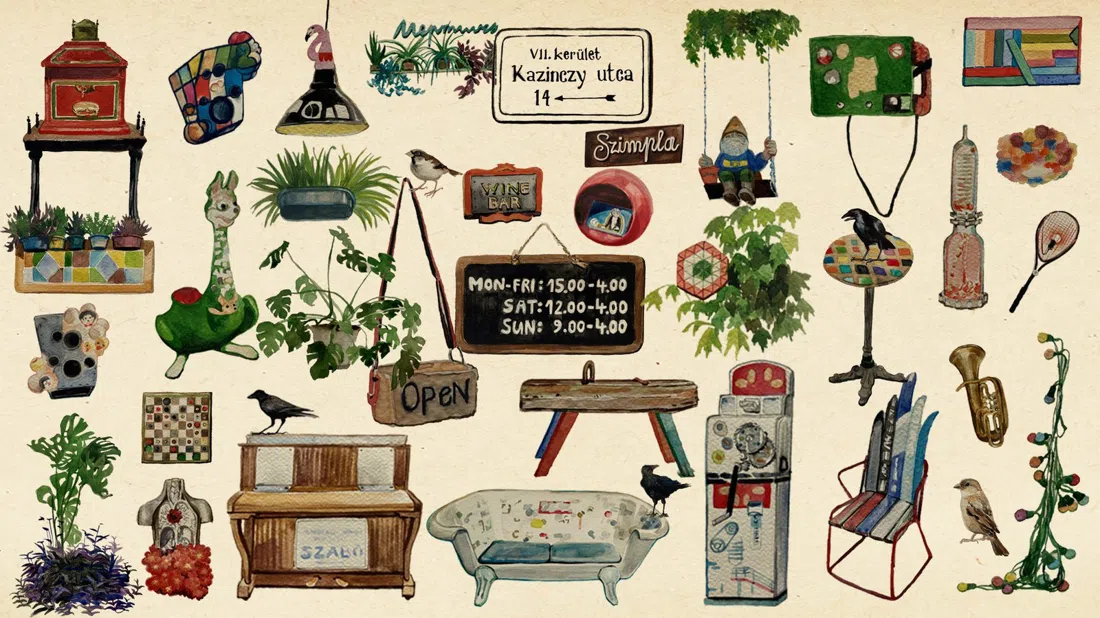
Szimpla Kert (Erzsébetváros) is the original ruin bar, and by night it's exactly what you've heard: big groups are the norm, mulled wine and beer run 1,500 to 2,500 forints, and the crowd is cheerfully international. The visit worth planning, though, is Sunday morning, 9:00 to 14:00, when the same crumbling courtyard hosts a genuine farmers' market with 30 to 40 Hungarian producers. Acacia honey, truffle goods, mangalica charcuterie: these make better gifts than anything wrapped in cellophane at a market chalet, and the room is calm enough to talk to the people who made them.
The between-holidays week is the quiet win
If your dates are flexible, aim for 27 to 30 December. Óbuda has closed and the pre-Christmas shopping frenzy is over, but the Basilica market runs to 1 January, the Városháza rink into late January, the light tram until 6 January (bar New Year's Eve itself), the Castle District market into early January, and the baths never stop. You get the lights and the mulled wine with half the elbows. For the city beyond the season, the Budapest guide covers the rest.
The practical bit
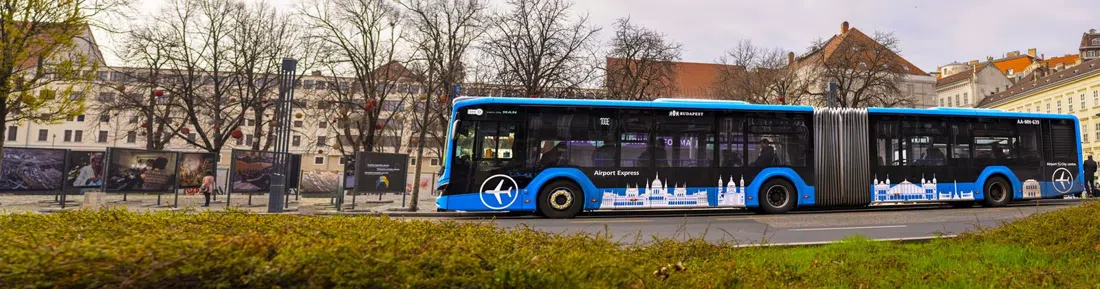
Getting around. Everything in Pest's centre (Basilica, Vörösmarty, Városháza Park) is walkable within fifteen minutes. Városliget, for the rink and the bath, is a short ride on the M1 metro; Óbuda is a tram or suburban-rail hop north. A single BKK ticket is about 450 forints; a 24- or 72-hour pass pays for itself quickly and covers the light tram too.
Money. All the markets are free to enter; you pay only for what you eat, drink and skate. Card acceptance at stalls is broad, but carry some forint cash for smaller vendors, especially in Óbuda and at the Szimpla Sunday market. Skip the airport exchange desks; use a bank ATM in town.
Budget, honestly. A market day runs comfortably on 15,000 to 20,000 forints a head: mulled wine 1,500, a proper stall meal 3,000 to 6,000, skating 2,500 to 4,500. Add 10,000 to 13,000 for Széchenyi, the one splurge I'd defend to anyone.
Timing. The season opens mid-November 2026. Shop on weekday middays; save weekend evenings for the Basilica light show if you don't mind the crush. Book December tables at Gerbeaud, timed tickets at Széchenyi, and festive-period cruises well ahead.
Sleeping. Base yourself in Pest's fifth or sixth districts and you'll walk to almost everything above; the Budapest hotel search covers the full range from riverside grande dames to quiet district guesthouses.