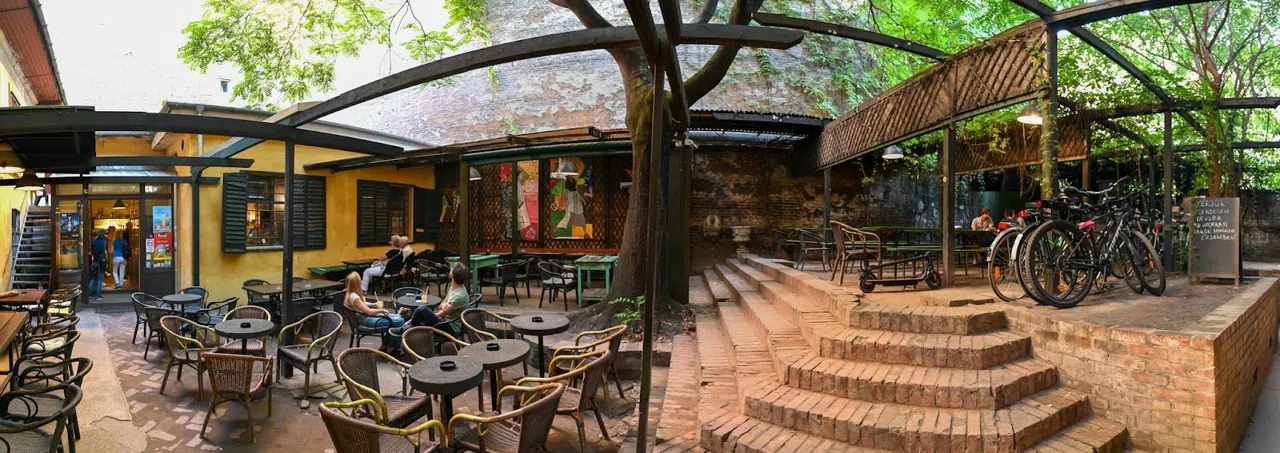

By one in the morning, the pub-crawl leaders have herded their groups toward the next photogenic courtyard, whistles round their necks, and the streets of the Jewish Quarter go quiet enough to hear the trams again. What's left behind is smaller, older and considerably less lit for photographs: a scattering of ruin bars where the regulars have tabs, the pálinka is poured without ceremony, and nobody is filming for a story. This is a walking guide to those places, in 2026, from the ones still hidden in plain sight on Kazinczy utca to the ones far enough from it that most visitors never find the street at all.
Budapest's ruin-bar story starts with squatting, not branding — young Hungarians in the mid-2000s taking over derelict pre-war buildings, courtyards and factory floors that the city hadn't yet worked out what to do with, and furnishing them with whatever the flea markets and skips provided. Some of those bars became the version of Budapest that ends up on other people's Instagram grids. Others didn't, and are arguably closer to what the scene actually was before it became a category of stag-party itinerary. For the full city context — where to sleep, what else to see — the Budapest guide covers the rest of the trip; this one stays in the courtyards.
Kazinczy Utca's Quieter Originals
Kazinczy utca is still the address most people associate with ruin bars, largely because of the one bar that isn't on this list. A few steps either side of it, though, are three places that have kept doing what the street used to do before the crowds arrived.
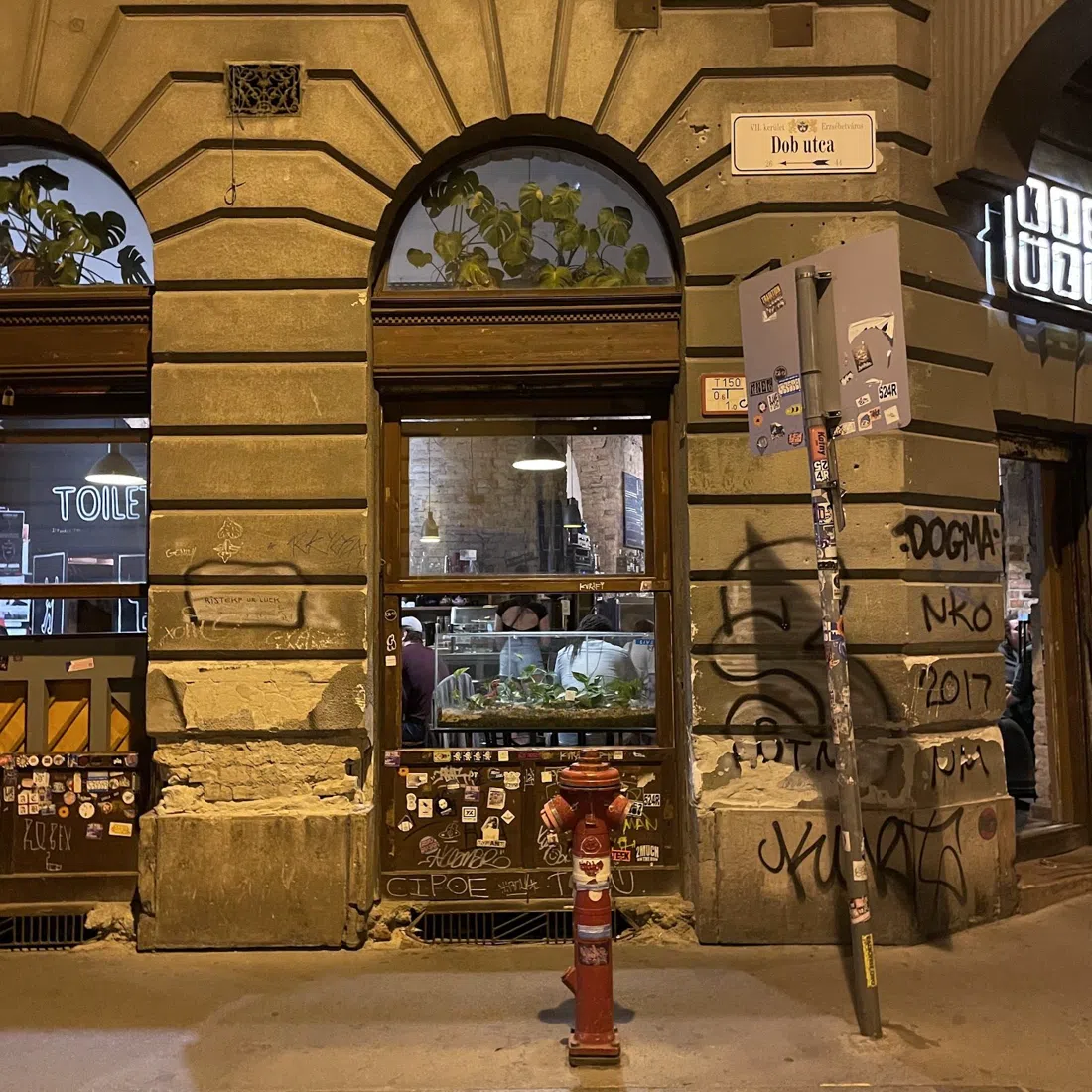
Kőleves Kert (Kazinczy utca, District VII) is older and calmer than its immediate neighbours, and it still runs like a neighbourhood canteen with a bar attached rather than a bar with a kitchen bolted on. The courtyard fills for dinner fast — get there by 6.30pm if you want a table without a wait — and it doesn't take large-group bookings once the evening service starts, so this is a better fit for couples or groups of four than for a stag party of fourteen. Pricing sits at proper restaurant-and-bar level rather than dive-bar cheap, which is part of why it hasn't been overrun.
Mika Tivadar Mulató (Kazinczy utca, District VII) functions as a working cultural venue as much as a drinking spot — there's a genuine film club and theatre programme running through the year, and locals turn up for that as much as for the courtyard pálinka. Groups are welcome and the space handles them comfortably, but check the programme before you go: theatre and film nights come with fixed seating, which changes the room from a wander-in bar into something closer to a small venue with a bar in the lobby. Mid-range pricing.
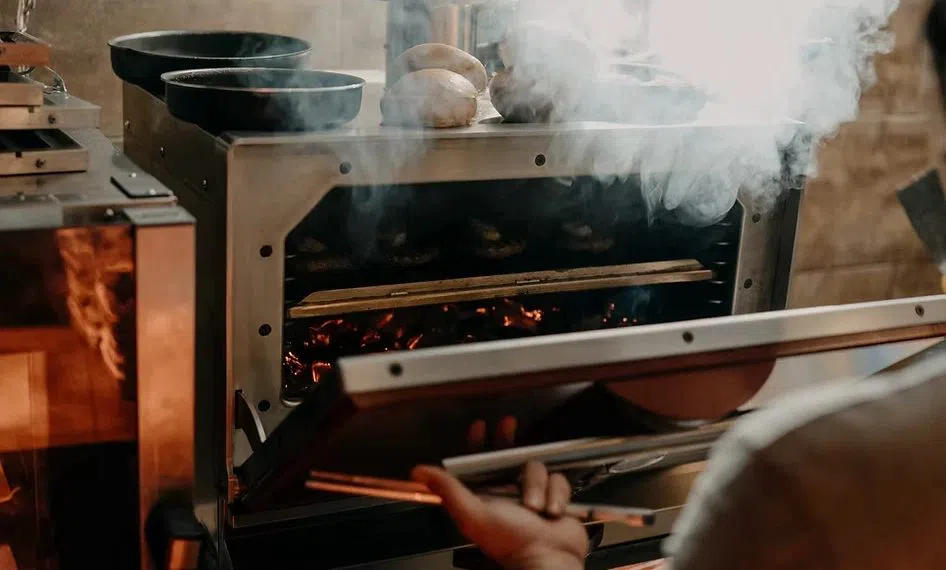
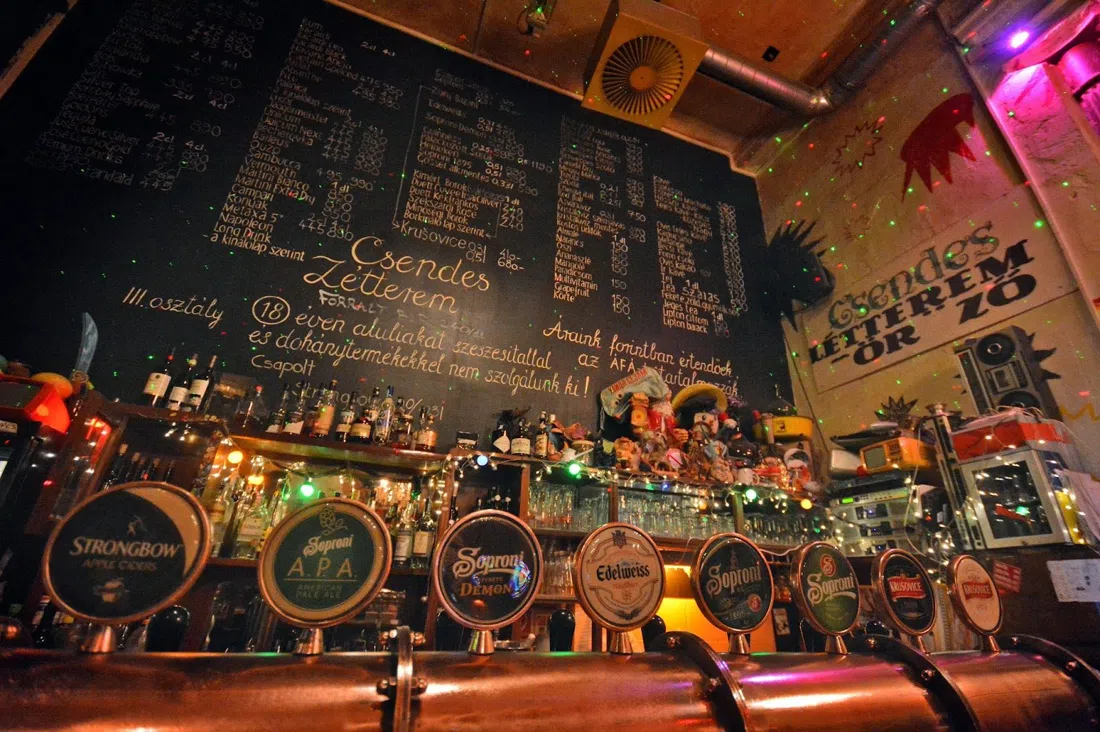
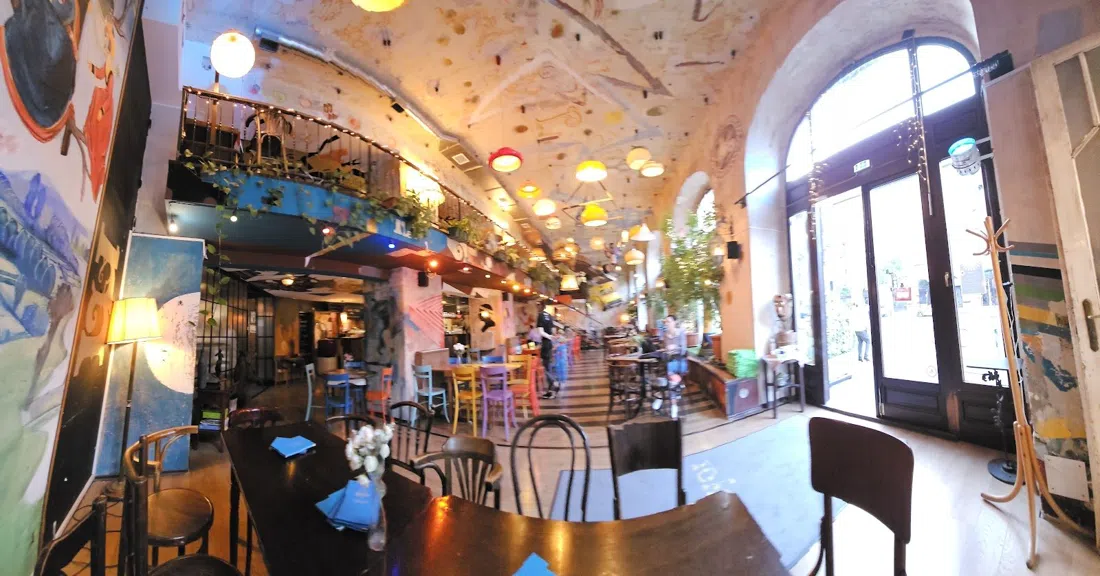
Csendes Létterem (Ferenczy István utca, District V, just off the Kazinczy cluster) is the one with the longest memory — it opened as a literary café in 1883, and the décor genuinely hasn't been redone since the bar reinvented itself as a ruin-bar hybrid. It still does the same trick it always has: coffee and quiet in the daytime, wine and something closer to romance by night. The rooms are small, which is charming for two people and a problem for twelve — groups over ten should call ahead rather than assume a walk-in table. Hungarian wine list is worth taking seriously here; the cocktails are more creative than the setting suggests.
District VII, Away From the Instagram Circuit
Walk two or three streets further from Kazinczy and the crowd changes noticeably — fewer matching lanyards, more people who clearly live nearby.
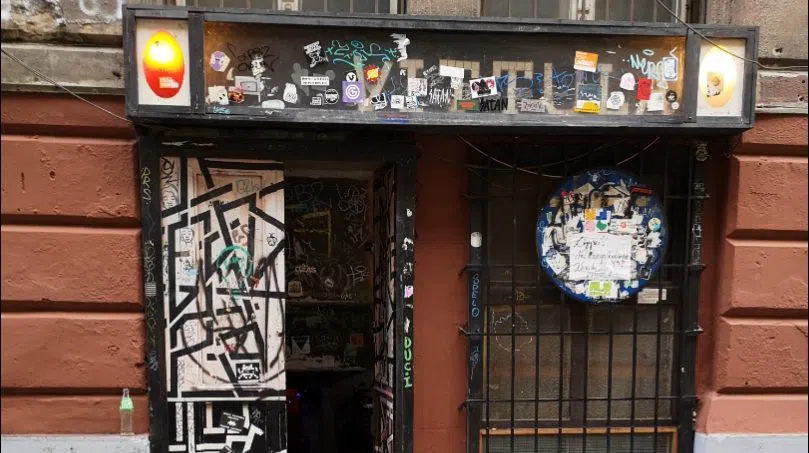
Kisüzem (District VII) is the clearest example: a small café-bar-slash-art-hub that's a genuine hub for the neighbourhood's left-wing intellectuals, artists and students, still putting on concerts and exhibitions on what is visibly a shoestring budget. The door is low-key and there's no dress code, but the room itself is small — fine for four to six people, not built for stag-party numbers, and you'll feel that within five minutes if you turn up as a crowd. Prices are properly budget: Hungarian wine and beer, cheap rum, the kind of bill that still surprises visitors used to the Kazinczy strip.
Klub Vittula (Kertész utca, District VII) has a claim to being the actual prototype for underground ruin-bar Budapest — it's been open since 2004, well before the concept had a name tourists would recognise, and it still looks grimier and less curated than the bars that later copied its aesthetic. It's a cellar, which means it's genuinely good for groups up to around ten and genuinely tight and sweaty once a DJ night gets going, so plan your visit around that rather than being surprised by it. Cheap by design, and it stays that way.
Fekete Kutya (District VII, a short walk from the Jewish Quarter strip) is deliberately the opposite of a party bar despite the location — a small, family- and dog-friendly neighbourhood pub that locals genuinely treat as an extension of their living room. It's best for groups under eight; beyond that the room stops working. The door policy is low-key and welcoming rather than selective, and the Czech craft beer and tapas keep it at budget-to-mid pricing. Most tourists walk straight past it, which is more or less the point.
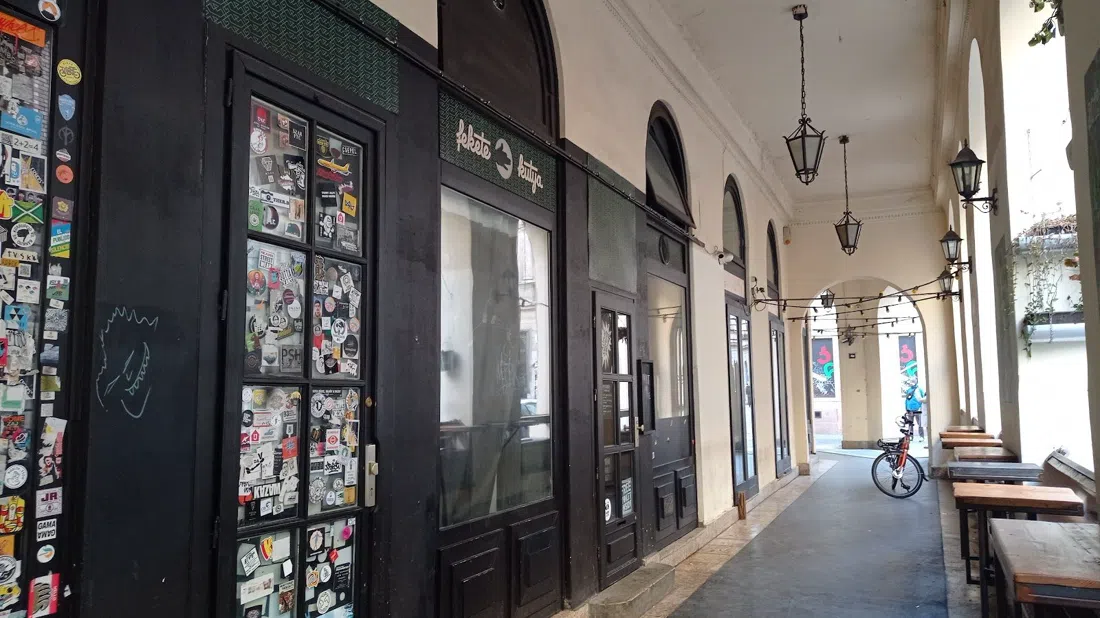
District VI: A Jazz Basement and an Arthouse Screen
A short tram ride north of the Jewish Quarter, District VI holds two places that don't fit the standard ruin-bar template at all, which is exactly why they've kept their character.
Pótkulcs (District VI) occupies a former engineering workshop and functions as the city's actual live-music and jazz-and-folk hub rather than a themed bar — this is where Hungarian bohemians go, not where they're photographed going. It takes groups easily, especially early in the evening out in the garden, but the room fills fast once a live set starts, so a large group should book a table in advance rather than expect to walk in and find seats together. Drinks run 700–1,200 HUF, cheap even by ruin-bar standards, and the food leans into communist-era comfort cooking rather than anything reinvented for visitors. Given the gentrification of the surrounding blocks, the pricing here is close to an anomaly.
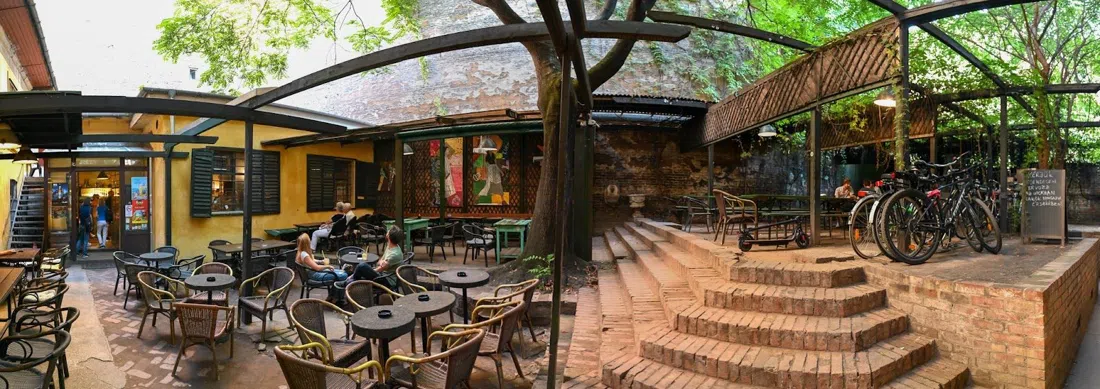
Toldi Klub (Bajcsy-Zsilinszky út, District VI) is one of the last real arthouse cinemas in Budapest with a bar attached, and the crowd is cinephiles and regulars rather than a pub crawl. Turning up for a film-night drink with a group is straightforward and welcomed; turning up on a DJ-night weekend is a different proposition, since the door gets more selective and queue-based once the music takes over. Budget-to-mid pricing, and worth checking the film schedule before deciding which version of the night you're walking into.
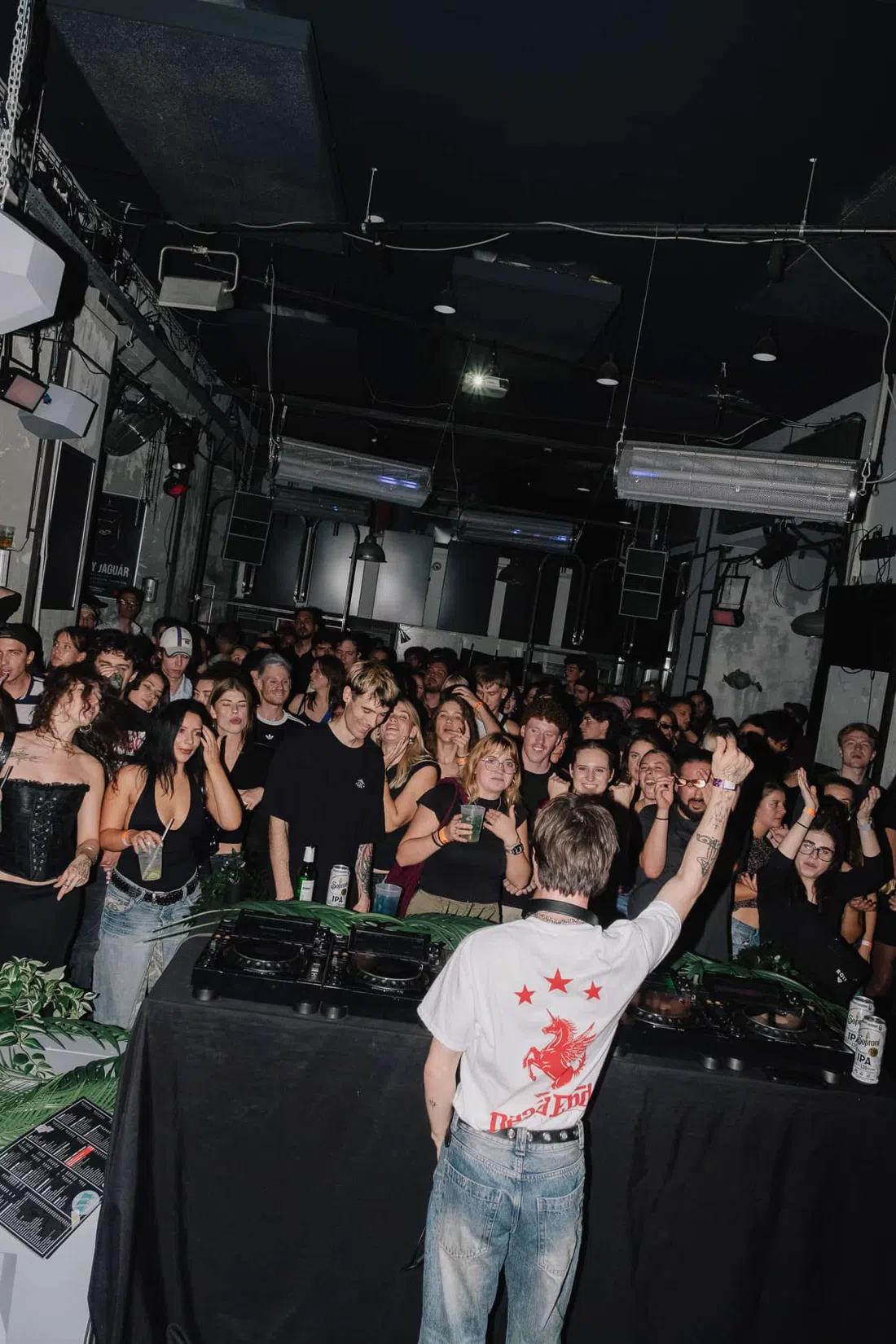
Across the River: Buda's Ruin-Bar Alternative
Almost everything above sits on the Pest side. Cross the Danube and the ruin-bar idea exists in a genuinely different register — smaller scenes, fewer visitors, and venues that still feel closer to the original squatted-courtyard spirit than anything left in the Jewish Quarter.
Manyi - Kulturális Műhely (Buda side) is about as far from the Pest ruin-bar cluster as this style of venue gets, and it shows: it genuinely feels like stumbling into someone's clubhouse rather than a designed destination, which is close to what the first ruin bars felt like before they were discovered. The courtyard works well for groups; the upstairs rooms are event-dependent, so check the schedule before assuming they'll be open. Budget-to-mid pricing throughout.
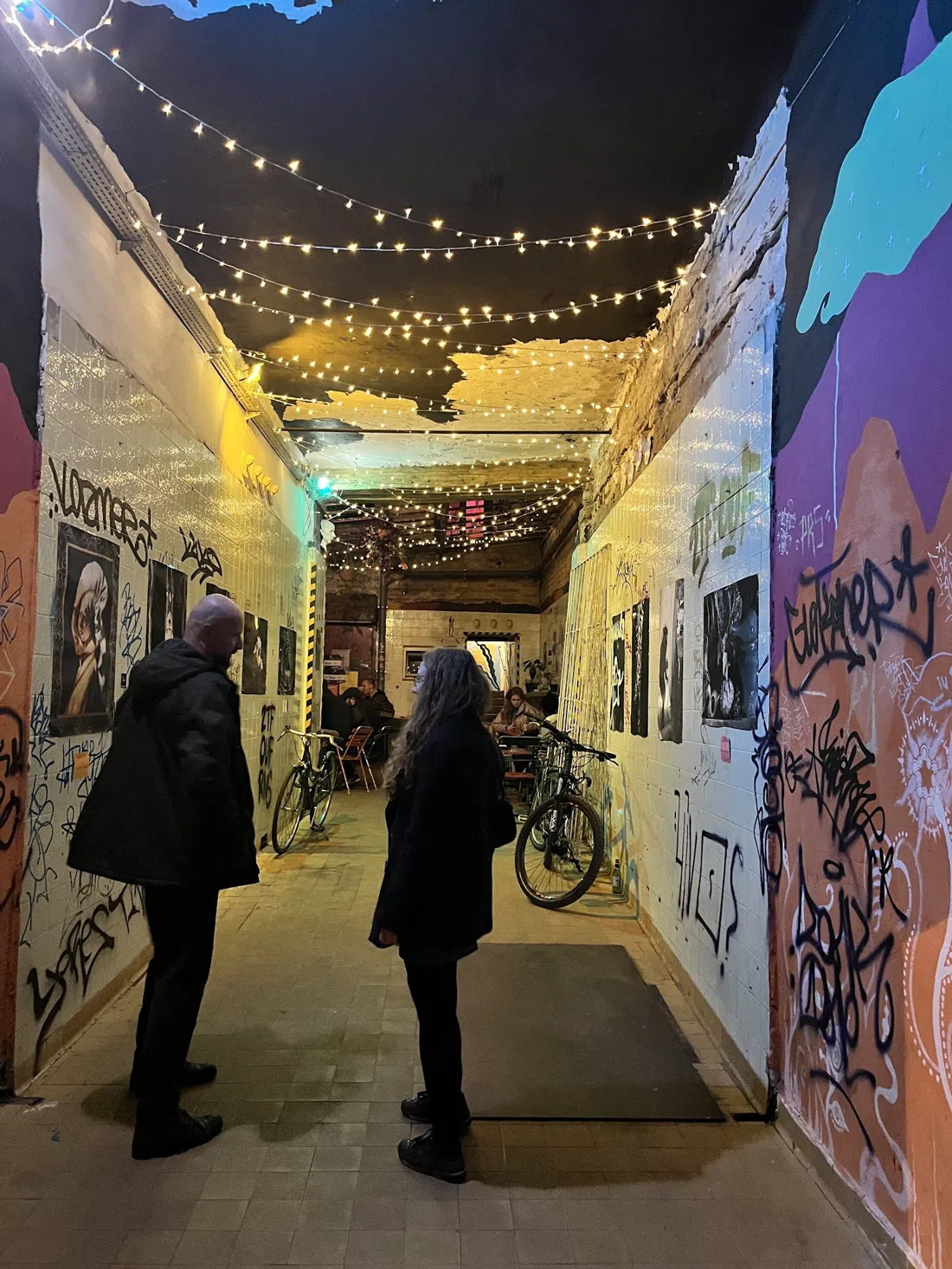
Szatyor Bár és Galéria (Bartók Béla út, District XI, Buda embankment) has been running since 2010 as an art-gallery-meets-neighbourhood-bar, and the embankment location keeps it well outside the Pest party district entirely. There's no door policy to speak of — it's genuinely casual — and it suits small-to-medium groups comfortably rather than a full stag-party contingent. Mid-range pricing, closer to a proper bar tab than a dive-bar one.
Out to the Edges: Craft Beer and an Óbuda Beer Garden
For a longer detour — worth a half-day rather than a quick stop between other plans — two venues sit well outside both the Jewish Quarter and central Buda.
Élesztőház (District IX, Ferencváros) is a proper craft beer hall rather than a ruin bar in the classic squatted-building sense, but it belongs on this list because the crowd is exactly the kind this guide is chasing: older, local, and genuinely beer-nerdy rather than passing through. Long communal tables mean it handles groups well, and dedicated cask-ale and wine sections make it workable for a mixed-preference crowd — not everyone has to drink the same thing to have a good night here. Pints run 1,500–2,800 HUF depending on what's on tap, with a roughly 2,500 HUF tasting flight for anyone who wants to sample rather than commit. Sunday mornings are worth knowing about specifically: the hall turns into the Pancs farmers' market instead of running as a hangover-crawl stop, so a Sunday visit is a different experience entirely from a Friday night one.
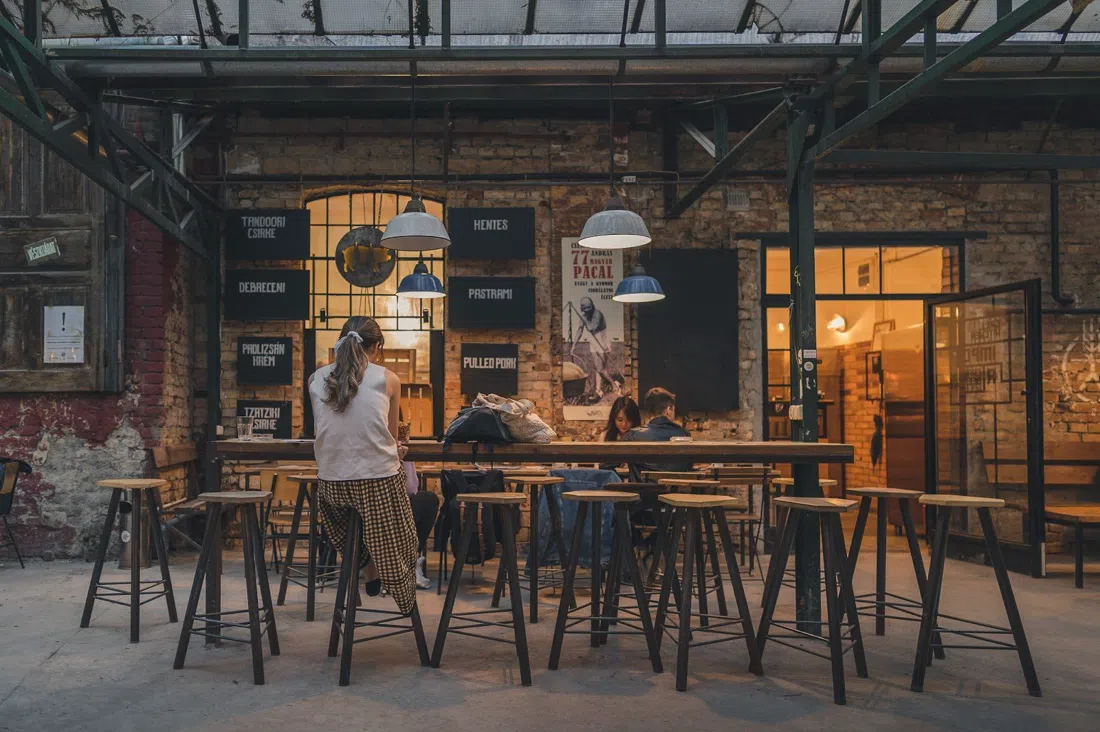
Kobuci Kert (Óbuda, District III) is a genuine outer-district detour, running as an open-air garden and live-music venue since 2009. Locals come for world-music and blues nights rather than to post about them, and the space has large open-air capacity that works well for bigger groups, particularly around scheduled concerts — check what's on before you go, since a concert night changes both the cover charge and the crowd. It's seasonal, running in full swing from spring through early autumn, so this isn't a winter option; plan the visit accordingly if you're building a warm-weather itinerary.
Planning the Route
None of this needs to be done in one night, and trying to cram District VII, District VI, Buda and Óbuda into a single evening will mostly cost you in taxi fares and tired feet. A reasonable way to split it: one evening in the Kazinczy utca cluster (Kőleves Kert, Mika Tivadar Mulató, Csendes Létterem) plus the quieter District VII bars a few streets over (Kisüzem, Klub Vittula, Fekete Kutya); a separate evening for Pótkulcs and Toldi Klub in District VI, ideally timed around whatever's on the live-music or film calendar; and a half-day or evening set aside for the Buda-side and Óbuda venues (Manyi, Szatyor Bár és Galéria, Kobuci Kert, Élesztőház), which don't cluster together geographically but reward the trip out.
Transport. Most of the District VII and District V venues are walkable from each other and sit within a few minutes of the M1, M2 or tram 4/6 lines. Buda-side venues and Óbuda need a tram or a short taxi — Kobuci Kert in particular is far enough out that budgeting for a taxi back is sensible once the trams thin out late at night.
Cash and cards. Most of these bars take cards now, but a few of the smaller, older venues — Kisüzem and Fekete Kutya especially — are the kind of place where having some forint in cash avoids any awkwardness at a busy bar. Cash also still moves faster at a packed communal table.
Timing. Early evening (6–8pm) is consistently the best window for groups at the venues that don't take bookings after dark, particularly Kőleves Kert. Live-music and film-night venues (Pótkulcs, Toldi Klub, Mika Tivadar Mulató, Kobuci Kert) are worth timing around their published programmes rather than treating as any-night drop-ins.
Budget. A night moving between two or three of the cheaper venues on this list — Pótkulcs, Kisüzem, Klub Vittula — can run under 5,000 HUF a person in drinks alone. Add Kőleves Kert, Mika Tivadar Mulató or Szatyor Bár és Galéria to the route and factor in mid-range restaurant-and-bar pricing instead. None of these are cheap by local standards anymore, but none of them are Kazinczy-utca-tourist-markup prices either.
For where to sleep between courtyards, the Budapest hotel search covers both the Jewish Quarter side and the Buda options, which is worth thinking about given how the good version of this crawl actually splits across the river.