The Budapest issue
123 Springs: How Budapest Turned Bathing Into a Way of Life
A calm, honest map to Budapest's thermal baths — from the palatial anchors to the locals' soaks and summer lidos — with prices, door realities and how to plan your days.

By Marek NovákNeighbourhoods, baths and the slow way round
Beneath Budapest runs a second city, one made of hot water. More than a hundred thermal springs rise through the rock under the streets, feeding a tradition of public bathing that began with Roman legions, deepened under Ottoman rule, and settled into ordinary daily habit sometime in the last century. To bathe here is not a spa treat but a civic routine, closer to visiting a café than booking a wellness retreat.
Where the water comes from
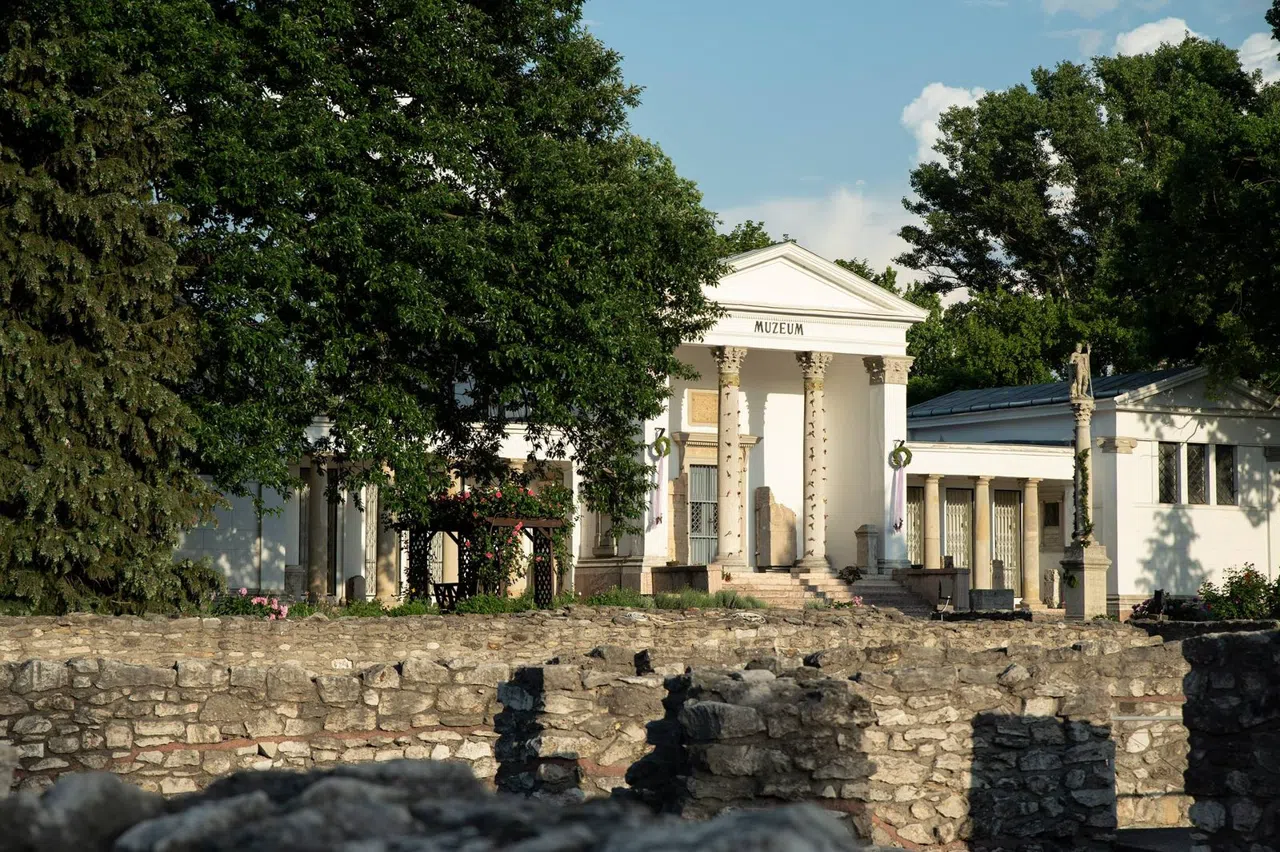
The springs are an accident of geology. A fault line runs along the foot of the Buda hills, and where it meets the Danube, mineral-rich water surfaces warm — sometimes very warm — straight from deep underground. The Romans noticed first, building bathhouses at Aquincum in the north of the city. The Ottomans, during their occupation in the sixteenth and seventeenth centuries, raised stone domes over several springs; a few of those domes still stand and still work. The grand palaces of coloured tile and stained glass came later, in the Belle Époque confidence of the early twentieth century, when bathing became a matter of civic pride as much as health.
What follows is a working map rather than a museum tour. Some of these places are cathedrals of leisure that swallow coach parties whole; others cap their numbers to stay quiet and reward anyone willing to book ahead. Read the group notes carefully before you plan a day with friends, and when in doubt, ring or check the website the day before — schedules here shift with the season and the day of the week. For where to stay within reach of the water, the Budapest hotel search is a sensible starting point, and the wider Budapest guide covers the rest of the trip.
Plan your Budapest trip
Live prices from our booking partners.
Free cancellation on many rooms. We may earn a commission when you book.
The two anchors you have already seen in photographs
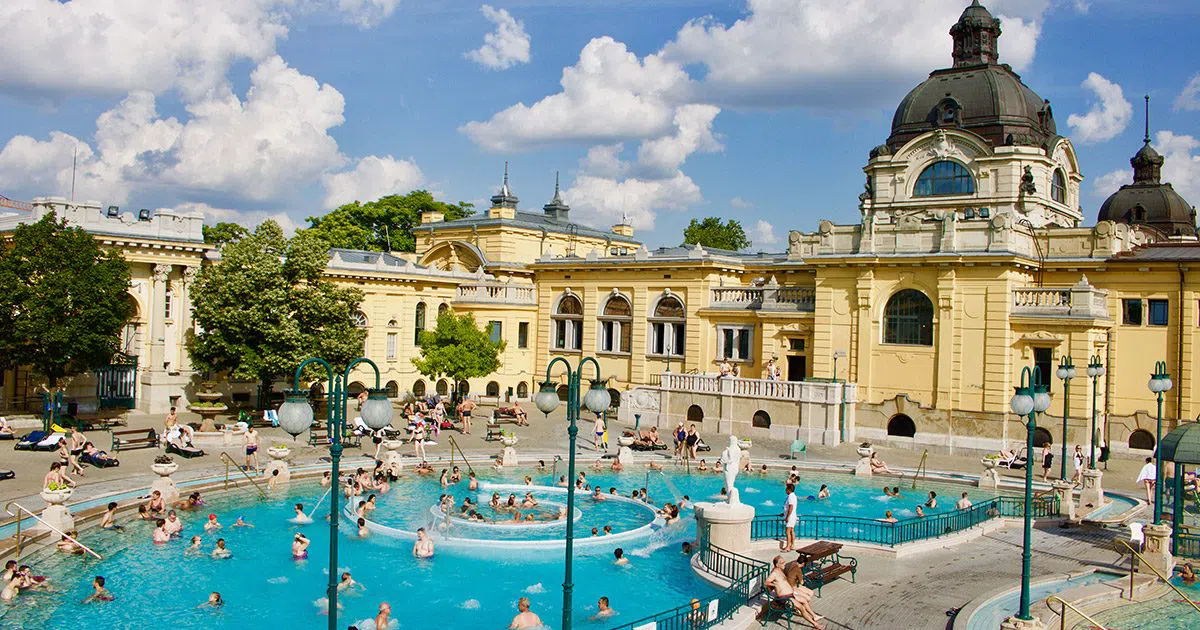
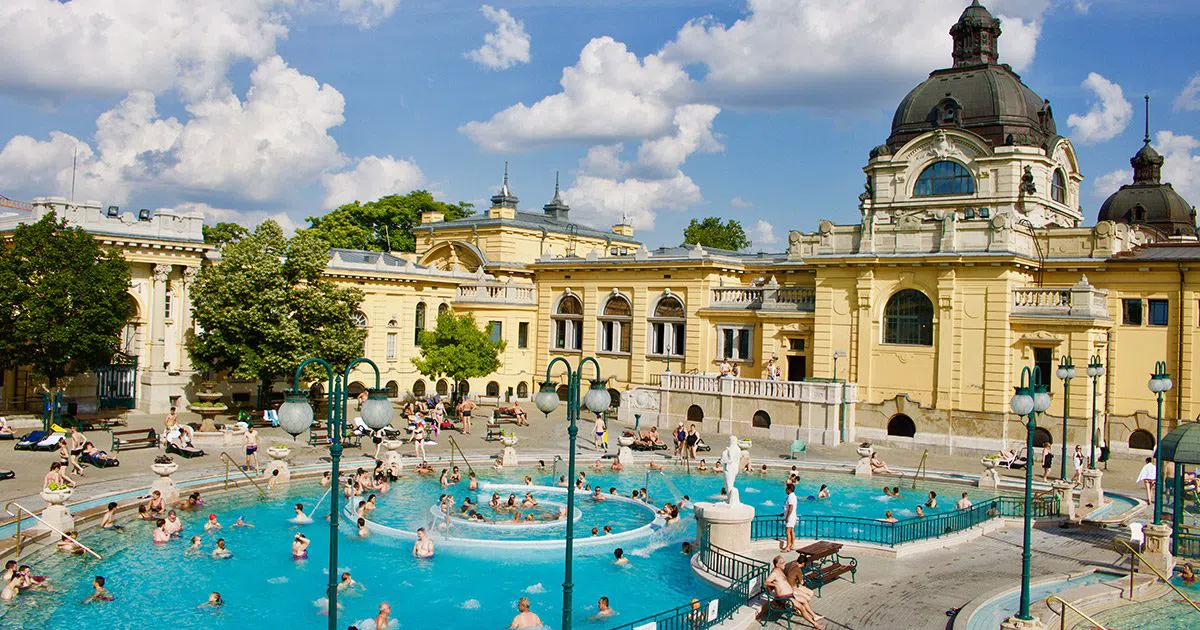
Every guide to Budapest bathing begins in the same place, and for good reason. Széchenyi Thermal Bath, out in the City Park (Városliget) on the Pest side, is the one on the postcards: a butter-yellow neo-Baroque palace wrapped around three large outdoor pools, with a maze of indoor thermal rooms behind. Steam rises off the water even in deep winter, and older regulars play chess on floating boards while tourists drift past them. It takes groups freely and has no real door policy, but its very fame is the catch. The midday crush in high season is considerable. Arrive when the doors open in the early morning, or come back in the last couple of hours before closing, and you will see the place at its best. Expect roughly 9,000–15,000 HUF for a day ticket with a cabin, and book a timed online ticket in advance for peak season and weekends. It is the obvious first soak, and it earns the fuss — provided you time it.
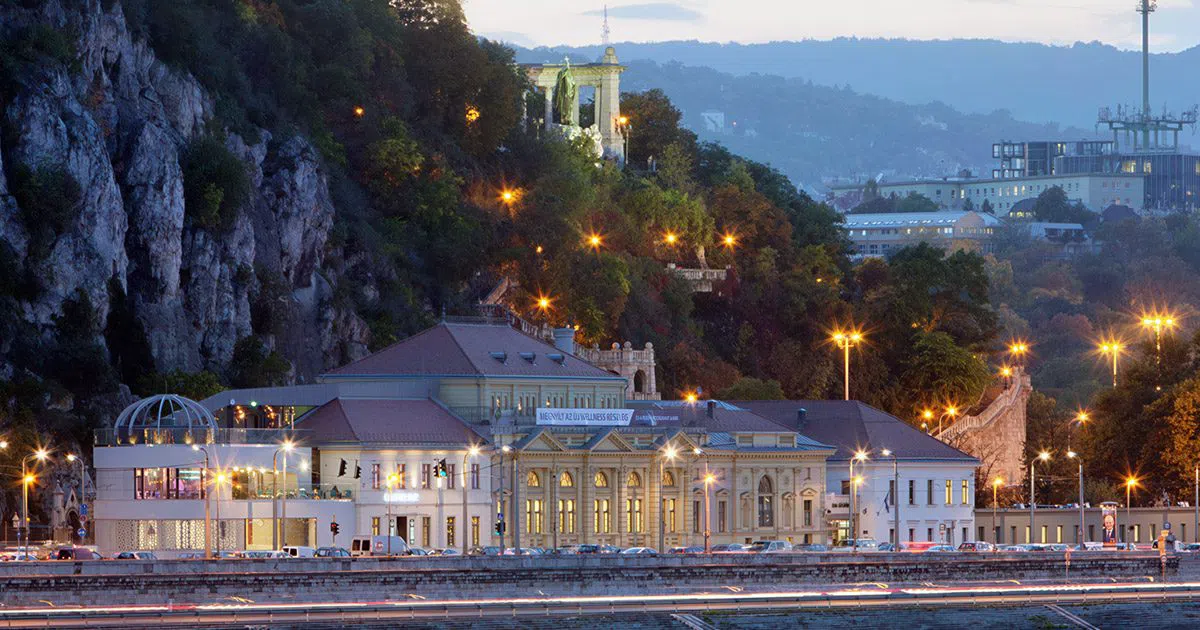
Rudas Bath, tucked beneath Gellért Hill on the Buda riverbank at Döbrentei tér, is the more atmospheric of the two. Its heart is a genuine Ottoman chamber: an octagonal pool under a domed roof pierced with small coloured skylights, unchanged in feeling since the sixteenth century. Above it sits a modern rooftop tub with a clean view across the Danube to the Pest skyline — the photograph half the city comes for. One thing to settle before you book a group: the historic Turkish section runs single-sex on weekdays and mixed, with swimwear, at weekends. Check the specific day before you commit, because the arrangement decides who in your party can go where. Tickets run around 11,000–15,000 HUF, with rooftop access included on the mixed tickets. If you visit only two baths, make it this one and Széchenyi.
The locals' baths, where the posturing drops away
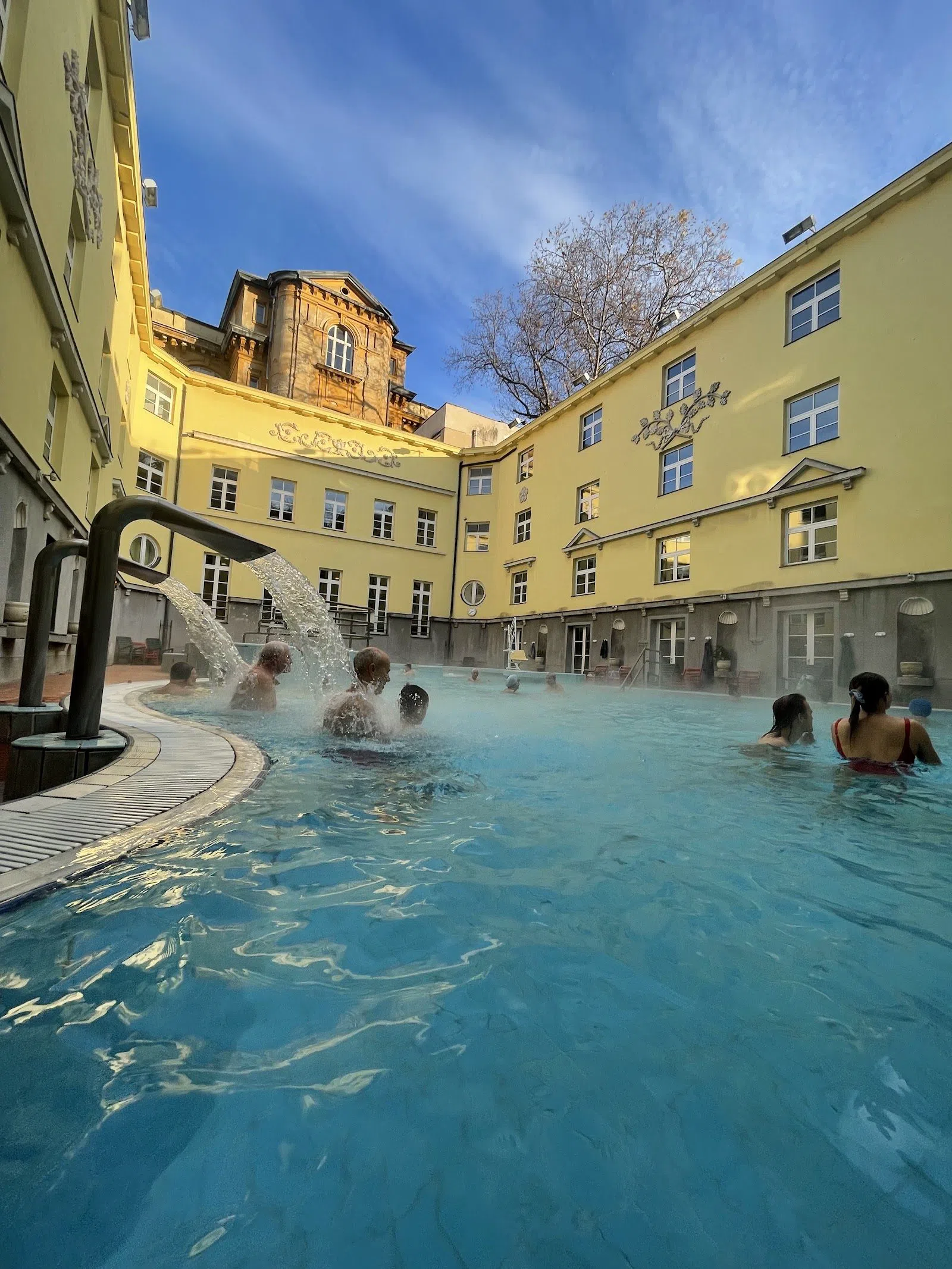
Cross the tourist current and the city opens up. Lukács Thermal Bath, on the Buda side near the Margaret Bridge, is the connoisseur's choice — a working therapeutic bath with serious healing water, walls hung with marble plaques from grateful bathers across a century, and a calm that Széchenyi cannot offer at midday. It is rarely full, so groups fit in without friction, and at roughly 7,000–8,500 HUF it costs noticeably less than the headline palaces. If you want the real thing without the crowds or the selfie sticks, start here.
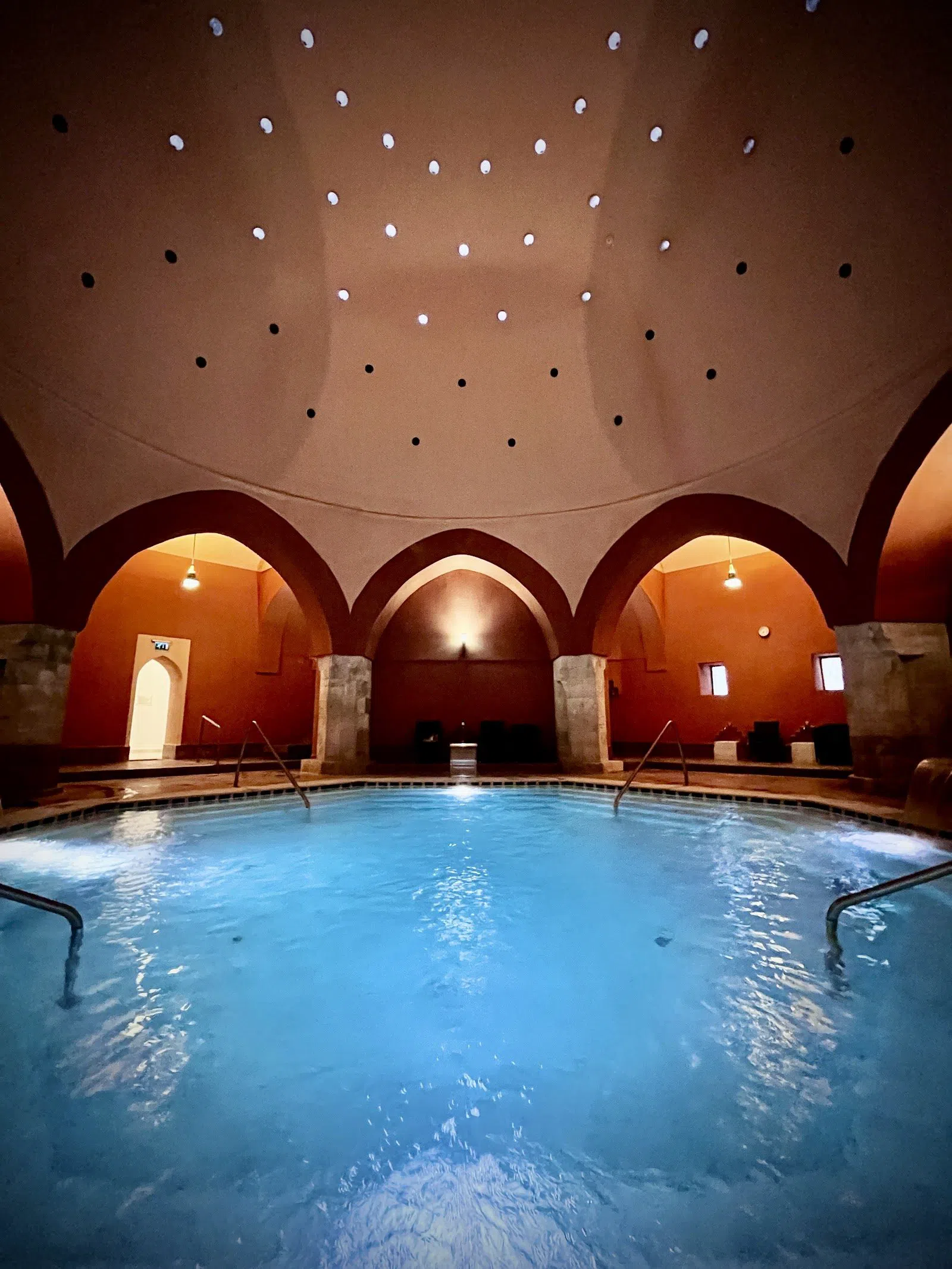
A short walk away sits Veli Bej Bath, also in Buda near the river, and it may be the finest surprise in the city. It is the best-preserved Ottoman bath in Budapest, a low domed hall with five thermal pools of graded temperature and light falling in shafts from the ceiling. The reason it stays so serene is that it caps visitor numbers — which means it fills quickly, and you should book ahead and keep the party small. It is not built for large groups. At around 5,700–7,500 HUF it is also notably cheap for the quality on offer. Treat it as a considered choice for two to four people rather than a stop for a big crowd.
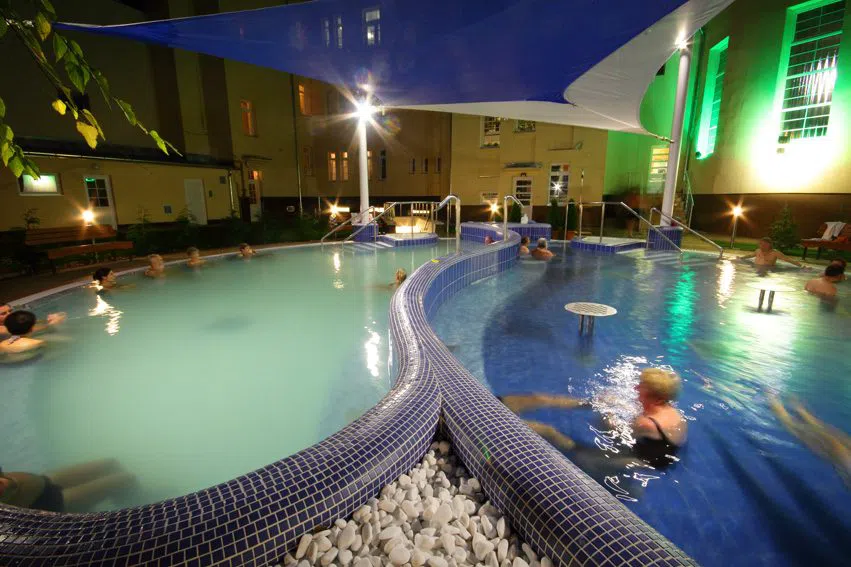
For something plainer still, Dandár Thermal Bath in Ferencváros (District IX), on the Pest side south of the centre, is small, unpretentious and gloriously off the tourist trail. It suits a handful of people rather than a coach party, and from around 3,500 HUF it is one of the cheapest thermal baths in the city. Nobody comes here to be seen. That is precisely the point, and a useful counterweight to the grander names if you want to understand how ordinary Budapesters actually bathe.
Open air and the summer strands
When the weather turns, the city moves outdoors to its strands — sprawling bathing complexes built around lawns as much as pools. The rhythm of these places is different: you bring a towel, claim a patch of grass, and stay for the afternoon.
Palatinus Strand, on leafy Margaret Island in the middle of the Danube, is the classic warm-weather day out. It is a large, family-friendly complex with generous lawn space, wave pools and thermal pools together, and no door policy to speak of — groups are welcome and easily absorbed. The important caveat is the season: it runs roughly May to September only, so confirm it is open before you build a day around it. Reckon on 6,000–7,000 HUF in summer. On a hot day, with the island's shade and river breeze, it is hard to better.
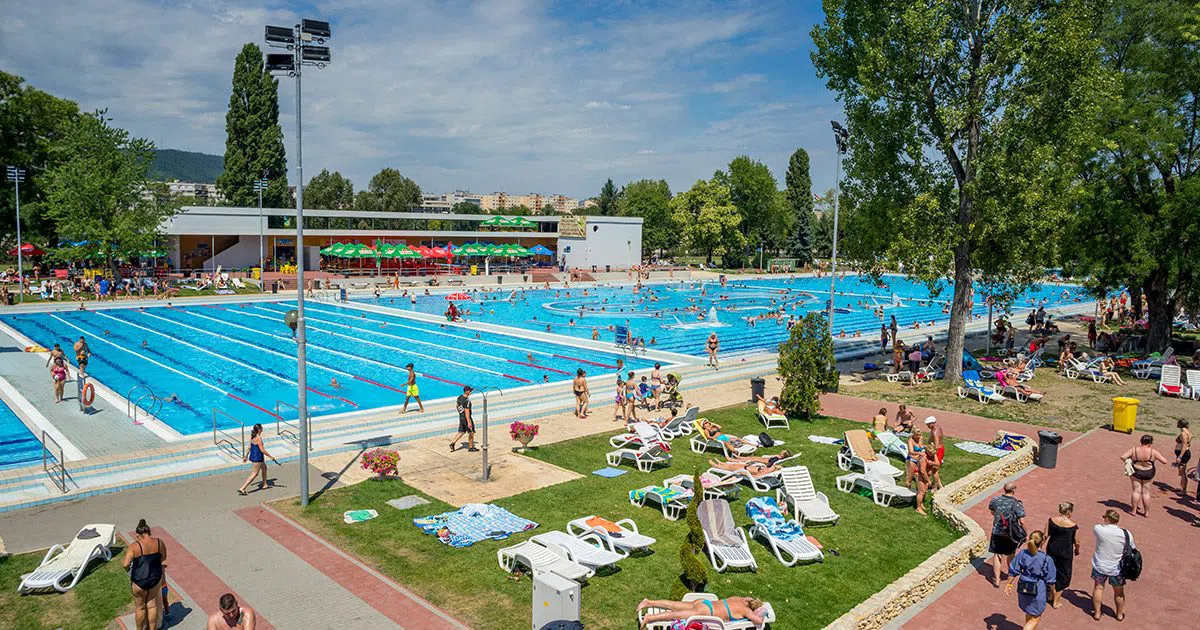
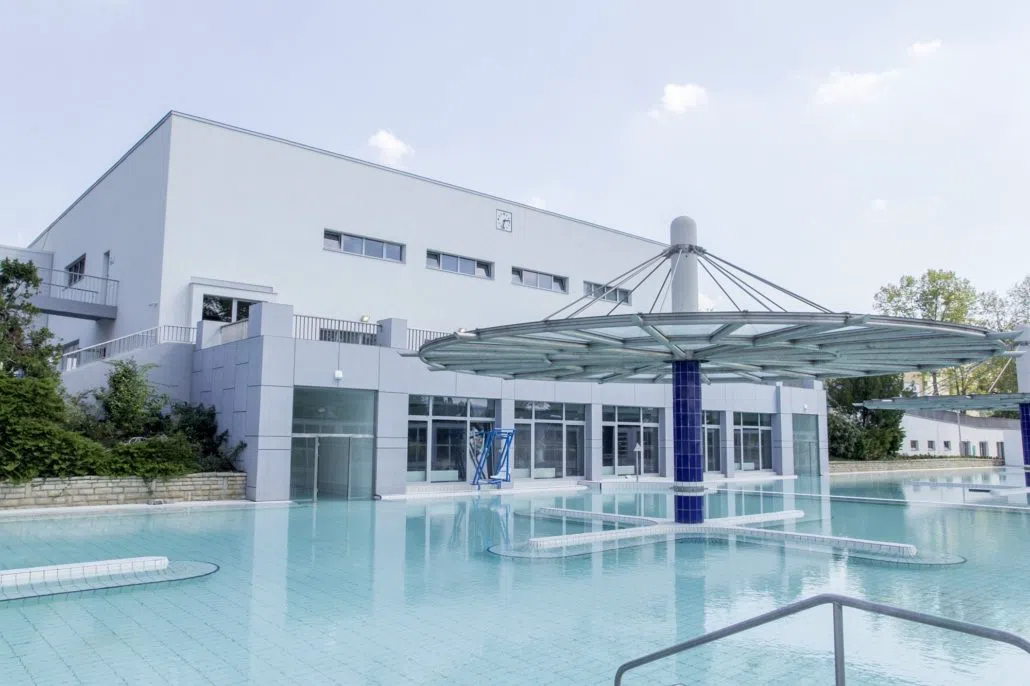
Dagály Thermal Bath, on the Pest riverside in District XIII, is large, airy and well suited to groups and families, with plenty of room where the central baths get cramped. Part of the complex was rebuilt around the 2017 aquatics championships, so the facilities are modern. Day tickets fall around 4,000–6,000 HUF. It is a locals' complex first and a tourist stop second, which shows in the unhurried atmosphere.
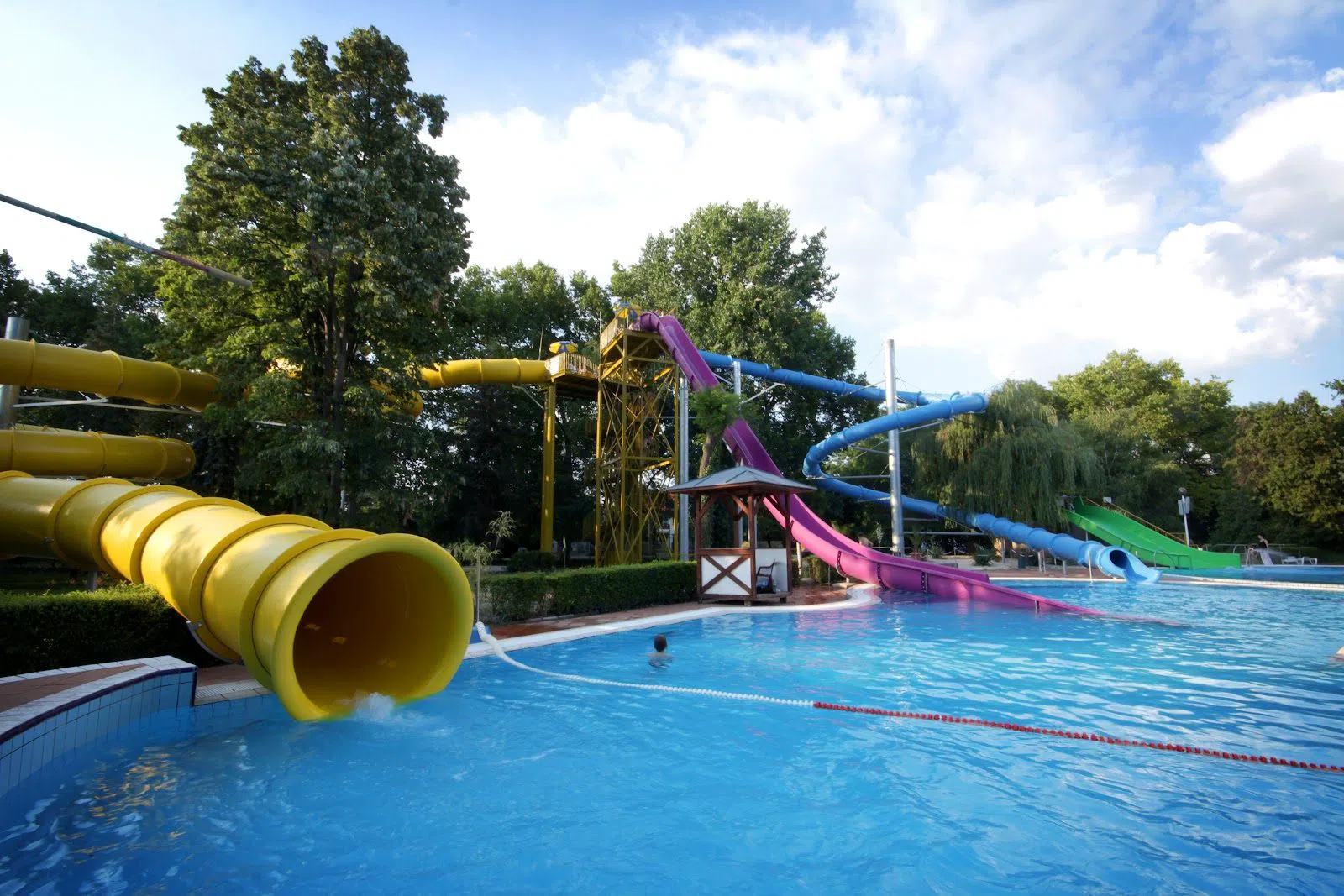
In the green north of the city, two more spots reward the tram ride. Csillaghegyi Árpád Source Bath, in the Csillaghegy district of north Buda, is a scenic open-air setting on a hillside that easily takes groups; since covered pools were added it now runs year-round, unlike the summer-only strands. Római Strandfürdő, further north near the Roman ruins at Aquincum, is a nostalgic, tree-shaded summer bathing ground — big, grassy and casual, and among the cheapest at roughly 3,000–5,000 HUF, though it is seasonal, so check the opening dates. Both sit well away from the tourist core and feel like the city's own back garden. Each costs in the region of 4,000–6,000 HUF for Csillaghegyi and a little less for Római.
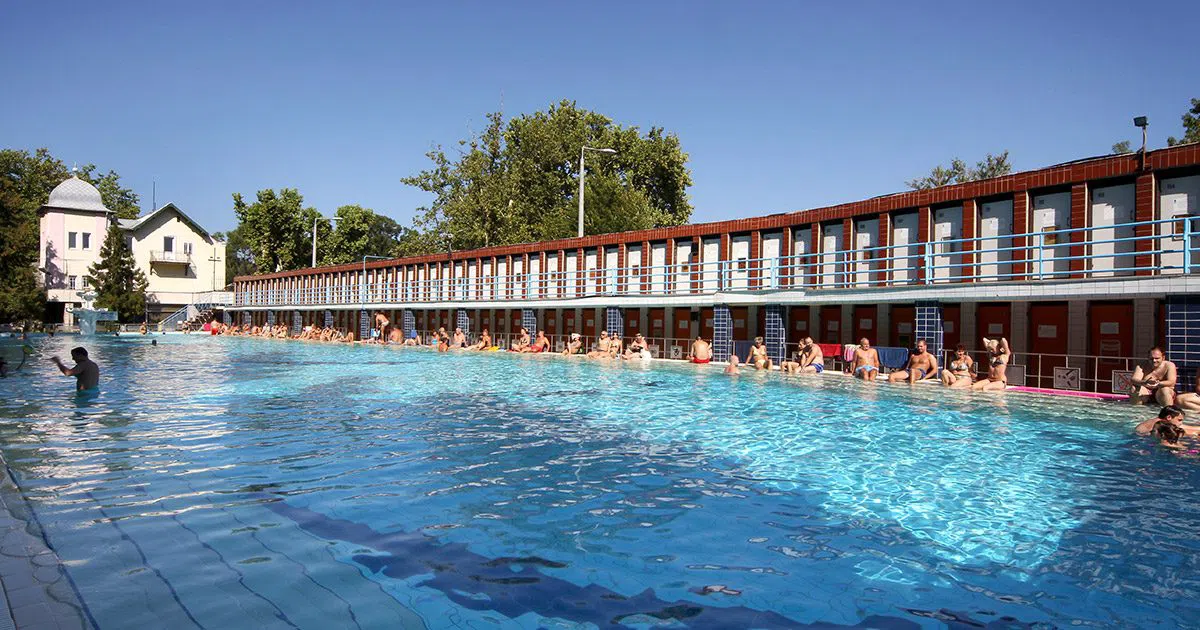
Back in the Zugló district (District XIV), Paskál Strand & Thermal Bath is a modern, roomy local favourite — comfortable for groups and families, with thermal water and none of the tourist scrum of the centre. At around 4,000–6,000 HUF it is a fair-value choice for anyone staying out this way or wanting a quieter afternoon.
For rain, for children, and for something rarer
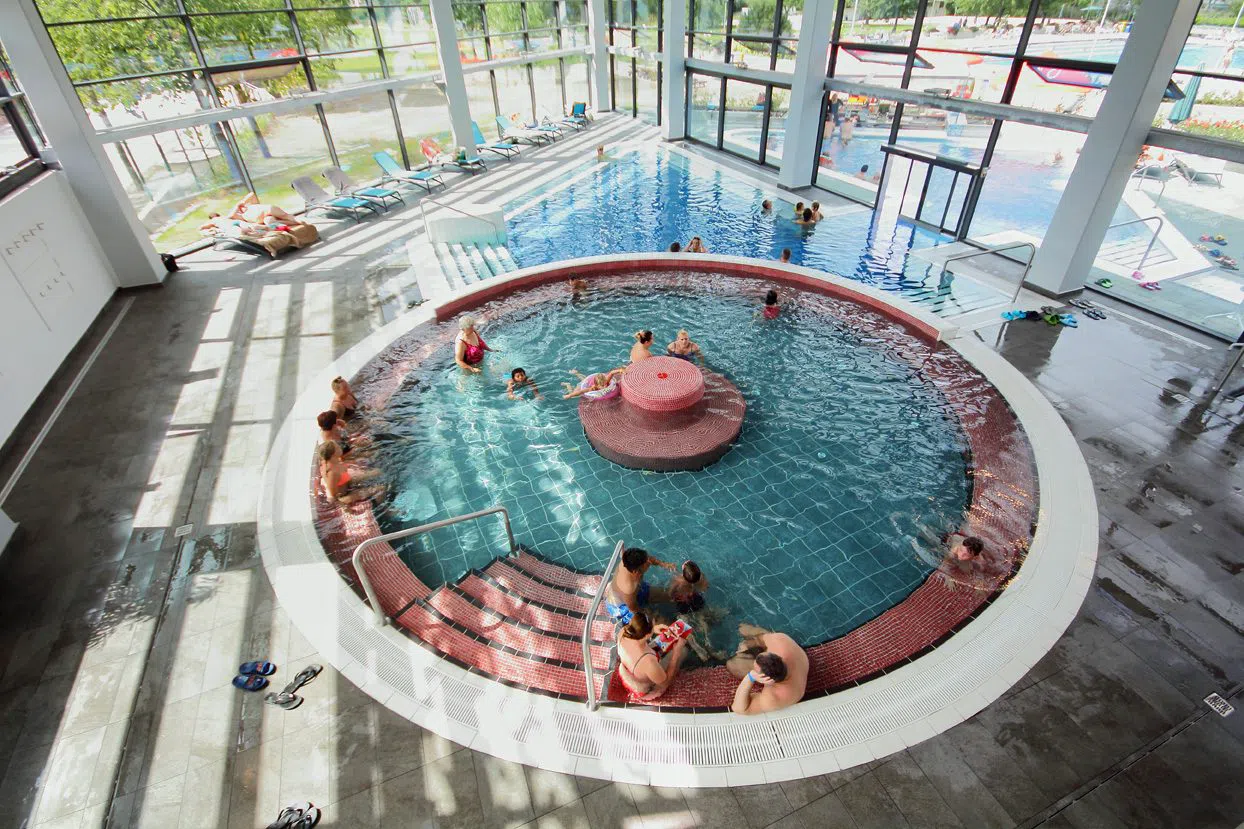
Not every day cooperates, and not every group wants a historic soak. Aquaworld Resort Budapest, out in District IV to the north, is the practical answer to a wet forecast or a party with children. It is an indoor water park and spa built for scale — slides, wave pools, thermal sections — with ample capacity and no door policy. It is not a historic thermal bath and does not pretend to be, but it is the reliable rainy-day and big-group option. The one thing to plan for is distance: it sits well outside the centre, so factor in the travel time each way. Day passes run around 9,000–13,000 HUF.
At the other end of the spectrum, in the southern district of Pesterzsébet (District XX), Pesterzsébet Jódos-Sós Bath is a small, health-focused bath known for its unusual iodine-salt water. It suits a few people rather than a large group, and at roughly 3,000–4,500 HUF it is inexpensive. This is a genuinely therapeutic, off-radar pick — worth the trip only if you are after the mineral water itself rather than the architecture or the scene. Include it in your plans if the point of your visit is the cure, not the setting.
Planning your bathing days
Getting there. The baths are spread across both banks and out into the suburbs, but the network reaches almost all of them. The metro serves Széchenyi directly; trams and the suburban HÉV railway cover the northern strands and the outer districts, and Margaret Island is a short walk or bus ride from either bridge. Buy a travel pass for the length of your stay rather than single tickets — it saves both money and fumbling at machines. For the further-flung options such as Aquaworld, Csillaghegyi and Római, allow thirty to forty-five minutes each way from the centre.
Cash and tickets. Most central baths sell timed online tickets, and for Széchenyi and Rudas on a peak weekend you should book ahead rather than queue. Prices sit broadly between 3,500 HUF at the humblest strands and 15,000 HUF at the flagship palaces with a cabin. Cards are widely accepted, but carry some forint for lockers, drinks and the smaller local baths. A cabin costs a little more than a locker and is worth it if you want somewhere to change and leave your things in privacy.
Timing. The single most useful piece of advice is to go early. The grand baths are calmest in the first hour and the last, and the difference between nine in the morning and one in the afternoon at Széchenyi is the difference between two very different places. Weekdays beat weekends everywhere. If you want the Ottoman rooms at Rudas at their most atmospheric, check the single-sex and mixed schedule before you choose your day.
Budget and pacing. Two baths in a day is possible but ambitious — the heat is more tiring than it feels, and most bathers find one long, unhurried session more rewarding than two rushed ones. A sensible three-day plan might pair a flagship (Széchenyi or Rudas) with a quiet historic soak (Lukács or Veli Bej), and save a strand or Aquaworld for a warm afternoon or a wet one. Bring a towel and flip-flops to avoid rental fees, drink more water than you think you need, and leave time afterwards to sit still. The city has been doing exactly that for two thousand years, and it knows what it is about.
Before you go
Which Budapest thermal bath should I visit if I only have time for one?
Rudas Bath for atmosphere — its Ottoman domed chamber and rooftop tub over the Danube are the city's signature soak. If you want the classic palatial scene instead, choose Széchenyi Thermal Bath, but go early or late to avoid the midday crowds.
Are Budapest's thermal baths suitable for large groups?
Some are, some are not. Széchenyi, Rudas, Palatinus, Dagály and Aquaworld take groups freely with no real door policy. Veli Bej caps its numbers, so it suits only small, pre-booked parties, and Dandár, Pesterzsébet and Lukács are better for a handful of people than a big crowd.
How much does a Budapest thermal bath cost in 2026?
Prices range from around 3,500 HUF at the cheapest strands such as Dandár and Római up to about 15,000 HUF for a day ticket with a cabin at the flagship palaces like Széchenyi and Rudas. Most local baths fall between 4,000 and 8,500 HUF.
Do I need to book Budapest baths in advance?
For Széchenyi and Rudas in peak season and at weekends, yes — buy a timed online ticket rather than queue. Veli Bej should also be booked ahead because it limits visitor numbers. The quieter local baths and strands can usually be paid for on the door.
When is the best time of day to visit a Budapest thermal bath?
Early morning, when the doors open, or the final hours before closing. The grand baths are calmest then, and weekdays are quieter than weekends everywhere. At Rudas, also check whether the Turkish section is single-sex or mixed on your chosen day.